
River Rock Landscaping: Sizing, Depth and Installation
River rock landscaping guide covering size choices, depth, base prep, installation steps and how to order by the ton.
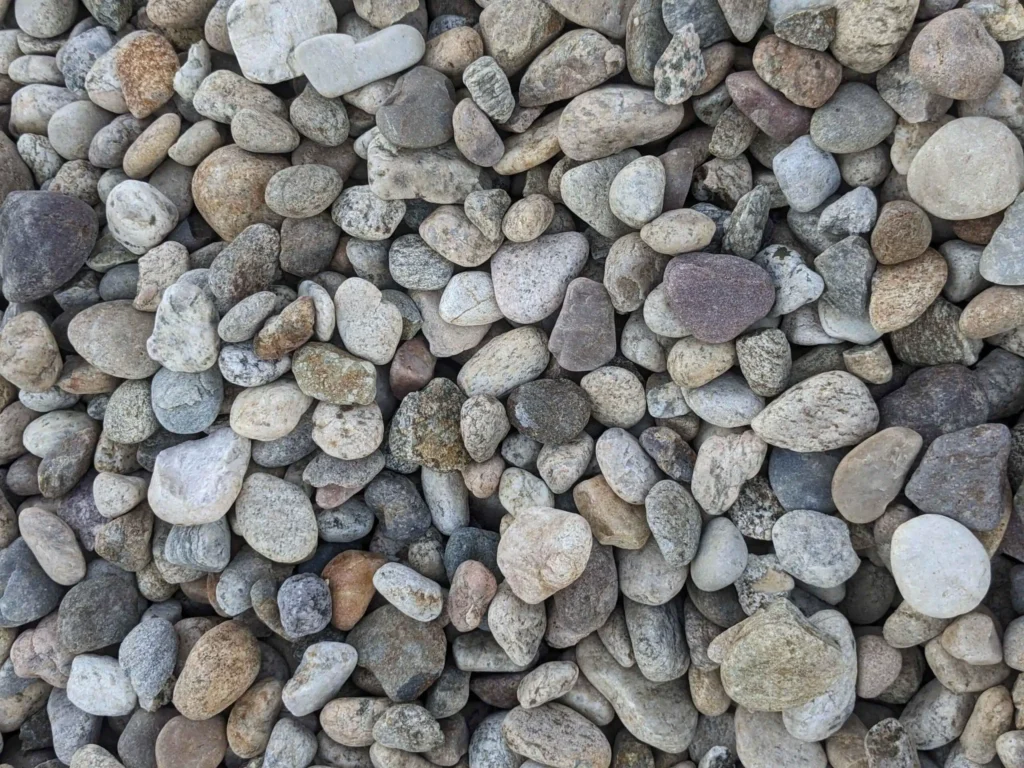
River rock landscaping uses rounded, water worn stone to cover beds, borders and open ground instead of mulch or turf. The stones come in a size range and a mixed natural color, so a bed reads as one calm surface rather than a pile of individual rocks. Homeowners lean on River Rock for this kind of project because it drains fast, resists fading, and does not break down or wash away the way bark mulch does over a few seasons.
As a form of decorative gravel, river rock sits on top of the soil rather than compacting into a base course, which keeps the work closer to a weekend project than a construction job. The rounded shape means no sharp edges to manage around walkways or play areas, and the stone will not scratch pets the way angular crushed rock can.
Why River Rock Landscaping Works So Well
The rounded profile is the whole story. Water sheds off the surface instead of pooling, so beds planted near the house drain away from the foundation rather than holding moisture against it. Weeds that do sprout root shallow in loose stone and pull out by hand instead of needing a trimmer. Because the color is a mixed natural blend rather than one flat tone, the coverage hides dust, leaf litter and the odd stray weed better than a single colored gravel does.
River rock also holds its place once it is set. It is heavy enough per stone that wind and light foot traffic do not scatter it, and it will not compress into mud the way soil or mulch can after a wet season.
Design and Sizing Choices
River rock for this kind of project typically runs 1 to 3 inches, and the size you pick changes the look more than the color does. Smaller stone toward the low end of that range reads as a finer, more uniform surface and works well in tighter beds along a walkway or foundation. Larger stone toward the top of the range reads as a bolder, more textured surface and holds up better in open areas that see more weather.
Mixing two sizes in the same bed usually looks messier, not more natural. Pick one size for the main coverage and use a second size, if any, only as a deliberate border or accent along an edge. Keep the same size consistent across a connected run of beds so the transition from one area to the next does not look patched together.
Depth, Base and Quantity
Most river rock landscaping beds run 2 to 3 inches deep. That is enough to fully hide the soil and any fabric underneath without burying low plants or raising the grade against siding and trim. A thin landscape fabric or weed barrier under the stone is worth the extra step, since it slows weed growth and keeps the rock from working down into the soil over time. A compacted gravel base is not needed here the way it is for a driveway or path that carries vehicle weight.
River rock is sold by the ton, and it runs about 2,700 pounds per cubic yard. To go from an area and a depth to a weight, multiply length in feet by width in feet by depth in inches and divide by 324 to get cubic yards, then multiply by 2,700 pounds and convert to tons. A 10 by 10 foot bed at 3 inches deep works out to roughly 0.9 cubic yards, or a bit over a ton of stone. Run your own bed dimensions through the calculator to get an exact tonnage before you order.
Installation Steps
- Mark the bed edges and remove existing turf, weeds or old mulch down to bare soil.
- Install edging along the perimeter so the stone has a firm boundary against lawn or pavement.
- Lay landscape fabric over the cleared area, overlapping seams and cutting slits for any existing plants.
- Spread the river rock with a rake or shovel to the target depth, working from the edges toward the center.
- Rake the surface level and settle the stone with a light pass so it beds in without gaps down to the fabric.
Maintenance and Common Mistakes
Skipping edging is the most common mistake. Without a firm boundary, foot traffic and rain slowly push river rock into the lawn or onto a walkway, and once it is scattered it is tedious to gather back. Spreading the stone too thin is the second most common issue: less than 2 inches lets soil and weeds show through within a season.
Ongoing care is light. Blow or rake off leaves and debris a few times a year so they do not build up and start decomposing into the stone, which can invite weeds back in. Rinse dusty areas with a hose if the mixed natural color starts looking dull. A bed with proper edging and fabric underneath rarely needs more than that.
Cost and Ordering River Rock Landscaping
River rock is priced and delivered by the ton, with the delivered price set by your ZIP code rather than a flat rate. Because the tonnage depends entirely on your bed's square footage and the depth you choose, the most accurate way to plan a budget is to measure the area first, run it through the calculator, then place the order once you know the exact weight you need. Ordering slightly over the calculated amount is common practice, since it is easier to use leftover stone on a small border than to place a second delivery for a shortfall.
River Rock for this project
Related project guides
More river rock project ideas
Browse more
Related guides
GUIDEWhat to Put Under River Rock for Landscaping BedsHere is what to put under river rock landscaping: a compacted base where needed, then landscape fabric, then rock, to stop weeds and settling.Read guide →GUIDEHow to Clean River Rock and Restore Its ColorLearn how to clean river rock landscaping with rinsing, soap and vinegar methods, plus common mistakes to avoid for a brighter, longer lasting rock bed.Read guide → GUIDEGravel Size Chart: Pea Gravel to Crushed StoneA gravel size chart showing pea gravel, crushed stone and river rock diameters side by side, so you can match the right size to your project.Read guide →GUIDEThe Different Types of Gravel and How to ChooseA plain-language guide to the main types of gravel, covering pea gravel, crushed stone, river rock and decomposed granite.Read guide →
Frequently Asked Questions
What size river rock is best for landscaping beds?
Most beds use stone in the 1 to 3 inch range. Smaller sizes toward 1 inch give a finer, tighter look that suits narrow beds along a walkway or foundation. Larger sizes toward 3 inches give a bolder, more open look and hold their position better in wide beds that see more rain and foot traffic.
Do I need landscape fabric under river rock?
Yes, a thin landscape fabric or weed barrier under the stone is worth installing. It slows weeds from rooting in the soil below and keeps the rock from settling down into the dirt over time, which otherwise means adding more stone every couple of years to keep the bed looking full.
How many tons of river rock do I need for a small bed?
It depends on the square footage and depth. As a rough example, a 10 by 10 foot bed at a 3 inch depth needs roughly 0.9 cubic yards, which works out to a little over a ton at 2,700 pounds per cubic yard. Measure your own bed and run it through the calculator for an exact figure.
Can river rock be installed over existing mulch?
Remove old mulch first rather than covering it. Mulch breaks down and compresses, so stone laid over it will settle unevenly and the soil underneath will still hold moisture against fabric or plant roots. Clearing down to bare soil before laying fabric and stone gives a flatter, longer lasting result.
Does river rock landscaping help with drainage near a house?
It helps because the rounded stone does not compact and lets water pass through quickly instead of pooling. A bed of river rock graded to slope gently away from siding moves rainwater off faster than bare soil or dense mulch, which reduces standing water right against the foundation during heavy rain.
Will the color of river rock stay consistent over time?
The mixed natural color blend is fairly stable since it comes from a range of stone tones rather than a dye or coating that can fade. Dust and debris can make a bed look dull after dry stretches, but a rinse with a hose typically restores the original mixed coloring without needing replacement stone.
Do I need edging around a river rock bed?
Edging is strongly recommended. Without a firm border, foot traffic, rain and mowing gradually push the stone into the lawn or onto adjacent pavement, and scattered rock is slow to collect and reset. A simple metal, plastic or paver edge keeps the bed contained and keeps the line between rock and lawn sharp.
How is river rock landscaping priced and delivered?
River rock is sold by the ton and delivered at a price set by your ZIP code, since hauling distance affects the delivered cost. There is no flat national price. Measure your bed, calculate the tonnage you need, and enter your ZIP through the calculator to see the delivered price for your address.