
Fill Dirt Volume Calculator
Quickly estimate cubic yards, tons, and material cost for your Fill Dirt project. Adjust the inputs below and the result updates in real time.
Calculate Your Project
Estimate only. Add 10-15% for compaction and waste.
How this calculator works
Cubic yards = (area × depth ÷ 12) ÷ 27
Tons = cubic yards × density × 27 ÷ 2000
Yards of fill dirt for grading, low-spot repair, or building pad prep.
Enter your area and depth, and we'll compute cubic yards, tons, and a delivered material cost using current 2026 quarry pricing.
What the Fill Dirt calculator computes
Fill Dirt is generally sold by the cubic yard rather than by the ton because moisture content varies more in fill than in screened topsoil, and the price-per-yard is the rate suppliers actually quote.
Common fill projects: filling a swimming pool that has been demolished (30 to 80 yards depending on pool size), raising grade against a foundation for proper drainage (5 to 15 yards), filling under a deck or shed pad (3 to 10 yards), building up a yard low spot (5 to 20 yards). The cubic-yard scale matters for the conversation with the supplier; truck capacity sets the delivery economics.
The calculator output assumes compacted final volume. Fill Dirt settles 10 to 20 percent under its own weight and seasonal rain over the first year. Add 15 to 20 percent overage on any fill job to compensate, or plan a top-up at the one-year mark.
Fill Dirt versus Topsoil and when each applies
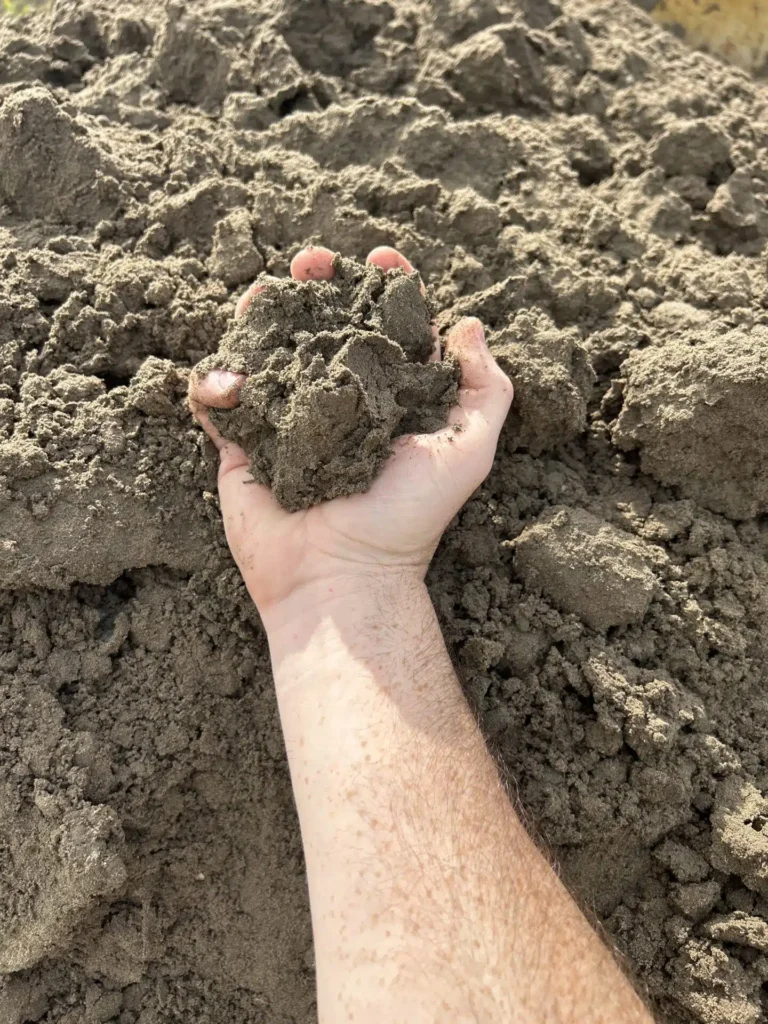
Fill Dirt and Topsoil is bulk subsoil dug from grade-correction projects, stockpiled, and resold. It contains stones, clay clumps, and root fragments. It is mineral soil with little organic content, which makes it appropriate for structural fill but useless as a planting medium.
Topsoil is the screened organic-rich surface layer, with 5 to 10 percent organic content and a fine uniform texture after screening. It supports plant growth.
Use Fill Dirt for any application below the visible grade where plants will not grow. Foundation backfill, low-spot correction, under-deck fill, demolished-pool fill, under-shed-pad fill. The volume is large; the appearance does not matter; the price is low ($41 to $104 per cubic yard delivered).
Use Topsoil for the top 4 to 6 inches where plants will grow. Lawn renovation, garden beds, sod prep. The volume is smaller; the appearance and quality matter; the price is higher ($44 to $173 per yard).
For grading projects, the cost-efficient pattern is Fill Dirt for the bulk volume below the planting layer, then 4 to 6 inches of Topsoil on top for the visible finish.
Compaction for structural fill
Any fill that will support a structure (driveway, sidewalk, deck pad, shed slab, retaining wall) requires compaction. Uncompacted Fill Dirt settles 10 to 20 percent over the first two years, which produces driveway ruts, cracked patios, and sloping decks. Compacted fill achieves 90 to 95 percent of natural soil density and behaves like undisturbed soil.
The compaction sequence is: place fill in lifts of 8 to 12 inches at a time, run a plate compactor or vibratory roller in overlapping passes across the lift, repeat for the next lift. Larger jobs (over 50 yards) use a ride-on roller or a sheepsfoot compactor on rented equipment; smaller jobs work fine with a rental plate compactor.
For fill that will NOT support a structure (yard low spots, landscape berms, planting beds), light compaction by walking on it and watering it in is enough. Heavy compaction is overkill and actually hurts plant root penetration in landscape applications.
Delivery logistics for large fill projects
Fill Dirt orders are typically larger than other aggregate orders, which changes the delivery format. A swimming-pool fill at 60 yards needs three tri-axle truck loads; a foundation-grade-correction at 8 yards rides on one tandem-axle truck. Sequence the trucks 2 to 3 hours apart so you can spread the first load before the second arrives, otherwise the trucks pile up and the unloading takes all day.
For large fill projects, consider hiring a skid-steer with a bucket or a small tracked loader from a rental yard ($200 to $400 per day). The machine spreads the fill in roughly 1/10th the time of hand-shoveling. For under 5 yards total, hand-spreading with shovels and wheelbarrows is fine for one person in a half-day.
Stage the pile somewhere it can sit without becoming a problem. Fill Dirt on grass kills the grass within hours; on a driveway it tracks mud into the house every time someone walks past. Tarps under the pile are mandatory unless the drop is on a dedicated dirt or gravel area.
Common fill project mistakes
The biggest mistake is using Fill Dirt where Topsoil anyway. Always cap fill projects with the planting-grade layer.
The second mistake is no compaction on structural fill. The fill goes in, the deck or pad gets built, and within a year the corner of the structure has settled an inch. By year three the structure is unusable and the fill has to be excavated, recompacted, and the structure rebuilt. Compact in lifts; spend the day on the rental compactor.
The third mistake is too much fill against a foundation. Backfill grade should slope away from the foundation at 5 percent for the first 10 feet (6 inches of drop). Fill that builds up against the foundation higher than 6 inches below the siding line invites water and pests into the structure. Use the volume math to verify you are not over-filling the foundation perimeter.
Permits, grading, and lot drainage rules
Large fill projects often trigger local grading regulations, especially in jurisdictions with strict stormwater management requirements. Threshold rules vary widely. Some municipalities require a permit for moving more than 10 cubic yards of fill on a residential lot. Others allow unlimited residential fill but require a permit when fill changes the lot drainage pattern. A few require a soil erosion and sediment control plan for any fill over 50 yards.
Check the local code office before ordering large fill quantities. The cost of a typical residential fill permit is $50 to $200; the cost of getting caught moving fill without one is a $500 to $5,000 fine plus restoration. Permit application turnaround in most municipalities is 1 to 3 weeks.
Drainage matters too. Fill that changes how water flows on the lot can divert runoff onto neighbors, which creates legal liability. The general rule: keep stormwater on your own property by grading fill to drain into infiltration areas (lawn, beds, dry wells) rather than toward property lines. For larger fill projects, mark planned drainage paths on a sketch before ordering and verify the grade with stakes and a string line as the fill goes in.
For very large fills (over 100 yards) or fills changing grade by more than 2 feet, retain a civil engineer to verify the grading plan. The $500 to $1,500 design fee prevents the larger costs of post-construction drainage problems.
Materials this calculator covers
From $40.95/yard- Density2200 lb/yd³
- ColorBrown
 From $44.03/yard
- SizeScreened, no size grade
- Density2200 lb/yd³
- ColorDark brown
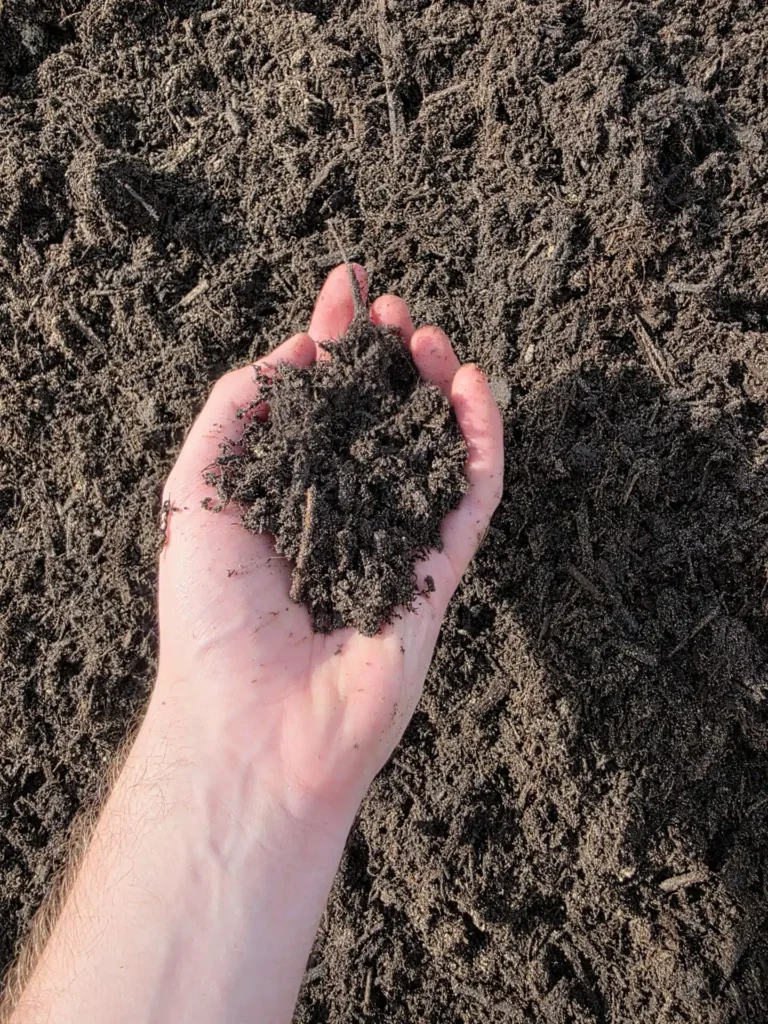 From $44.03/yard
- Density2000 lb/yd³
- ColorDark brown
Other calculators
CALCULATORLoam CalculatorUse this loam calculator to turn your area and depth into cubic yards of topsoil, then see the delivered weight in tons.Open calculator →CALCULATORTopsoil CalculatorFree Topsoil Calculator - enter your area in square feet and depth in inches and get instant tons, cubic yards, and an estimated material cost.Open calculator →CALCULATORPlanter Soil CalculatorVolume of garden soil or planting mix for raised beds and planters.Open calculator → CALCULATORCompost CalculatorUse this compost calculator to find how many cubic yards of compost your beds or lawn need, plus depth and ordering guidance.Open calculator →
Related guides
 GUIDEHow Much Gravel Do I Need? Quick Sizing GuidePractical, field-tested guide: how much gravel do i need. Pulled from real US installer notes and 2026 supplier price data.Read guide →GUIDEWhat Is #57 Stone? Uses, Size, and Cost ExplainedPractical, field-tested guide: what is 57 stone. Pulled from real US installer notes and 2026 supplier price data.Read guide →
 GUIDEHow Deep Should a Gravel Driveway Be? Layer GuidePractical, field-tested guide: how deep should gravel driveway be. Pulled from real US installer notes and 2026 supplier price data.Read guide →
 GUIDEHow Much Does River Rock Cost? By Ton or YardRiver rock cost depends on your ZIP code, order size, and whether you buy by the ton or the cubic yard. Here is how pricing works.Read guide →
Frequently Asked Questions
How does this calculator work?
Enter area in sq ft and depth in inches. We convert to cubic yards, multiply by density to get tons, and divide by 2,000.
What if I don't know the depth?
Most projects use 4 inches. Drainage applications go deeper (6-12 in).
Why is the estimate different from my supplier quote?
Within 10% is normal - supplier quotes include delivery + minimum-load surcharges that depend on your distance from the quarry.
Should I round up?
Yes - round up to the nearest half-ton. The price-per-ton usually drops on larger orders.
Does this include delivery cost?
No - the result is material cost only. Get a delivered quote with your ZIP for the full price.
Can I use this for another material?
Density varies by material. This calculator is tuned for fill-dirt; switch to the matching calculator for accurate results.