
River Rock Flower Bed Ideas and Installation Guide
Plan a river rock flower bed that drains fast and stays neat, with sizing, depth, base prep and installation steps for any yard.
Why River Rock Suits a Flower Bed
River rock flower bed and river rock garden bed designs are showing up in more front yards, foundation plantings and back corners of the landscape. Rounded, tumbled stones hold their color through the seasons, drain fast after storms and never need mowing, watering or the seasonal mulch turnover that organic materials require.
Smooth river stone works well around perennials, shrubs and foundation plantings because it will not float away in heavy rain the way lighter mulch can, and it will not compact into mud the way bare soil does. Homeowners choose it for beds along downspouts, dry creek transitions and any planting area that needs a finished look with almost no upkeep.
The stone also holds up better than bark or wood mulch against sun, sprinklers and foot traffic near a path or patio. Where organic mulch fades, floats out of a bed after a storm or breaks down and needs replacing, river stone stays put and keeps its look with only occasional rinsing, which makes it a common choice for beds that are hard to reach with a hose or a wheelbarrow.
Design and Sizing Choices for a River Rock Garden Bed
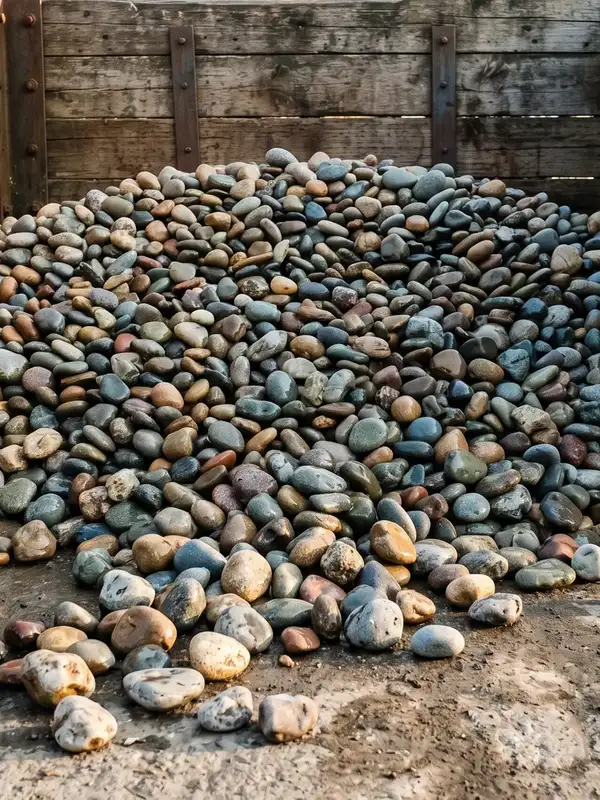
River Rock for flower beds comes in a mixed natural color blend, so no two handfuls look identical and the bed reads as stone rather than as a uniform manufactured product. The stones run 1 to 3 inches across, rounded and smooth on every face, which is the size range most homeowners choose for planting bed gravel because it sits still around root balls and does not shift underfoot the way sharp crushed stone can.
Smaller stones toward the low end of that range settle into tight spots between plants and along curved bed edges. Larger stones toward the top of the range work well as a border along a walkway or foundation, or mixed through the bed for texture. Many beds use one size throughout for a clean, uniform look, while others mix sizes to break up a large planting area.
Because the color is a mixed natural blend rather than a single dyed tone, river stone tends to pair well with brick, stucco, siding and existing mulch beds elsewhere on the property without clashing. It also reads consistently in sun and shade, so a bed on the north side of a house near foundation plantings looks the same as one along a sunny walkway.
Depth, Base and Quantity for a River Rock Flower Bed
Most river rock flower beds look best at 2 to 3 inches deep. That is enough coverage to hide the landscape fabric underneath and block light from reaching the soil, without piling stone so high it buries the crowns of nearby plants. A woven weed barrier under the stone keeps material from working down into the soil over time and makes the bed easier to weed by hand.
To find quantity, multiply the bed's length in feet by its width in feet by the depth in inches, then divide by 324 to get cubic yards. River Rock weighs about 2,700 pounds per cubic yard, which works out to roughly 1.35 tons per cubic yard, since this material is sold and delivered by the ton rather than the yard. The calculator handles that conversion automatically and returns a ton figure once the bed's dimensions are entered.
How to Install a River Rock Flower Bed
Installation follows the same basic steps as most other bed treatments, with a few details that keep river stone in place once it is down.
- Clear the bed of weeds, old mulch and any turf, then rake the soil level and pull roots or debris that would poke through the stone.
- Lay a woven landscape fabric or weed barrier across the entire bed, overlapping seams by several inches and cutting slits around existing plants.
- Cut an X in the fabric for each new plant and set root balls at grade before backfilling with soil.
- Spread the stone from the pile toward the edges with a rake or shovel, working to an even 2 to 3 inch depth across the bed.
- Set edging, steel, stone or plastic, along any border that meets lawn or mulch to keep the stone from migrating.
- Rinse dust off the surface with a hose once the bed is graded, which brings out the natural color of the stone.
Maintenance and Common Mistakes
A river rock flower bed needs less upkeep than a mulched one, but it is not maintenance free. Leaves and debris still need to be blown or raked off the surface, and any spot where soil washes onto the stone eventually grows weeds that need pulling before their roots get established.
The most common mistake is skipping the weed barrier to save a step. Without it, stone sinks into the soil within a couple of seasons and starts growing its own crop of weeds from beneath. Another common error is choosing a stone size too small for a bed near heavy foot traffic or a downspout, where lighter stones wash or scatter, or laying the stone too thin, which lets sunlight reach the soil and the fabric show through.
Algae or a green tint can show up on stone in a shaded, damp corner of a bed, especially near a downspout or an irrigation head that runs often. A rinse with a hose and a few minutes of scrubbing with a stiff broom usually clears it. Trimming back overhanging branches that keep the bed shaded and damp helps prevent it from coming back as quickly.
Cost and Ordering
River Rock for a flower bed ships by the ton, with delivery priced to the ZIP code for the project rather than a flat national rate. Because minimum order sizes and truck access vary by address, run the bed's dimensions through the calculator first, and round the order up slightly to cover uneven ground or a deeper edge along a border.
A flower bed is one of several uses for this stone on most properties. Homeowners with a larger yard often add matching river rock along a dry creek bed, a path or a foundation border in the same delivery, an approach worth comparing on the main river rock landscaping page before placing an order.
Before the truck arrives, clear a path from the driveway or street to the bed and mark any sprinkler heads, low branches or buried lines near the drop spot. A wheelbarrow and a flat shovel make it easier to move stone from the pile to the bed in stages, especially on a property where the bed sits well away from where the delivery is dropped.
River Rock for this project
Related project guides
Browse more
Related guides
 GUIDEWhat to Put Under River Rock for Landscaping BedsHere is what to put under river rock landscaping: a compacted base where needed, then landscape fabric, then rock, to stop weeds and settling.Read guide →GUIDEHow to Clean River Rock and Restore Its ColorLearn how to clean river rock landscaping with rinsing, soap and vinegar methods, plus common mistakes to avoid for a brighter, longer lasting rock bed.Read guide →
 GUIDEGravel Size Chart: Pea Gravel to Crushed StoneA gravel size chart showing pea gravel, crushed stone and river rock diameters side by side, so you can match the right size to your project.Read guide →GUIDEThe Different Types of Gravel and How to ChooseA plain-language guide to the main types of gravel, covering pea gravel, crushed stone, river rock and decomposed granite.Read guide →
Frequently Asked Questions
How deep should a river rock flower bed be?
Most river rock flower beds work well at 2 to 3 inches deep. That depth covers a woven weed barrier completely, blocks light from reaching the soil below and still lets rainwater drain through quickly. Going much deeper wastes material and can bury the crowns of nearby plants, while a thinner layer lets weeds punch through and lets the fabric show.
Do I need landscape fabric under river rock?
Yes. A woven landscape fabric or weed barrier keeps the stone from sinking into the soil and keeps most weed seeds from taking root underneath. Skip it and the bed needs a full refresh within a couple of seasons because stone and soil mix together and weeds grow up through the gaps. Cut an X in the fabric for each plant instead of removing large sections.
What size river rock works best for flower beds?
Stone in the 1 to 3 inch range is the size most homeowners use for flower beds. Smaller stones in that range settle into tight spots around plants and curved edges, while larger stones hold their place better along borders and walkways. Many beds use one size throughout for a clean look, though mixing sizes adds texture in a larger planting area.
Will river rock hurt my plants?
No, as long as it is not piled directly against stems or crowns. Keep a small gap around the base of each plant so the stone does not trap moisture against the stem, and set root balls at grade before backfilling. Rounded river stone does not compact the way sharp gravel can, so roots below the surface are not affected.
Can I put river rock over mulch instead of removing it?
It is better to remove old mulch first. Mulch breaks down and settles, so stone placed on top of it sinks unevenly as the mulch decomposes underneath, and the organic matter mixed into the base makes it easier for weeds to root. Clearing the bed to bare soil, then laying fabric and stone, gives a flatter, longer lasting result.
How is river rock for a flower bed delivered?
River Rock is sold and delivered by the ton, priced to the ZIP code where the project is located. A delivery truck drops the stone in a single load at the address given, so the bed, driveway or staging area needs to be clear and accessible before the truck arrives. Use the calculator to convert the bed's dimensions into a ton figure first.
Does river rock in a flower bed change color over time?
Not from sun or weather. River Rock is a mixed natural color blend of tumbled stone, and the color comes from the stone itself rather than a dye or coating, so it does not fade the way stained mulch can. Dust, soil or algae can build up on the surface over time, and a rinse with a hose restores the original color.
How often does a river rock flower bed need to be topped off?
Much less often than a mulched bed. Because river rock does not decompose the way organic mulch does, a properly installed bed with a weed barrier underneath can go for years without adding more stone. Occasional topping off is only needed if stone gets displaced by heavy foot traffic, digging animals or erosion along a slope or downspout.