
River Rock Edging Ideas: Borders, Depth and Install
River rock edging ideas for flower beds, foundations and driveways, with guidance on depth, base prep, install steps and ordering by the ton.
Why River Rock Edging Ideas Work So Well
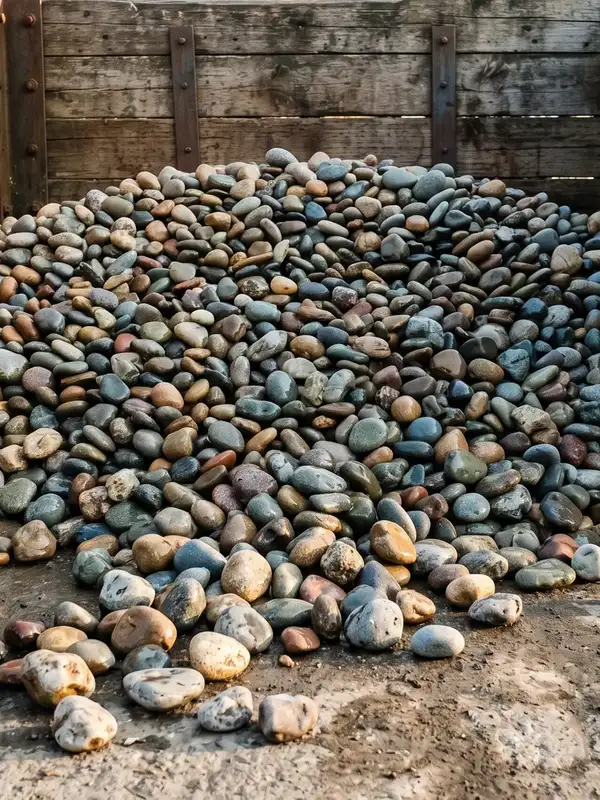
River rock edging ideas start with a simple material: smooth, rounded stones set along the line where a bed, walkway or driveway meets the lawn. Because each stone is naturally worn round, a river rock border reads as informal and low maintenance next to sharp edged pavers or poured concrete curbing. The mixed natural coloring blends with brick, stucco, wood siding and most planting palettes, so a border sits comfortably around a front foundation, along a walkway or beside a mailbox without fighting the rest of the yard.
A river rock border also solves a practical problem. Rounded stone does not soak up water and rot the way bark mulch does, so it holds its look for years instead of needing yearly refills. It stays put once it settles, sheds rain instead of holding it, and keeps mud from splashing onto siding or paint during heavy weather. Used along a foundation, a walkway or the edge of a planting bed, river rock creates a clean line between soil and hardscape and cuts down on the weeding that comes with a bare dirt edge.
Design and Sizing Choices for a River Rock Border
Most river rock edging ideas fall into a few shapes: a straight run along a driveway, a gentle curve around a flower bed, or a ring that wraps a tree or lamp post. A river rock border around a house works well as a foundation strip that keeps soil, splash and mulch away from siding, especially under roof lines without gutters. A river rock driveway border marks the edge of pavement or a gravel drive and keeps grass from creeping into the surface. For a river rock flower bed border or a river rock garden border, a narrower run of about 8 to 12 inches usually reads as a clean edge without competing with the plants themselves.
Stone in this size range, roughly 1 to 3 inches, works well for edging because the pieces are large enough to stay put in a defined border but still small enough to look tidy along a tight curve. The mixed natural coloring also means a border blends into more settings than a single toned stone would, which matters for a landscape border that has to sit next to brick, wood mulch and grass all at once. River rock edging pairs naturally with decorative gravel spread across a wider bed and with planting bed gravel tucked among shrubs, so the border and the fill can come from the same load.
For river rock landscape edging that has to hold a hard line, such as along a patio or a driveway, pair the stone with a physical restraint like steel or aluminum landscape edging, or a trenched and compacted edge. For river rock garden edging around softer curves and planting beds, the restraint can be lighter since foot traffic and mower wheels matter less. Either way, the goal is the same: keep the stones where they were placed instead of letting them scatter into the lawn or the bed.
Depth, Base and Quantity for River Rock Edging
A river rock border does not need to run deep to work. Two to three inches of stone is enough for most flower bed and foundation borders, since the goal is coverage and a clean line rather than a load bearing surface. A river rock driveway border that takes foot traffic or the occasional tire can run slightly deeper, closer to three inches, to keep the base from showing through after a season of settling.
Before spreading stone, dig out the border area a few inches below grade and lay landscape fabric to block weeds and keep the rock from working down into the soil over time. A steel, aluminum or paver edging restraint set along the outer line keeps the border crisp and stops stones from migrating into the lawn or driveway. Because River Rock sells by the ton rather than by the cubic yard, the amount needed depends on the length and width of the run and the depth of stone, so run the numbers through the calculator to get a tonnage figure for the exact border before ordering.
Installation Steps for a River Rock Border
Installing a river rock border follows a straightforward sequence:
- Mark the border line with a hose or spray paint and cut a clean edge along the bed, walkway or driveway.
- Dig out the strip a few inches deep, removing sod, roots and loose soil so the base is firm.
- Lay landscape fabric across the trench to block weeds and keep the rock separated from the soil below.
- Set a steel, aluminum or paver edging restraint along the outer line to hold the border shape.
- Spread the stone evenly to the target depth and rake it level along the run.
- Tamp or lightly compact the stone so it settles and resists shifting during rain and mowing.
Maintenance and Common Mistakes
River rock edging needs little upkeep once it is installed. An occasional rake keeps the stones level and pulls out leaves or mulch that blow in from nearby beds. Topping off low spots after a few seasons keeps the border looking full, and rinsing the stones with a hose clears out dust or pollen buildup.
The most common mistake is skipping the edging restraint, which lets stones drift into the grass where a mower can throw them. Skipping landscape fabric is a close second: without it, weeds root through the rock within a season and the stones slowly sink into the soil. Going too shallow is another issue, since a thin layer of stone shows bare fabric or dirt through the gaps once it settles, so it pays to err on the fuller side rather than spreading it too thin.
Cost and Ordering River Rock Edging
River rock for edging and borders is sold and delivered by the ton, so it helps to know the total length, width and depth of the border before ordering. A short run around a mailbox or a single flower bed needs far less material than a border that wraps a whole foundation or lines a long driveway, and ordering slightly more than the minimum covers settling without leaving a large excess.
Because River Rock ships as one material, the same load can double as the border stone, a wider fill of decorative gravel, or planting bed gravel among shrubs, which is worth planning for if more than one area of the yard needs stone. Delivered pricing is quoted by ZIP code, since hauling distance and site access affect the cost of getting a load to a property, so the final ton count and drop off details get confirmed at ordering rather than estimated from a national average.
River Rock for this project
Related project guides
Browse more
Related guides
 GUIDEWhat to Put Under River Rock for Landscaping BedsHere is what to put under river rock landscaping: a compacted base where needed, then landscape fabric, then rock, to stop weeds and settling.Read guide →GUIDEHow to Clean River Rock and Restore Its ColorLearn how to clean river rock landscaping with rinsing, soap and vinegar methods, plus common mistakes to avoid for a brighter, longer lasting rock bed.Read guide →
 GUIDEGravel Size Chart: Pea Gravel to Crushed StoneA gravel size chart showing pea gravel, crushed stone and river rock diameters side by side, so you can match the right size to your project.Read guide →GUIDEThe Different Types of Gravel and How to ChooseA plain-language guide to the main types of gravel, covering pea gravel, crushed stone, river rock and decomposed granite.Read guide →
Frequently Asked Questions
What is the best edging for river rock borders?
A steel, aluminum or paver restraint set along the outer line works best because it holds a crisp shape and stops stones from drifting into the lawn or driveway. For softer curves around a flower bed, a trenched and compacted edge without a hard restraint can be enough, especially where foot traffic and mowing are light.
How deep should river rock edging be?
Two to three inches of stone covers most flower bed and foundation borders. A driveway border that takes foot traffic or the occasional tire does better closer to three inches, since a thinner layer can show bare fabric or dirt through the gaps once the stone settles.
Do I need landscape fabric under a river rock border?
Yes. Fabric blocks weeds from rooting through the stone and keeps the rock from working down into the soil over time. Skipping it is one of the most common mistakes with river rock edging, since weeds and sinking stone both show up within a season without it.
Can river rock be used as a border around a house foundation?
Yes. A river rock border around a house keeps soil, splash and mulch away from siding, which helps in spots without gutters where roof runoff hits the ground hard. It pairs well with an edging restraint so the stones stay in a clean strip against the foundation instead of spreading.
What size river rock works best for edging and borders?
Stone in the 1 to 3 inch range works well because the pieces are large enough to stay in place along a defined border but small enough to follow a tight curve cleanly. The mixed natural coloring also blends with brick, siding and most planting palettes.
How do I keep river rock from spilling into the lawn or driveway?
Set a physical restraint, such as steel, aluminum or paver edging, along the outer line before spreading stone. Keeping the depth in the recommended range and avoiding overfilling past the restraint also helps, since stone piled above the edge is what tends to scatter.
Can river rock be mixed with mulch in the same bed?
Yes, this is a common combination. Many beds use river rock edging as the border and mulch as the fill closer to the plants, or the reverse, with a restraint or fabric barrier between the two zones so the materials do not mix together over time.
How much river rock do I need for a border?
It depends on the length, width and depth of the run, since river rock calculator gives an accurate tonnage before ordering.