
River Rock Dry Creek Bed Ideas for Yard Drainage
See how a river rock dry creek bed manages runoff, controls erosion and adds a natural drainage swale to any yard.
Why River Rock Works for a Dry Creek Bed
A river rock dry creek bed turns a soggy low spot or a straight drainage ditch into a landscape feature that reads as intentional design. Water still follows the same path off the roof, patio or side yard, but instead of bare mud or a plastic pipe, it moves across smooth stone that holds its place through heavy rain.
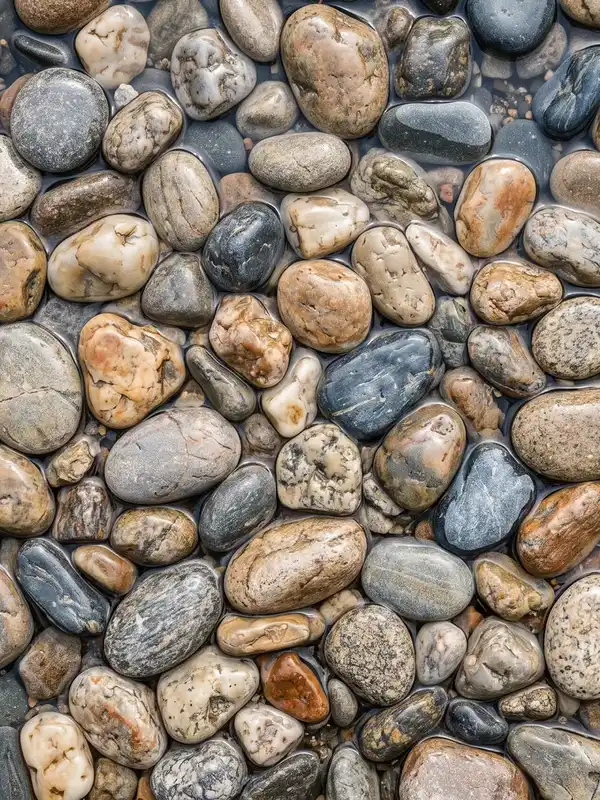
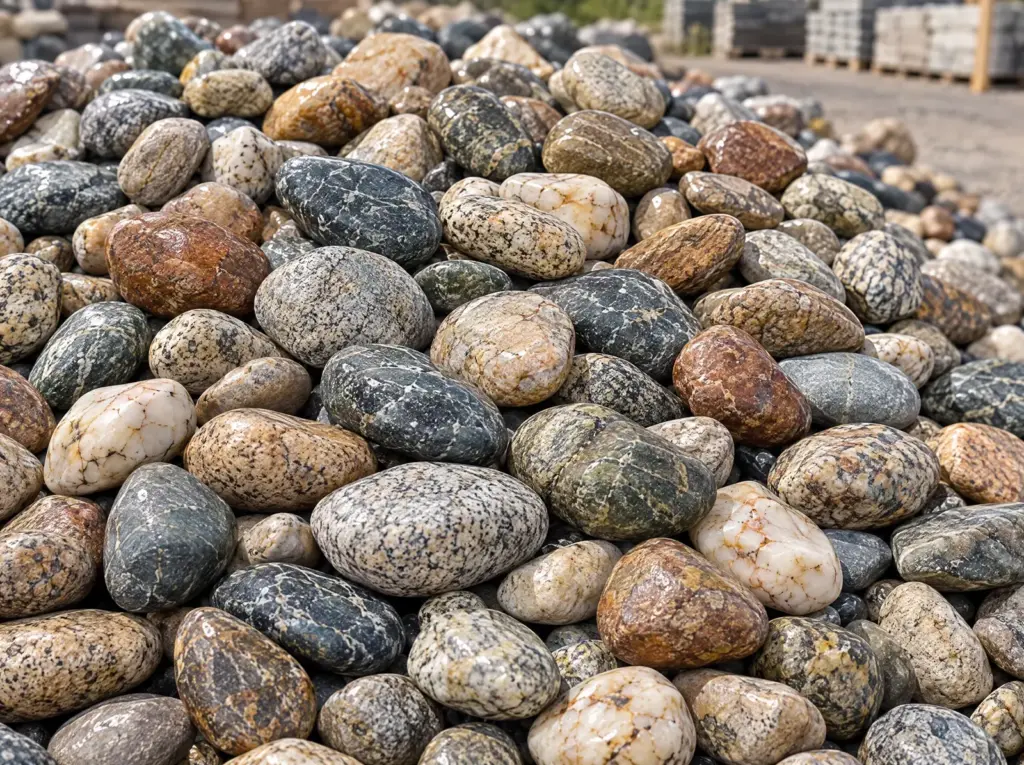
River Rock comes in a mixed natural color blend, rounded rather than angular, which is close to the shape water carves on its own in a real streambed. Because the stone is heavy and interlocks loosely instead of sitting loose like pea gravel, it resists washing downhill the way lighter aggregate can. That is why landscapers reach for it on erosion control jobs and on drainage gravel projects that see runoff every time it rains, not only during a storm.
Design and Sizing Choices for a Drainage Swale
River rock drainage ideas usually start with the path water already takes. Walk the yard during or right after a rainstorm and mark where water pools, where it cuts a channel, and where it exits toward the street or a low corner of the lot. That path becomes the centerline of the creek bed, and a gentle curve rather than a straight trench both slows the water and looks more like a natural drainage swale than a ditch.
Size the rock to the job. River Rock in the one to three inch range gives a creek bed real texture: place the larger stones along the outside of each bend, where moving water pushes hardest, and let smaller stones settle toward the center and the straight runs. A river rock drainage swale in the backyard that carries only roof runoff and light sheet flow can run narrower and shallower than a swale collecting water from a whole side yard or a low point where two roof lines drain together.
Depth, Base and Quantity for Your Creek Bed
Cubic yards for a creek bed work out to length in feet times width in feet times depth in inches, divided by 324. A bed that is wide and shallow uses less material than a narrow, deep trench of the same length, which is one reason it pays to settle on the width and curve first and the depth second. Depth itself is a judgment call: enough to bury the base layer and hold the rock in place, not so deep that the bed reads as a ditch instead of a dry creek bed.
Because River Rock weighs about 2,700 pounds per cubic yard, or roughly 1.35 tons, a bed that works out to a modest number of cubic yards still adds up in tons fairly fast. Rather than do that math by hand, run the measurements through the calculator, which turns length, width and depth straight into a tonnage figure and a delivered price for your ZIP code. Many installers also lay landscape fabric under the rock first, which keeps the stone from working down into the soil over time and cuts back on weeds pushing up through the bed.
Installation Steps
Installing a river rock dry creek bed follows the same order on almost every job, whether the result is a decorative dry creek bed with river rock or a working drainage swale for the backyard.
- Lay out the path with marking paint or a garden hose, following the route water already takes and building in a gentle curve rather than a straight line.
- Excavate to the planned depth, sloping the base slightly toward the outlet so water keeps moving instead of sitting.
- Roll out landscape fabric along the base and up the sides to separate the rock from bare soil.
- Spread the River Rock from the outlet end back toward the start, raking it level and working larger stones toward the outside of each curve.
- Tuck the fabric edges under the rock at the borders and add edging or plantings along the sides to hold the line.
- Rinse the finished bed with a hose to settle the stone and clear off dust before it sits under plants.
Maintenance and Common Mistakes
A river rock dry creek bed needs little upkeep once it is graded and settled, but a few habits keep it working and a few mistakes shorten its life.
- Clear leaves, mulch and soil that wash in after storms, since buildup gives weeds a place to root and slows drainage.
- Rake stone back into place along the outside of curves each season, where the fastest water tends to nudge rock downstream over time.
- Top off any spot where the bed has thinned rather than waiting until soil shows through.
- A common mistake is skipping landscape fabric, which lets weeds root and lets the rock sink into the soil within a season or two.
- Another is building the bed too shallow or too straight, so it channels water fast without slowing it, which defeats the point of an erosion control feature.
- A third is using a single, uniform rock size throughout, which looks less like a real creek bed than a mix of larger and smaller stone.
Cost and Ordering
River Rock is sold and delivered by the ton, not the cubic yard, so pricing and ordering both key off the tonnage worked out for the specific bed. Total cost depends on how much stone the design calls for, how far the delivery has to travel, and whether the job needs fabric, edging or a base course on top of the rock itself.
Order enough for the full run in one delivery when possible. A dry creek bed that runs short part way through is hard to match exactly, since natural stone varies slightly between deliveries. Measure the full path, run the numbers through the calculator, and round up rather than down so the bed finishes with consistent color and size from one end to the other.
River Rock for this project
Related project guides
Browse more
Related guides
 GUIDEWhat to Put Under River Rock for Landscaping BedsHere is what to put under river rock landscaping: a compacted base where needed, then landscape fabric, then rock, to stop weeds and settling.Read guide →GUIDEHow to Clean River Rock and Restore Its ColorLearn how to clean river rock landscaping with rinsing, soap and vinegar methods, plus common mistakes to avoid for a brighter, longer lasting rock bed.Read guide →
 GUIDEGravel Size Chart: Pea Gravel to Crushed StoneA gravel size chart showing pea gravel, crushed stone and river rock diameters side by side, so you can match the right size to your project.Read guide →GUIDEThe Different Types of Gravel and How to ChooseA plain-language guide to the main types of gravel, covering pea gravel, crushed stone, river rock and decomposed granite.Read guide →
Frequently Asked Questions
What size river rock works best for a dry creek bed?
Most dry creek beds use River Rock in the one to three inch range, which gives enough texture to look like a natural streambed while staying heavy enough to hold its position. Larger stone toward the top of that range works well along the outside of curves, where moving water pushes hardest, while smaller stone in the same range fills the straight runs and the center of the bed.
How deep should a river rock dry creek bed be?
Depth depends on how much water the bed carries and how wide it runs. A wider bed spreads the same flow across more surface and can run shallower, while a narrow bed needs more depth to hold the same volume without overflowing the edges. Use the depth math, length times width times depth divided by 324, to check how a given depth changes the total cubic yards before settling on a number.
Do you need landscape fabric under a dry creek bed?
Fabric is not required, but most installers use it because it keeps the River Rock from working down into the soil over time and cuts back on weeds growing up between the stones. Skipping it usually means the bed needs topping off sooner and takes more weeding to keep clean, especially in a bed that sits in full sun most of the day.
Can a dry creek bed actually handle stormwater, or is it only decorative?
A properly graded river rock dry creek bed does real drainage work. It follows the same path water already takes, so it moves runoff from a roofline, patio or low corner of the yard toward an exit point instead of letting it pool or cut a bare channel through the lawn. The rock slows the water enough to reduce erosion along the way, the same job as a drainage swale, built to look intentional.
What is the difference between a river rock swale and a regular drainage ditch?
Both move water along a graded path, but a river rock swale is lined with stone instead of left as bare soil or grass. That lining keeps the channel from washing out during heavy rain and gives the yard a finished look instead of an open trench. A dry creek bed is a swale designed with curves and mixed stone sizes to also read as a landscape feature.
How much river rock do I need for a backyard drainage swale?
Quantity depends on the length, width and depth of the swale, since River Rock is ordered by the ton based on the volume the design calls for. Measure the full path in feet, decide on a width and depth, and run those numbers through the calculator to get a tonnage figure rather than guessing, since natural stone volume is easy to underestimate on a curved bed.
Will river rock migrate or wash away in a heavy storm?
River Rock resists washing away better than lighter aggregate because it is heavy and interlocks loosely once it settles, but no loose stone is completely immune to fast moving water. Placing larger stones along the outside of curves, where flow is strongest, and keeping the bed properly graded toward its outlet both reduce how much stone shifts during a big storm.
Is river rock sold by the ton or by the cubic yard?
River Rock is sold and delivered by the ton. If a design is measured in cubic yards, convert it using the material's weight, about 2,700 pounds per cubic yard, or roughly 1.35 tons, before ordering. The calculator handles that conversion automatically once the length, width and depth of the bed are entered.