
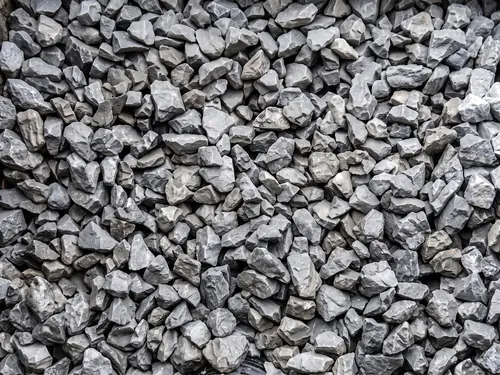
Drainage Trench Calculator
Quickly estimate cubic yards, tons, and material cost for your Drain Rock project. Adjust the inputs below and the result updates in real time.
Calculate Your Project
Estimate only. Add 10-15% for compaction and waste.

How this calculator works
Cubic yards = (area × depth ÷ 12) ÷ 27
Tons = cubic yards × density × 27 ÷ 2000
Estimate cubic yards of drain rock for a French drain, foundation perimeter, or yard drainage trench.
Enter your area and depth, and we'll compute cubic yards, tons, and a delivered material cost using current 2026 quarry pricing.
What the drainage trench calculator computes
A drainage trench moves surface or subsurface water away from a problem area, usually around a foundation, under a driveway, or across a wet yard. The calculator takes trench length, width, and depth and returns cubic yards and tons of drainage aggregate. A typical residential drainage trench is 12 inches wide, 18 inches deep, and 30 to 60 feet long. For a 50 foot trench at those dimensions, expect about 2.8 tons of aggregate.
The math assumes you are filling the trench up to within 4 inches of finished grade with drainage stone. The top 4 inches gets backfilled with topsoil cap and leaving the stone exposed at grade is a valid choice for utility trenches in side yards but reads as unfinished in front-yard applications.
Stone selection and the no-fines rule
Drainage trenches need washed stone with no fines. Fines (stone dust and silt-sized particles) clog the void space between stones, and the trench stops draining within 2 to 4 years. The three workhorse drainage products are 3/4" Crushed Stone (washed), #4 Crushed Stone, and Drain Rock. All three are available in washed form at any aggregate yard; specify "washed" when you order.
3/4" Crushed Stone is the most common pick because it fits in narrow trenches (12 inch trench width or less) and holds void space well under soil load. #4 Crushed Stone (1.5 to 2.5 inch) is the heavy-duty choice for high-volume drainage situations, like behind retaining walls or under driveways where water volume is high. Drain Rock at 1 to 2 inches is the contractor favorite for around perforated pipe in French drain applications.
Crusher Run, Road Base, and any unwashed stone are wrong for drainage. They look similar but have fines that defeat the void-space requirement. The price difference is small ($4 to $8 per ton) and skipping the washed grade trades 30 years of life for 2 to 3 years.
Trench sizing for common drainage problems
The right trench size depends on what is being drained. A foundation-perimeter drainage trench protecting a basement is typically 18 inches wide, 24 inches deep, and runs the full perimeter of the wet wall. A French drain across a wet lawn area is 12 inches wide, 18 inches deep, and as long as needed to reach a low spot or daylight outlet. A swale-and-drain combination for surface stormwater is wider and shallower (24 inch trench, 12 inch depth).
The trench needs slope: 1 percent minimum (1 inch of fall per 8 feet of run), 2 percent is better. Mark the start and end elevations with stakes and a string line, then dig to maintain that slope along the entire length. Flat trenches do not drain; backsloping trenches drain the wrong direction. A 4 foot bubble level on a 2x4 spanning across the trench bottom every 6 feet verifies the grade.
Pipe, fabric, and the full assembly
The full drainage trench assembly is: dig trench, line trench with 4 to 6 ounce filter fabric (fabric overlaps the top edges by 12 inches on both sides so it can be folded over at the end), lay 2 inches of drainage stone in the bottom, place a 4 inch perforated pipe with holes facing down, fill stone up to within 4 inches of grade, fold the fabric over the top of the stone column, cap with topsoil or mulch.
The pipe must slope with the trench. Verify pipe slope independently of trench slope by laying the pipe and checking with the level. The pipe outlet (daylight or storm system) needs a positive slope all the way to the end; backed-up pipe stores water rather than draining it.
Filter fabric is the critical detail that homeowners often skip. Without fabric, soil migrates into the stone column over time and clogs the voids. With fabric, the assembly stays clean for 25 years or more. A 100 foot roll of woven landscape fabric costs $40 to $80 and is enough for several residential drainage projects.
Pricing and common drainage mistakes
Washed 3/4" Crushed Stone runs $49 to $214 per ton delivered. Drain Rock is similar. For a typical 50 foot residential drainage trench, expect about 3 tons of stone, totaling roughly $140 to $200. Add $50 to $100 for filter fabric, perforated pipe, and connectors. The full materials cost for a substantial drainage project rarely exceeds $300 in a residential setting.
The most common drainage mistake is using unwashed stone (often Crusher Run, because it is cheaper and looks similar). The trench drains for the first year, then progressively slower as fines wash into the void space. By year 3 the trench holds water rather than draining it.
The second-most-common mistake is skipping the filter fabric. Same outcome as the fines mistake but slower; soil migrates from the trench walls into the stone over 5 to 8 years and eventually clogs the system.
The third mistake is wrong-direction slope. The trench bottom needs continuous fall toward the outlet. Even a small back-slope in the middle of the run creates a low spot that fills with water and stagnates, defeating the entire drainage purpose.
Outlet design and dry well alternatives
Every drainage trench needs somewhere to send the water it collects. The two outlet styles cover nearly every residential case. Daylight outlets discharge water at a lower point on the property where the soil naturally drains: a creek, a roadside ditch, a low spot in the back yard 50 feet from the structure. Daylight outlets need clear visual identification (a stone-faced rock or short pipe stub) so the path stays clear over years.
Dry wells are the alternative when no daylight discharge is feasible. A dry well is a 3 to 6 foot deep gravel-filled pit at the end of the trench that holds the collected water until it percolates into surrounding soil. Sizing depends on the trench input volume and soil percolation rate; sandy soils need smaller dry wells than clay soils. A typical residential dry well is 4 feet wide by 5 feet deep, filled with Drain Rock and wrapped in filter fabric. Volume around 75 cubic feet handles a typical 100 foot trench in moderate soil.
Pipe outlet covers (animal guards, screens) prevent rodents and snakes from entering the pipe and using it as a nest or den. Stainless steel mesh covers $5 to $15 each and are mandatory in most rural areas. Skipping the cover invites a nest that clogs the pipe within months; ask anyone who has shop-vacuumed a chipmunk out of a 4 inch pipe how easy that conversation is.
Materials this calculator covers
From $44.41/ton- Size1 - 2″
- Density2700 lb/yd³
- ColorGray
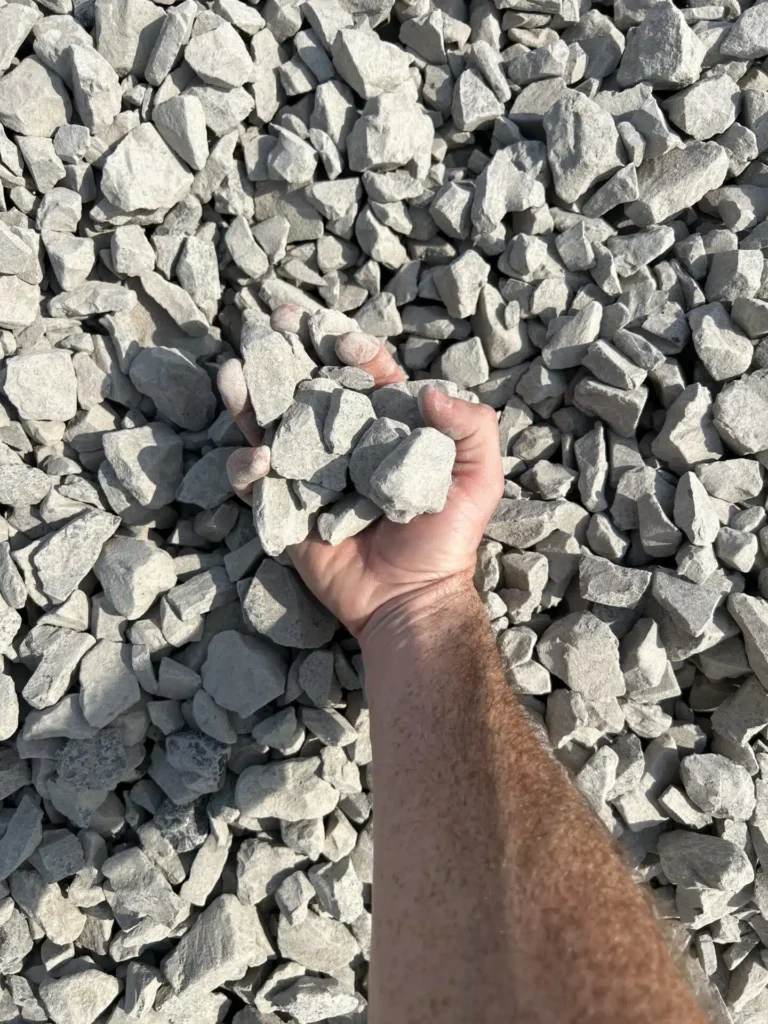 From $56.90/ton
- Size1.5 - 2.5″
- Density2800 lb/yd³
- ColorGray
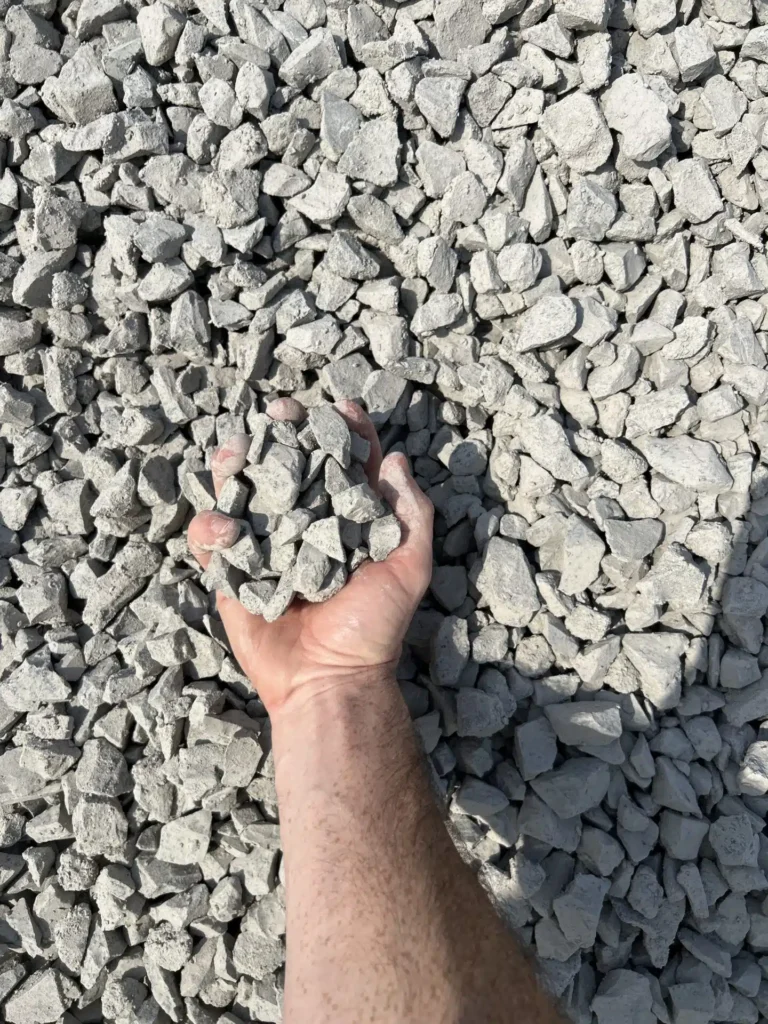 From $48.68/ton
- Size3/4 - 1″
- Density2700 lb/yd³
- ColorGray
Other calculators
CALCULATORFrench Drain CalculatorHow much drain rock does a French drain need? Enter length, width, and depth - get tons and material cost.Open calculator →CALCULATORSeptic Field Aggregate CalculatorEstimate drain rock for a septic leach field. Includes lateral spacing math.Open calculator →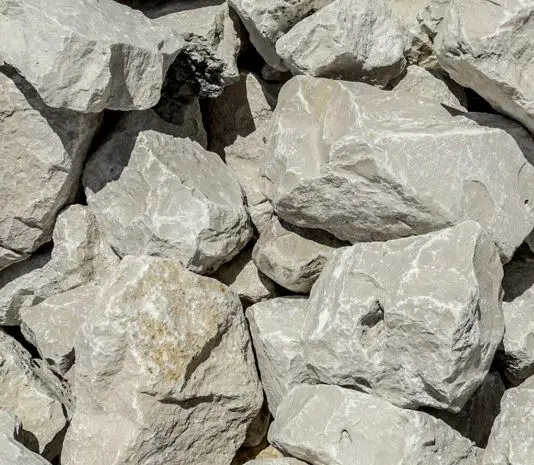 CALCULATORRip Rap CalculatorEnter length, width and depth in our rip rap calculator to see how many tons of Riprap Med your slope or bank protection project needs.Open calculator →
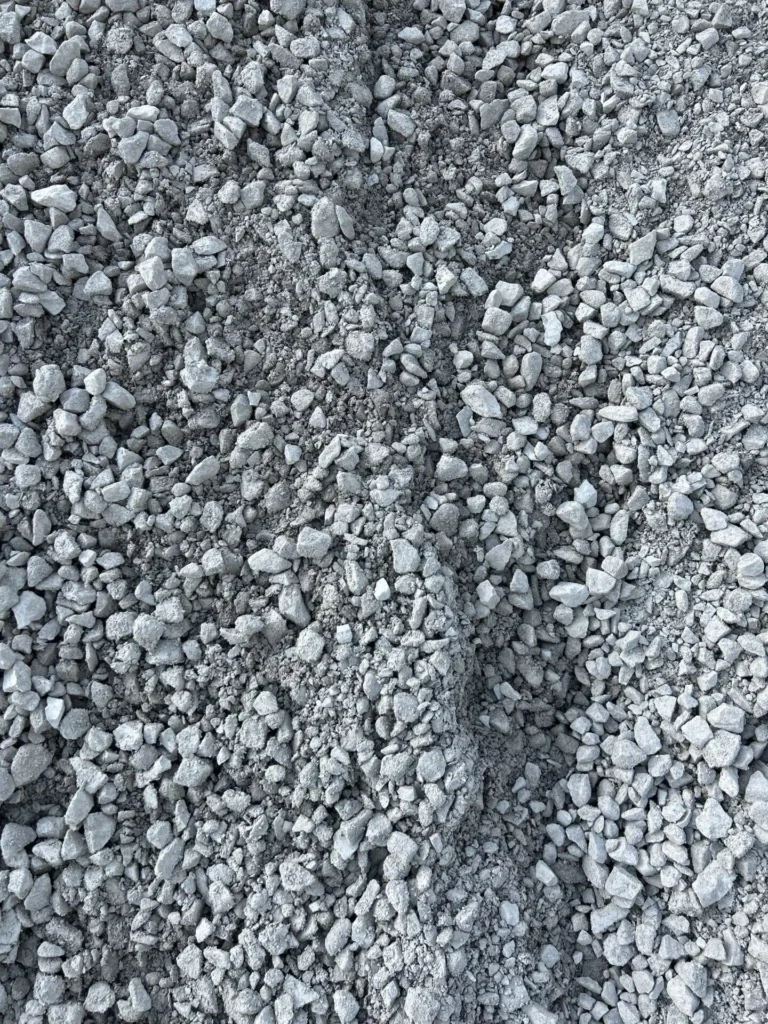 CALCULATORParking Lot Gravel CalculatorCommercial parking lot aggregate planner. Defaults to 6" depth of crusher run.Open calculator →
Related guides
 GUIDEHow Deep Should a Gravel Driveway Be? Layer GuidePractical, field-tested guide: how deep should gravel driveway be. Pulled from real US installer notes and 2026 supplier price data.Read guide →
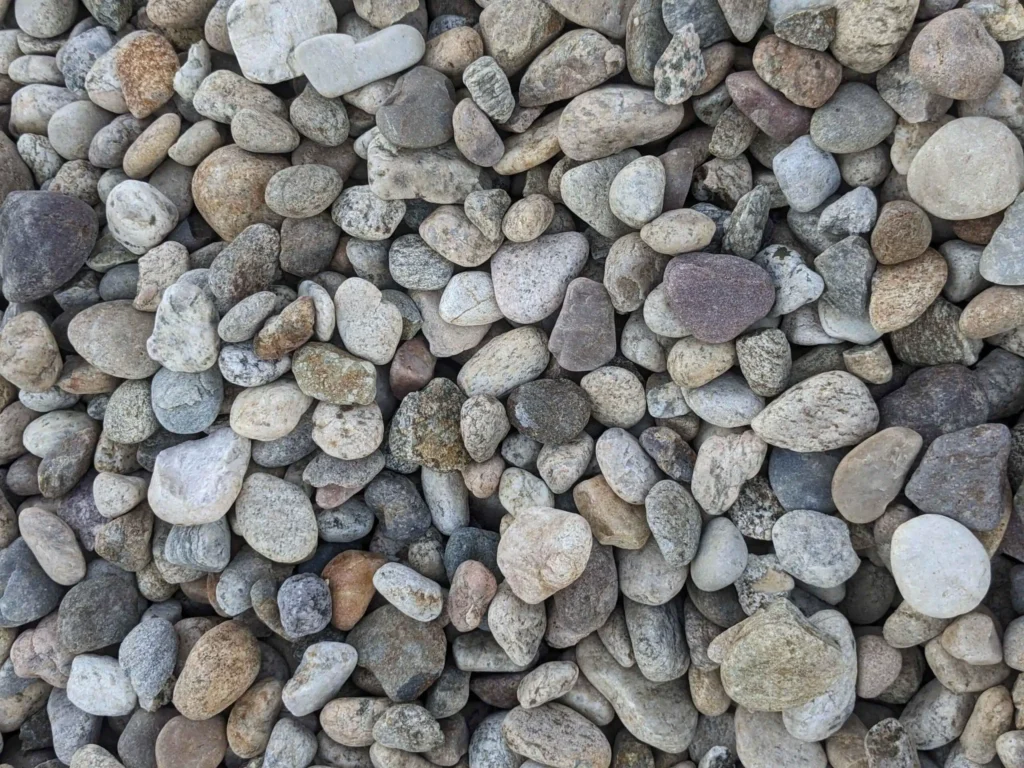 GUIDEHow Much Does River Rock Cost? By Ton or YardRiver rock cost depends on your ZIP code, order size, and whether you buy by the ton or the cubic yard. Here is how pricing works.Read guide →GUIDEWhat Size Crushed Stone Goes Under a Concrete SlabMost slabs need 4 to 6 inches of compacted crushed stone underneath. What size crushed stone under a concrete slab needs, and why it matters.Read guide →GUIDEWhat Is Crushed Stone? Sizes, Uses and Buying BasicsCrushed stone is quarried rock crushed and screened into angular pieces sold by the ton. Here is what it is, how it is graded, and where to use it.Read guide →
Frequently Asked Questions
How does this calculator work?
Enter area in sq ft and depth in inches. We convert to cubic yards, multiply by density to get tons, and divide by 2,000.
What if I don't know the depth?
Most projects use 4 inches. Drainage applications go deeper (6-12 in).
Why is the estimate different from my supplier quote?
Within 10% is normal - supplier quotes include delivery + minimum-load surcharges that depend on your distance from the quarry.
Should I round up?
Yes - round up to the nearest half-ton. The price-per-ton usually drops on larger orders.
Does this include delivery cost?
No - the result is material cost only. Get a delivered quote with your ZIP for the full price.
Can I use this for another material?
Density varies by material. This calculator is tuned for drain-rock; switch to the matching calculator for accurate results.