
River Rock Driveway Guide: Design, Depth and Cost
Everything you need to plan a river rock driveway: ideal depth, base prep, install steps, upkeep and how much stone to order by the ton.
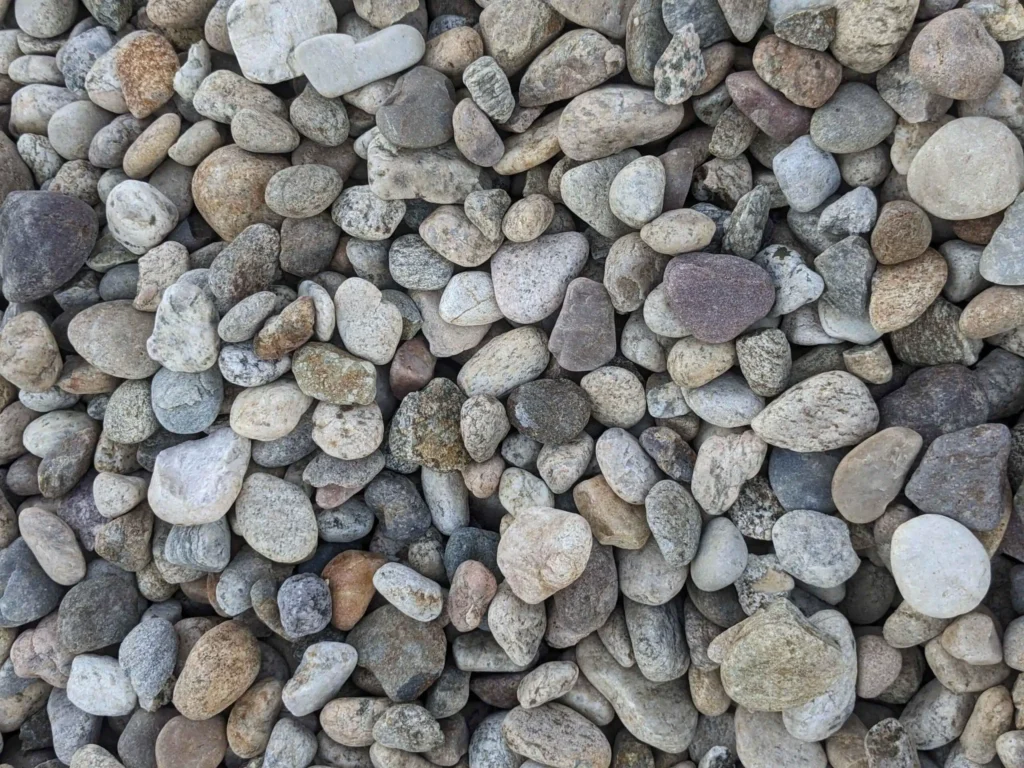
A river rock driveway swaps sharp crushed stone for smooth, rounded stones in a mix of natural earth tones. The rounded shape is comfortable to walk and drive on, and the blended coloring hides tire tracks and everyday dirt better than a single tone gravel. Homeowners choose a river rock driveway for a natural, low maintenance surface with good drainage, especially on rural lots, cabin access roads, and properties where a poured surface would look out of place.
The stones stay loose enough to shift slightly underfoot, which some homeowners like and others do not. River rock compacts less firmly than angular crushed stone, so it works best as a top layer over a compacted base rather than as the full driveway depth on its own. This guide covers how to size, install and maintain a river rock driveway, plus what determines how much material an order needs.
Why River Rock Suits a Driveway
River Rock is smooth, water worn stone in a mixed natural color range, generally 1 to 3 inches across. That rounded shape means it will not develop the sharp edges that crushed stone can, so it is gentler on bare feet, paws and tires, and it will not bite into tires the way angular rock sometimes does. The mixed coloring also blends with landscaping better than a flat gray, which is why river rock shows up as often in decorative driveway borders and parking pads as it does across full driveway surfaces.
Straight driveway gravel made from crushed, angular stone packs down tighter and holds its shape under repeated tire traffic better than river rock does on its own. A river rock driveway trades some of that firmness for a distinct rounded look and a softer feel underfoot, which is why it tends to work best on lower traffic driveways, secondary parking areas, and long approach drives where appearance matters as much as durability.
Choosing a Look: Size, Color and Layout for a River Rock Driveway
River rock for this use runs about 1 to 3 inches, and stone in that range strikes a balance between staying in place and remaining comfortable to drive on. Smaller stones toward the bottom of that range settle into a tighter, more walkable surface. Larger stones toward the top of the range resist scattering better but shift more noticeably underfoot and can feel rougher at low driving speeds.
The color runs in a mixed natural blend rather than a single uniform tone, so a finished driveway reads as a soft mix of tans, grays and browns rather than one flat color. That blend is useful for a driveway because it hides road dust, dropped leaves and tire marks between cleanings. Many driveways use a single consistent depth of river rock across the full width, while others reserve it for borders or parking pads and keep a firmer surface, such as driveway gravel, for the main travel lanes.
Depth, Base and How Much River Rock a Driveway Needs
A river rock driveway needs a compacted aggregate base beneath the decorative layer. The base carries the weight of vehicles and keeps the river rock from being pushed down into the soil. A common approach is a compacted base layer topped with 2 to 3 inches of river rock, deep enough to look full and cover the base without so much depth that stones squirm under tires.
To find volume, use the depth formula: cubic yards equal length in feet times width in feet times depth in inches, divided by 324. A driveway 50 feet long and 10 feet wide at a 3 inch depth works out to 50 x 10 x 3 divided by 324, or about 4.6 cubic yards. Since river rock weighs about 2700 pounds per cubic yard and is sold by the ton, that volume converts to roughly 6.3 tons, or 4.6 cubic yards times 2700 pounds divided by 2000 pounds per ton. Curves, turnarounds and irregular widths change the math, so run the actual dimensions through the calculator before ordering.
Installing a River Rock Driveway Step by Step
- Mark the driveway layout and excavate to a depth that allows for both the base layer and the river rock layer.
- Grade the subgrade so water drains away from the house and any low spots are corrected.
- Install a compacted aggregate base and run a plate compactor over it in several passes.
- Set edging along both sides, such as steel, paver or timber edging, to keep stones from migrating onto the lawn.
- Spread the river rock in an even layer at the planned depth, working from one end to the other.
- Rake the surface level and lightly compact it so the stones settle without burying the base layer.
Maintenance and Mistakes to Avoid
The most common mistake is skipping the compacted base and laying river rock straight over bare soil or old gravel. Without a base, the rock sinks, ruts form under tires, and the driveway needs regrading sooner than it should. Skipping edging is the second common mistake: without a physical barrier, stones spread onto the lawn with mowing and get kicked into flower beds by tires and foot traffic.
Ongoing maintenance is light. Rake high traffic areas and the entrance periodically to redistribute stones that vehicles push toward the edges, and add a fresh layer where the base has become visible. Because the stones are rounded rather than angular, a river rock driveway will not lock together as tightly as crushed driveway gravel, so plan on more frequent raking in wheel paths than a crushed stone surface needs.
Cost and Ordering River Rock for Your Driveway
River rock is sold and delivered by the ton, with pricing set by ZIP code. Order quantity should account for the full driveway area, including any parking pads or turnarounds, plus a small buffer for future top offs, since a river rock driveway loses some depth to displacement over time. Larger driveways and long approach drives need a proportionally larger order, and the base layer and the river rock layer should be ordered separately since they are different materials.
River Rock for this project
Related project guides
Browse more
Related guides
GUIDEWhat to Put Under River Rock for Landscaping BedsHere is what to put under river rock landscaping: a compacted base where needed, then landscape fabric, then rock, to stop weeds and settling.Read guide →GUIDEHow to Clean River Rock and Restore Its ColorLearn how to clean river rock landscaping with rinsing, soap and vinegar methods, plus common mistakes to avoid for a brighter, longer lasting rock bed.Read guide → GUIDEGravel Size Chart: Pea Gravel to Crushed StoneA gravel size chart showing pea gravel, crushed stone and river rock diameters side by side, so you can match the right size to your project.Read guide →GUIDEThe Different Types of Gravel and How to ChooseA plain-language guide to the main types of gravel, covering pea gravel, crushed stone, river rock and decomposed granite.Read guide →
Frequently Asked Questions
How thick should the river rock layer be on a driveway?
Plan on 2 to 3 inches of river rock over a compacted aggregate base. That depth is enough to fully cover the base and give the loose stone a finished look without so much depth that tires sink in and push stones out of place. Thinner layers expose the base quickly in high traffic wheel paths and need topping off sooner.
Can river rock be the only material used for a driveway?
No. River rock layer sits on top of the base as the finished, decorative surface that vehicles actually drive on.
What size river rock works best on a driveway?
River rock for driveways generally runs 1 to 3 inches. Stone toward the smaller end of that range packs into a tighter, more walkable surface, while stone toward the top of the range stays in place better but shifts more noticeably underfoot and feels rougher at low driving speeds.
How do I stop river rock from spreading onto the lawn?
Install edging along both sides of the driveway before spreading the stone, using steel, paver or timber edging set slightly above grade. The physical barrier keeps river rock from migrating during mowing, snow removal and everyday tire traffic, which is the main way loose stone ends up scattered across a lawn.
Is a river rock driveway suitable for daily vehicle traffic?
Yes, with a proper compacted base and adequate depth. River rock driveways work well for daily use on lower speed, lower traffic drives such as home approaches and secondary parking areas. Expect more frequent raking in wheel paths than a crushed stone driveway needs, since the rounded stones do not interlock as tightly.
How is a river rock driveway different from crushed driveway gravel?
River rock is rounded and smooth, while driveway gravel trades some of that firmness for a softer look and feel, which is why it often works best on lower traffic drives or as a decorative border.
How often does a river rock driveway need to be topped off?
There is no fixed schedule. Check the driveway periodically, especially the entrance and any turning areas where tires push stone toward the edges, and add fresh river rock wherever the base layer starts to show through. Driveways with heavier daily traffic will need topping off more often than lightly used ones.
What color is river rock?
River rock driveway hide dust, dropped leaves and tire marks between cleanings, and it tends to match natural landscaping better than a single uniform gray stone.