Concrete Sand Delivery in Vancouver
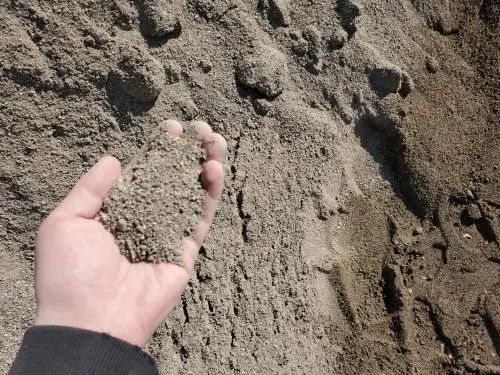
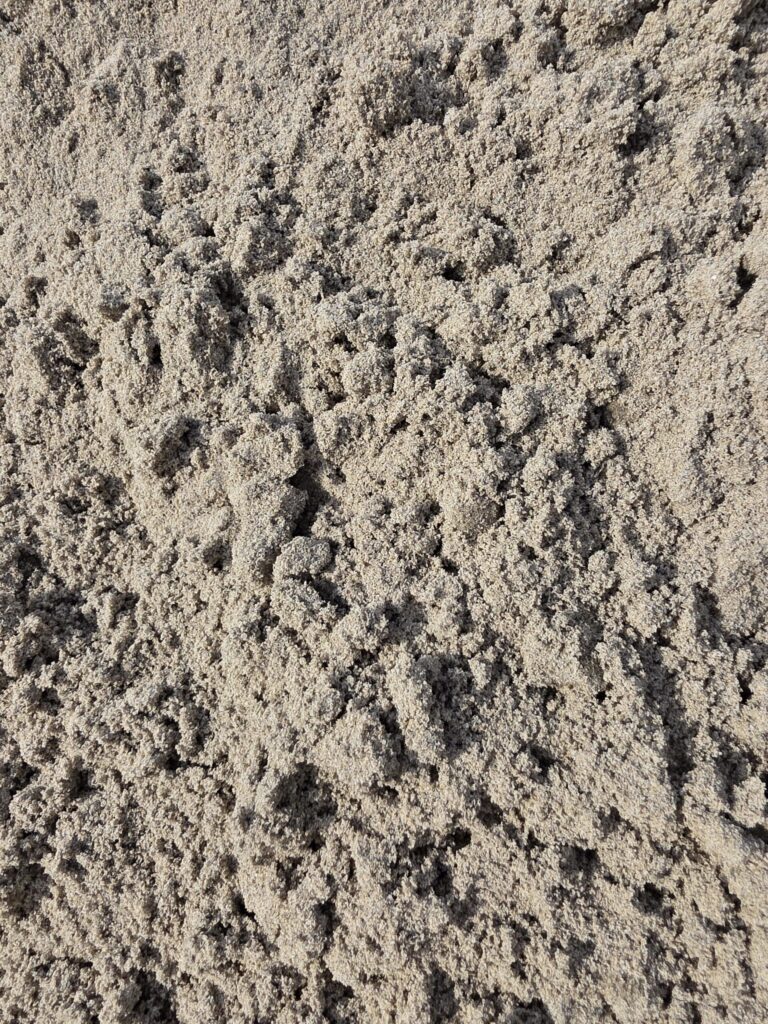
Bulk concrete sand delivered in Vancouver, WA. Stone size 0 - 3/8. Tan / gray color.
The Portland-Vancouver metro area sits on the Willamette Valley's dense clay and volcanic soils, which creates distinct challenges for outdoor construction. Concrete sand at 0-3/8 inch is the material that solves those challenges for builders, landscapers, and homeowners throughout Vancouver and surrounding Clark County. The tan and gray aggregate provides superior drainage and compaction compared to local soils alone, making it essential for any project requiring a stable base. Rainy Pacific Northwest winters mean water management is critical, and concrete sand excels at both draining and holding level surfaces year after year. Whether you're working on a residential renovation or a commercial project, this is the material professionals specify.
Applications in the Portland-Vancouver Region
Vancouver's wet climate and challenging native soils make concrete sand a foundational material for residential and commercial work. Use it under decorative pavers to prevent frost heave and settling during freeze-thaw cycles. Place it beneath concrete slabs as a base layer that prevents water migration and maintains a stable foundation. Landscaping contractors rely on it for leveling patios, building driveway bases, and creating stable ground for deck posts. The material's mineral content and grain size ensure it stays compacted even when saturated, a property that matters deeply in a region that receives abundant annual rainfall. It's also the correct choice when setting stone around pools or creating smooth finishes for any concrete work. Because the material resists settling, your finished surfaces remain level and safe for years.
Estimating Your Tonnage
Determine how much concrete sand you need by multiplying length in feet by width in feet by depth in inches, then dividing by 324 to convert to cubic yards. Concrete sand weighs 2,700 pounds per cubic yard, so convert cubic yards to tons for your order. A 20 by 12 foot patio base at 2 inches deep needs about 1.5 tons. A driveway 40 feet long, 10 feet wide, and 3 inches deep requires roughly 4.5 tons. Use the calculator to skip the math and get an exact tonnage. Knowing your precise tonnage in advance makes ordering quick and ensures no delivery surprises. Most contractors overestimate slightly to avoid shortage, and any leftover material can be used for future repairs or landscaping adjustments.
Concrete Sand Delivery Timeline in Vancouver
We deliver to Vancouver and the surrounding Portland metro area by the ton. Small orders of 3 to 7 tons typically arrive within 1-2 business days, allowing for projects with a week or two of lead time. Orders of 8 tons or more qualify for same-day or next-day delivery, which is useful when schedules tighten or unexpected work appears. At 15 tons you get free delivery in Vancouver plus our lowest per-ton bulk pricing. Larger orders make economic sense, spreading your delivery trip across more material and reducing your overall cost per ton substantially. The bulk tier also means faster turnaround, since larger orders often move to priority scheduling.
Pricing Structure
Concrete sand is sold by the ton, never per cubic yard. Your delivered price includes both material and the delivery fee for your address. Small orders have a higher per-ton cost because the fixed delivery expense is spread across fewer tons. Medium and large orders drive that per-ton cost down as the delivery fee is shared across more material. We'll quote your exact landed price once you supply your ZIP code and tonnage, so you always know the total before committing to the order. Price transparency means no surprises on delivery day.
How to Order
Provide your address, ZIP code, and tonnage estimate and we'll quote you a firm price and schedule. Delivery windows can usually be arranged within a few days. Our drivers are experienced navigating Vancouver's neighborhoods and will position the truck to deliver material as close to your work area as safely possible. We can discuss unloading placement ahead of time to avoid landscaping damage or obstacles. The whole process is straightforward and built around your project timeline.
Other Aggregates in the Area
For broader information, visit our Concrete Sand in Washington page. In Vancouver, we also carry Pea Gravel, Premium Screened Topsoil, River Rock, and #57 Crushed Stone. All materials are available with the same fast, local delivery and clear pricing. You can order multiple materials in a single trip if your project needs different aggregates for different tasks or layers. Combining orders reduces your total delivery fee and simplifies project logistics.
About Concrete Sand
Concrete sand is a precisely graded aggregate with particle sizes from 0 to 3/8 inch, featuring a tan and gray coloring that complements any outdoor setting. The material compacts reliably under moderate pressure, making it the preferred base layer under concrete slabs, pavers, and stone finishes across the construction industry. Unlike utility sand or beach sand, concrete sand is specifically graded to minimize dust and maintain consistent particle size, both essential for concrete bonding strength and structural performance. The mineral composition naturally resists weathering and water infiltration, making it ideal for regions with high rainfall and seasonal moisture. Its predictable compaction and stable behavior under load make it the top choice for any outdoor project where a long-term, reliable foundation is required. When combined with proper drainage and maintenance, concrete sand provides decades of service without settling or shifting.
What Concrete Sand costs in Vancouver
In the Vancouver market, concrete sand is sold by the ton and priced at the gate before delivery is added on. Send your ZIP and load size and we will send back a same-hour quote with the truck rate and the per-ton figure spelled out. One ton covers about 80 sq ft at a 3 inch finished depth, so a 400 sq ft driveway pad runs roughly 5 tons.
How crews use Concrete Sand in Vancouver
Crews working out of Vancouver tend to call for concrete sand on a few repeat jobs each week. The first is pipe bedding, typically laid on rural drives and acreage projects with a base lift compacted before the finish course goes on. The second is base course gravel, which lands here across longer driveways and outbuilding work and usually ships as a 4 to 8 ton order. Order size in Vancouver averages 4 to 8 tons for homeowner jobs and climbs into full-truck loads for contractor work.
Delivery day in Vancouver
On the day of the drop, the dispatcher pulls the closest yard, batches your ticket with other Vancouver stops, and sends a window the night before. Tandem-axle dumps need at least 12 ft of clear width and 14 ft overhead to set the bed; tri-axles need 14 ft of clearance on both counts and a level pad to tip safely. Standard lead time on this lane is 24-48h, with same-day windows held open for orders that hit the desk before 11 AM and clear payment.
Related materials we deliver in Vancouver

Estimate how much you need
Calculate Your Project
Estimate only. Add 10-15% for compaction and waste.
Browse more
Available in nearby cities
Plan your project
Related guides
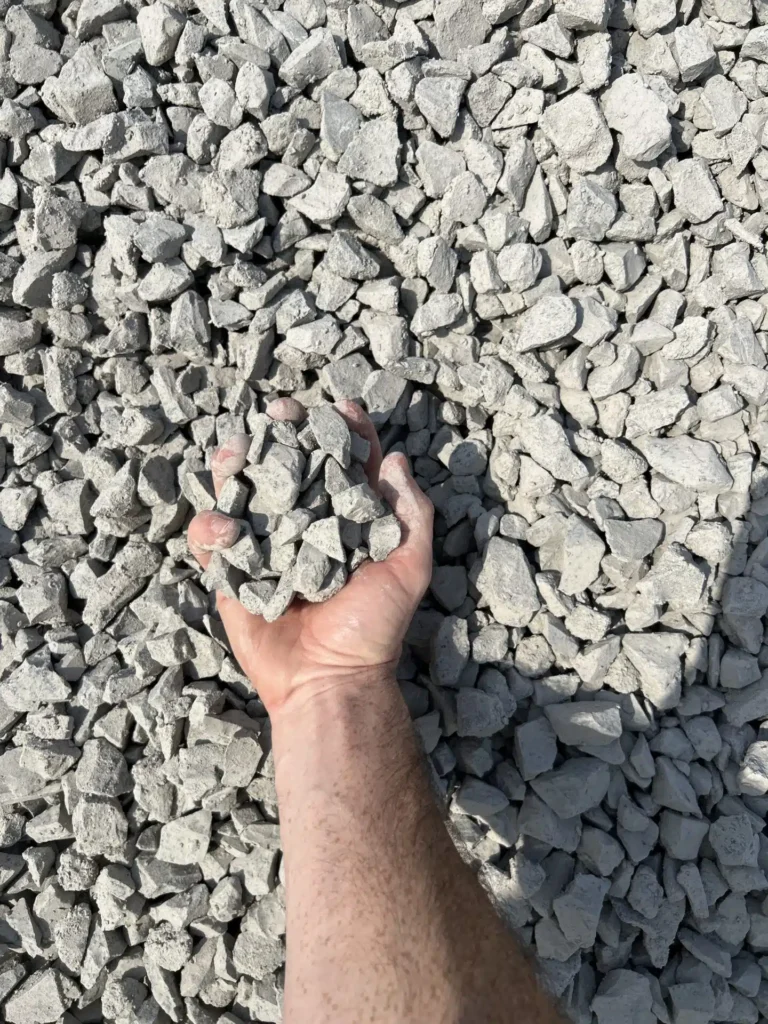 GUIDEWhat Size Crushed Stone Goes Under a Concrete SlabMost slabs need 4 to 6 inches of compacted crushed stone underneath. What size crushed stone under a concrete slab needs, and why it matters.Read guide →GUIDEWhat Is Crushed Stone? Sizes, Uses and Buying BasicsCrushed stone is quarried rock crushed and screened into angular pieces sold by the ton. Here is what it is, how it is graded, and where to use it.Read guide →
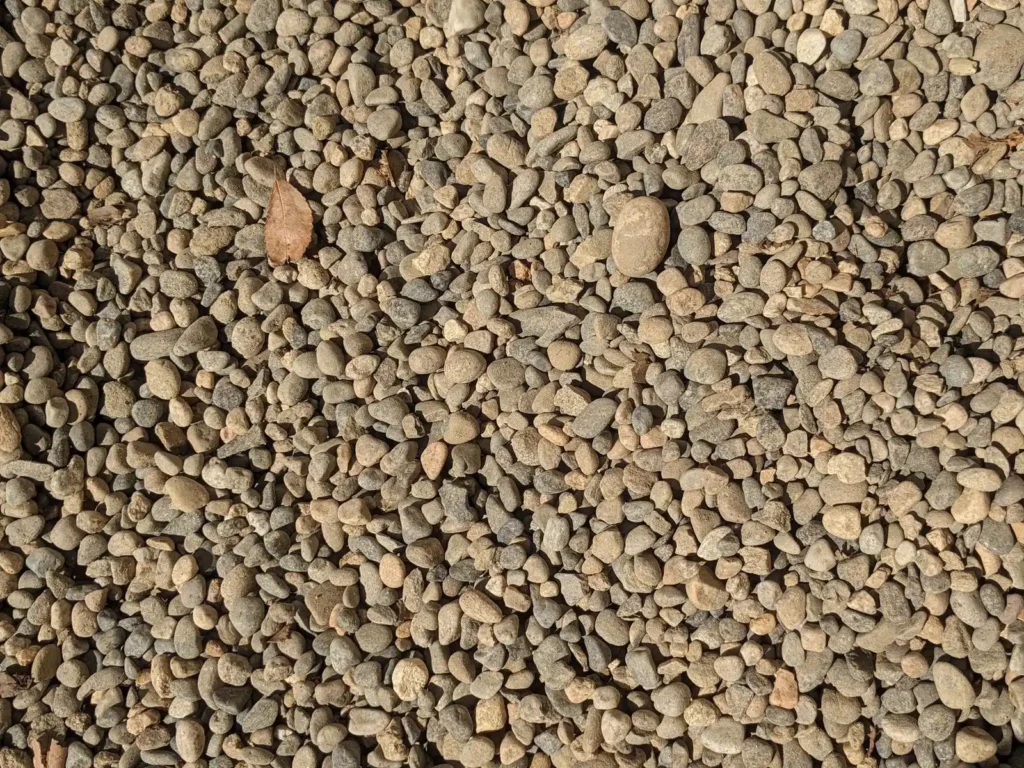 GUIDEHow Much Does Gravel Cost? A Practical Pricing GuideHow much does gravel cost and why does it vary? See the real factors behind ton pricing, delivery, and order size before you buy.Read guide →GUIDEGravel Size Chart: Pea Gravel to Crushed StoneA gravel size chart showing pea gravel, crushed stone and river rock diameters side by side, so you can match the right size to your project.Read guide →
Frequently Asked Questions
Why is concrete sand better than the native soil?
Vancouver's native soils are clay-heavy and dense, which means poor drainage and frost heave risk. Concrete sand at 0-3/8 inch particle size drains quickly, compacts uniformly, and resists the settling and shifting caused by freeze-thaw cycles. It's the standard base material for patios, driveways, and any work requiring a stable foundation.
Will concrete sand hold up to wet winters?
Yes. Concrete sand's mineral composition and grain size allow water to drain through while the compacted material stays level and stable. It's used extensively in rainy climates for exactly this reason. When properly compacted, it maintains its integrity season after season.
What is the smallest order you accept?
The minimum order for Vancouver is 3 tons. This covers most small residential projects. If you need less material or are unsure of your exact amount, contact us to discuss your specific job requirements.
How quickly can you deliver?
Small orders from 3 to 7 tons arrive within 1-2 business days. Orders of 8 tons or more can be delivered the same day or next day. Bulk orders of 15+ tons in Vancouver qualify for free delivery. We work around your schedule when possible.
Do you serve areas near Portland?
Yes. We deliver throughout Vancouver, Clark County, and the surrounding Portland metro area. The Portland-Vancouver metro is within our service zone, so if you're in the broader region, we can almost certainly reach you.
How do you handle drainage on wet sites?
Concrete sand is naturally free-draining. When compacted properly, it allows water to pass through while remaining stable. If your site has standing water issues, we can discuss adding a drainage layer or alternative materials during your estimate.
Can concrete sand be used in winter?
Yes. We deliver year-round. Concrete sand compacts just as well in cold weather as in warm, though saturated ground or snow may require special access planning. Contact us to discuss winter delivery for your specific location.
What equipment spreads and compacts the sand?
For small quantities, hand tools and a wheelbarrow work fine. For larger orders, most contractors use a skid loader, plate compactor, or small excavator to spread and compact efficiently. Professional landscapers and construction crews typically use mechanical equipment for orders over 3 tons.