
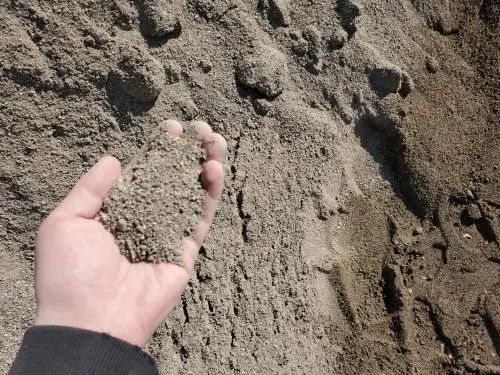
Concrete Sand Delivery in Sacramento, CA
Bulk concrete sand delivered in Sacramento, CA. Stone size 0 - 3/8. Tan / gray color.
From $110/ton delivered, free delivery on full loads
At the confluence of the Sacramento and American rivers, where the Central Valley meets the Delta, the ground tells you a lot about why builders here are picky about sand. Sacramento contractors specify concrete sand by the ton: a washed, screened fine aggregate graded from 0 to 3/8 inch in a tan and gray tone. The capital region's mix of river silt, Delta peat, and expansive clay does not drain or compact like good sand does, so a clean, coarse fine aggregate under a slab or behind a wall is what keeps a build stable through a wet Northern California winter and a long dry summer.
Why Sacramento Builders Specify Concrete Sand
The Sacramento-Roseville-Folsom metro spreads across a low river valley with high groundwater in places, expansive soils in others, and a steady boom of new housing on its edges. Concrete and hardscape demand never really slows here, and the sand in the mix has to perform. Concrete sand covers four core jobs that local crews rely on.
- Concrete mixing. As the fine aggregate, it fills the voids between coarse rock and gives driveways, patios, foundations, and the endless infill and ADU slabs their workability and strength. The region's expansive clay punishes a weak mix, so a well-graded sand earns its place.
- Paver bedding. A screeded inch of concrete sand sets the bed for patios, pool decks, and walkways from Midtown out to Folsom and Roseville. Over a compacted Paver Base, it drains the winter rains and rides out the soil movement that comes with the wet and dry seasons.
- Pipe bedding. Utility and storm-drain crews cradle pipe in concrete sand because it compacts evenly in soft, high-water-table ground and supports the line without point-loading it as the trench settles.
- Masonry work. Stucco and block walls fill the region's subdivisions. Concrete sand backs scratch coats, stucco brown coats, and structural wall fill, while finer Mason Sand handles the finish mortar joints and cheaper Fill Sand covers non-structural backfill.
Because the sand is washed, the silt and organic fines from the river bottoms are gone. Clean sand means a stronger mix, less shrinkage cracking, and a bedding layer that sheds water instead of holding it against your slab during the long gray rains. It also keeps pumps and finishing tools clean, which matters on the high-volume tract and ADU work that defines this market.
There is a consistency advantage that high-volume Sacramento builders value. With a uniform washed product you are not gambling on whatever a small local source screened that week, so you can repeat a proven mix design across an entire subdivision phase. On the region's expansive clay and soft river-valley ground, that predictable, free-draining base is often the deciding factor in whether a slab or patio stays flat through its first wet winters.
Local Delivery and Lead Times
We deliver concrete sand throughout Sacramento and across the Roseville and Folsom corridor, from downtown and Midtown out to Elk Grove, Citrus Heights, and the new builds along Highway 50. A single ton on a residential order arrives in 1 to 2 business days. Move up to six tons or more and we generally deliver same or next day, which keeps flatwork and framing crews running. Loads of sixteen tons and up ride a full dedicated truck and turn around quickly.
Our reach extends well past the capital region. Crews working down toward Stockton, about 45 miles south, or over toward Oakland around 68 miles and San Francisco near 75 miles, can pull consistent washed sand from us. We also support jobs reaching toward San Jose, roughly 89 miles, and as far as Fresno about 158 miles down the valley, when a uniform spec sand beats whatever the nearest local source offers. Tell us your access when you book, because Delta levee roads and tight Midtown lots call for different trucks.
How Much Concrete Sand You Need
Concrete sand is sold by the ton and weighs about 2,700 pounds per cubic yard, so a ton covers a little under three-quarters of a yard. Here is the math most Sacramento crews use for a paver setting bed.
Take a 24-foot by 20-foot patio, 480 square feet, with a 1-inch bedding layer. That is roughly 1.48 cubic yards, or about 2 tons after compaction, so order 2 to 2.5 tons to keep from running short mid-job. For a concrete pour, the sand is typically 40 to 45 percent of the dry mix volume. With summer heat pushing set times, round up rather than stall a pour to chase a half load across the metro.
- Patio, pool deck, or walkway bedding: 1 to 2 tons
- Driveway slab base and mix sand: 6 to 10 tons
- Foundation backfill or large pour: 16 tons and up
Local Pricing Context
Concrete sand in the Sacramento market starts from $110 per ton, with the per-ton rate dropping as the load grows. A single ton is $149 with a $286 delivery fee on a 1 to 2 business day window, which works for a small repair or a backyard project. At six tons or more the price falls to $134 per ton with a reduced $154 delivery fee and same or next day service. Order sixteen tons or more and you lock in the best $110 per ton rate with free delivery, which is why most full driveway, slab, and foundation jobs are scoped to that bulk tier. Pooling several jobs worth of sand into one bulk drop is the simplest way to cut your cost per ton across the capital region.
Placement and Installation Tips
For pavers, screed concrete sand to a uniform inch over compacted Paver Base, set the units, then sweep sand into the joints to lock them. Keep the bed thin and even so it does not rut under load. For concrete in Sacramento's dry summer heat, dampen the subgrade, work the cooler morning hours, and add water last so the mix does not flash off before you finish. When bedding pipe in soft, high-water-table ground, place the sand in lifts and compact each one so the trench holds. During the rainy season, let saturated sand drain on a tarp before batching so your mix water stays predictable and your slab is not weakened by a wet stockpile.
Seasonal Notes for California
Sacramento runs a Mediterranean climate with a long, dry, hot summer and a wet, mild winter, which gives you a generous build season. The prime stretch for big pours and hardscape is roughly May through October, when the ground is dry and stable, with the caveat that triple-digit afternoons push crews to early-morning concrete work. The rainy season, November into March, brings the steady storms and high groundwater that can flood trenches, soak fresh pours, and saturate bedding sand. Schedule flatwork around the storm windows, tarp your stockpiles, and keep an eye on the water table when you trench near the rivers and the Delta. Spring and fall are the easiest stretches. Plan around the summer heat and the winter rains and Sacramento jobs can run most of the calendar.
About Concrete Sand
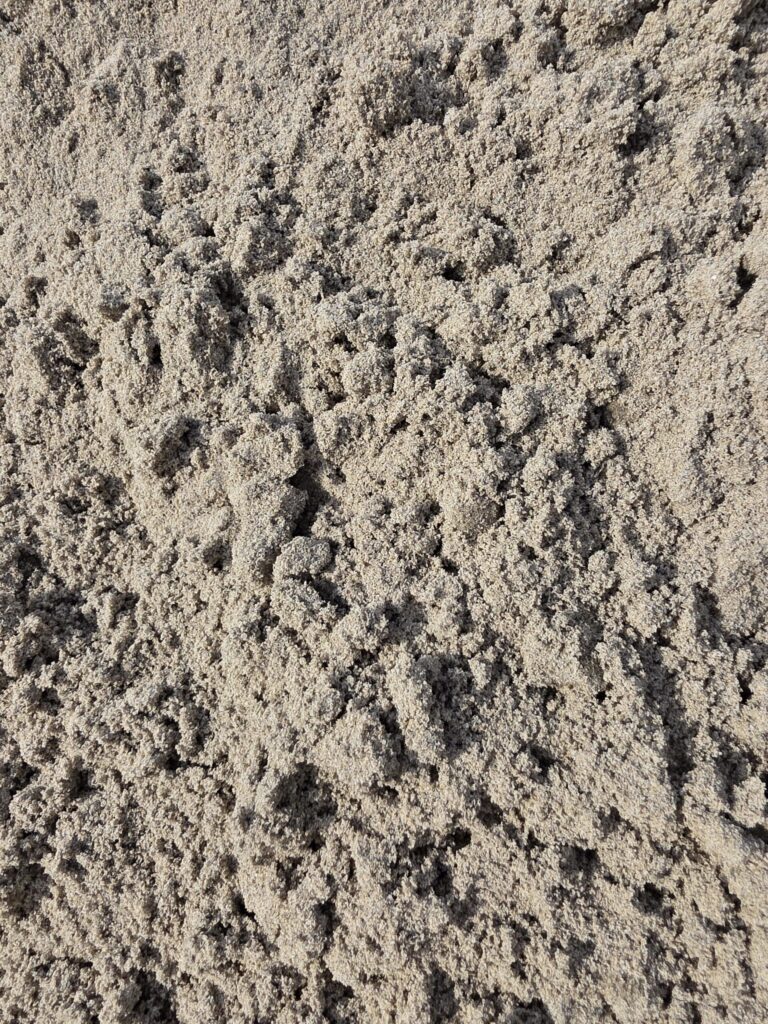
Concrete Sand is a coarse, washed fine aggregate graded from 0 to 3/8 inch, carrying a natural tan and gray color. It is the most widely specified sand in residential and light commercial construction because its gradation and angular particle shape deliver the strength, drainage, and compaction that finer sands cannot.
During processing the sand is washed to remove silt, clay, and organic fines. That cleaning step is what separates true concrete sand from raw pit-run material. Clean sand mixes into concrete without weakening the paste, beds pavers without holding water, and cradles pipe without trapping moisture against the line. At roughly 2,700 pounds per cubic yard, it is dense and stable, slow to migrate once placed and compacted.
Concrete sand serves four primary roles. As the fine aggregate in a concrete mix, it fills the gaps between coarse stone and controls workability. As a paver setting bed, a screeded layer gives a firm, free-draining cradle for the units above. As pipe bedding, it compacts evenly to support utility and drainage lines. And in masonry, it backs scratch coats, stucco brown coats, and bulk wall fill.
It pairs naturally with related materials on the same project. Crews often run it alongside finer Mason Sand for finish mortar, Paver Base as the compacted sub-layer beneath the bedding sand, and Fill Sand where a cheaper, non-structural backfill is all the spec requires. Sold by the ton, concrete sand is the dependable, all-purpose sand that belongs on nearly every build.
What Concrete Sand costs in Sacramento
Local Sacramento yards quote concrete sand by the ton; the delivered number includes fuel, the truck, and the haul. Pricing in Sacramento starts at $110 per ton on full-truck loads, which works out to roughly $149 per cubic yard at the typical density of 2700 lb per yard. A ton of this material spreads across about 80 sq ft when laid 3 inches deep, useful when you are sizing a patio base or a walkway run. Stacked against the rest of CA, this market is lower than the state average for concrete sand.
How crews use Concrete Sand in Sacramento
In and around Sacramento, concrete sand shows up most often on two project types. The most common deployment is pipe bedding, often in tight urban lots and infill builds in two to three inch lifts. Second on the list is base course gravel, which we see in dense neighborhoods where curb access is short on partial-truck deliveries. At roughly 524,943 people, the Sacramento order mix leans toward 3 to 8 ton residential drops with the occasional 16 ton job for a contractor.
Delivery day in Sacramento
A typical Sacramento drop is dispatched from the closest yard with a two hour window and a heads-up call once the truck is loaded. Tandem trucks want a 12 ft lane in and out; tri-axles need 14 ft, and both want firm ground at the tipping spot so the load releases cleanly. Standard lead time on this lane is Mon-Sat, with same-day windows held open for orders that hit the desk before 11 AM and clear payment.
Related materials we deliver in Sacramento
Delivered pricing in Sacramento
| Order size | Price / ton | Delivery fee | Lead time |
|---|---|---|---|
| 1+ tons | $149 | $286 | 1-2 business days |
| 6+ tons | $134 | $154 | Same/next day |
| 16+ tons | $110 | Included | Free delivery |
Estimate how much you need
Calculate Your Project
Estimate only. Add 10-15% for compaction and waste.
Browse more
Available in nearby cities
Plan your project
Related guides
 GUIDEWhat Is #57 Stone? Uses, Size, and Cost ExplainedPractical, field-tested guide: what is 57 stone. Pulled from real US installer notes and 2026 supplier price data.Read guide →
 GUIDEHow Deep Should a Gravel Driveway Be? Layer GuidePractical, field-tested guide: how deep should gravel driveway be. Pulled from real US installer notes and 2026 supplier price data.Read guide →
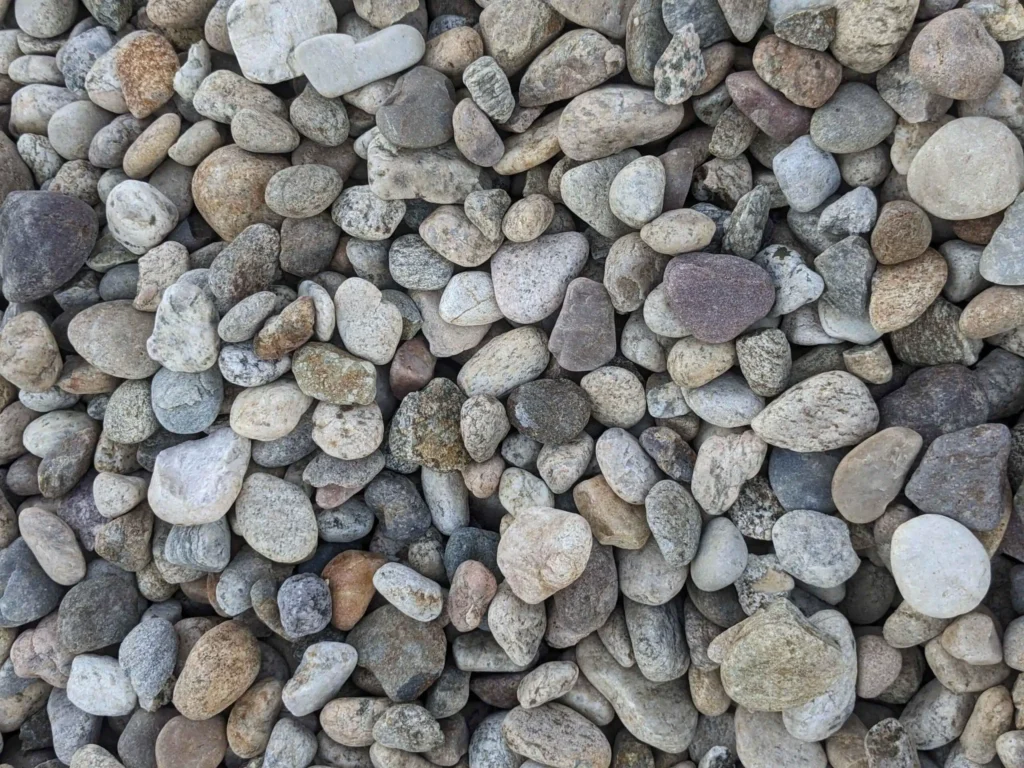 GUIDEHow Much Does River Rock Cost? By Ton or YardRiver rock cost depends on your ZIP code, order size, and whether you buy by the ton or the cubic yard. Here is how pricing works.Read guide →
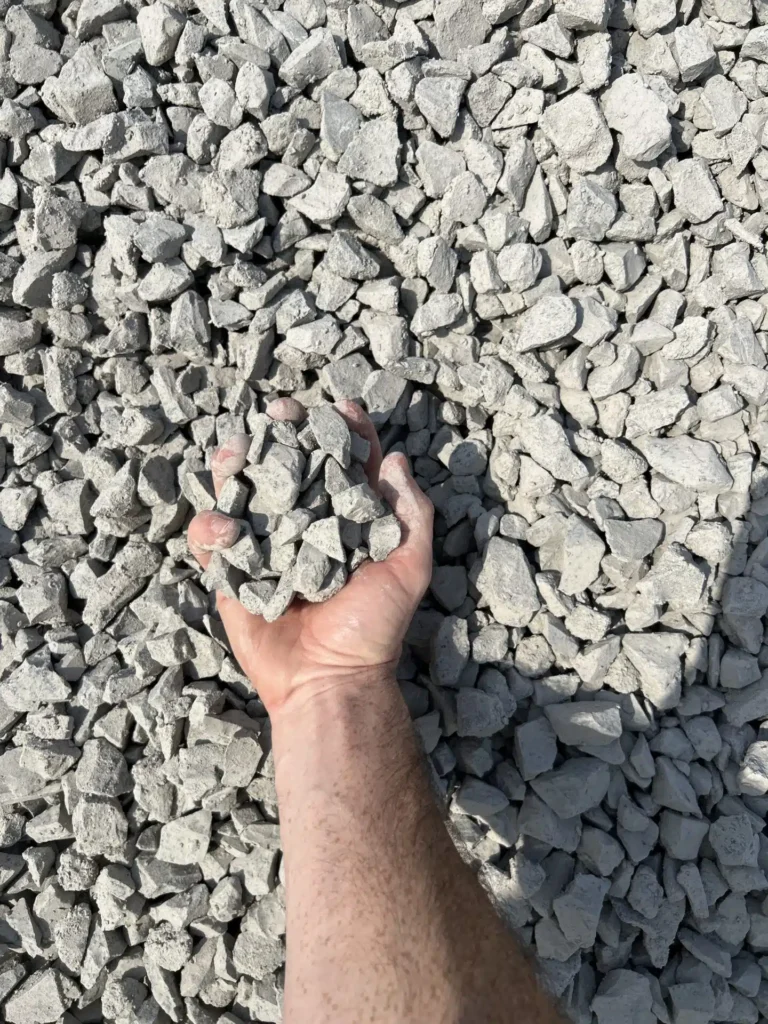 GUIDEWhat Size Crushed Stone Goes Under a Concrete SlabMost slabs need 4 to 6 inches of compacted crushed stone underneath. What size crushed stone under a concrete slab needs, and why it matters.Read guide →
Frequently Asked Questions
What is concrete sand used for in Sacramento?
Sacramento crews use concrete sand as the fine aggregate in concrete mixes, as a one-inch bedding layer under pavers, as pipe bedding for utility and storm-drain lines, and behind stucco and block masonry. Its washed, coarse gradation gives the strength and drainage that river silt and Delta soils cannot.
How much does concrete sand cost in Sacramento?
Pricing starts from $110 per ton. A single ton is $149 with a $286 delivery fee, six or more tons drops to $134 per ton with a $154 fee, and sixteen tons or more locks in $110 per ton with free delivery. The larger your load, the lower your cost per ton.
How fast can you deliver concrete sand in Sacramento?
Single-ton residential orders usually arrive within 1 to 2 business days. Orders of six tons or more typically ship same or next day, and bulk loads of sixteen tons and up move quickly on a dedicated truck. We cover the full Sacramento-Roseville-Folsom metro.
Why not use river or Delta sand for concrete?
Raw river-bottom and Delta sand carries silt and organic fines and is too inconsistent for structural use. It weakens concrete and beds pavers poorly. Washed concrete sand has the clean, coarse, well-graded particles that mix strong and drain well, which is why pros specify it.
How many tons of concrete sand do I need for a patio?
For a 24-foot by 20-foot patio with a one-inch bedding layer, plan on about 2 tons after compaction, which most crews round up to 2 to 2.5 tons. Concrete sand weighs around 2,700 pounds per cubic yard, so one ton covers just under three-quarters of a yard.
What is the difference between concrete sand and mason sand?
Concrete sand is coarser, graded from 0 to 3/8 inch, for strength in concrete, paver bedding, and pipe bedding. Mason Sand is finer and smoother for finish mortar and brick joints. Many Sacramento jobs, especially stucco and block work, use both materials.
How does the rainy season affect concrete sand work in Sacramento?
From November into March the storms and high groundwater can flood trenches, soak fresh pours, and saturate bedding sand. Schedule flatwork around the storm windows, tarp your stockpiles, and let saturated sand drain before batching so your mix water stays consistent.
Do you deliver concrete sand outside the city of Sacramento?
Yes. Beyond the capital region, we reach job sites toward Stockton about 45 miles south, Oakland around 68 miles, San Francisco near 75 miles, San Jose roughly 89 miles, and Fresno about 158 miles down the valley when a consistent washed sand is required.
Can concrete sand be used for pipe bedding near the rivers?
Yes. Concrete sand is a preferred pipe bedding material because it compacts evenly in lifts and supports the pipe without point-loading it, even in soft, high-water-table ground near the Sacramento and American rivers. Place it in layers and compact each lift as you backfill.
Should I order extra concrete sand for compaction?
Yes. Sand loses volume when compacted, so add about 15 to 20 percent over the loose calculation and round up to the next full ton. Hitting the sixteen-ton bulk tier also earns free delivery, so consolidating orders across the metro saves money.