Concrete Sand Delivery in Mesa, AZ
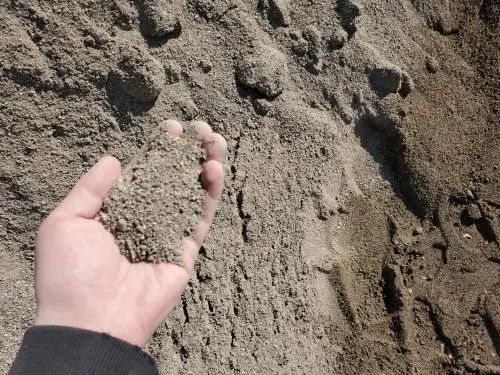
Bulk concrete sand delivered in Mesa, AZ. Stone size 0 - 3/8. Tan / gray color.
From $102/ton delivered, free delivery on full loads
Concrete Sand Delivered Across Mesa, AZ
Mesa anchors the East Valley, and building here means working around two things the desert never lets you forget: hard caliche-laced ground and brutal summer heat. The native soils across Mesa, Gilbert, and Chandler are dense, often cemented with caliche, and they drain poorly when they drain at all. That is why nearly every slab, patio, and trench in this part of the Phoenix-Mesa-Chandler metro starts with clean imported sand. Our Concrete Sand is a washed, sharp-edged aggregate graded from 0 to 3/8 inch in a tan to gray tone, and it is the foundation under a huge share of the concrete and hardscape work going up across the East Valley.
Whether you are batching concrete, bedding pavers, cradling irrigation and utility pipe, or mixing mortar for block, this is the sand engineered for the job. It is coarse and angular by design, so it interlocks under load and gives cement paste something to grip. That structure is what sets true concrete sand apart from the soft, rounded washes some yards sell as a cheaper stand-in.
Why Mesa Builders Choose Concrete Sand
The angular grain is the whole reason this product exists. Concrete sand is the fine aggregate in a standard concrete mix, packing the voids between the larger rock so a slab cures dense and strong. In Mesa, where surface temperatures push concrete to flash-set if you are not careful, a well-graded, properly proportioned mix is your best defense against shrinkage cracking and a weak finish. Density and a controlled water ratio matter more here than almost anywhere.
Around the East Valley, locals reach for it four main ways:
- Concrete mixing for footings, slabs, mow strips, and the equipment pads that go in behind so many Mesa homes.
- Paver bedding, the 1 inch screeded setting layer under the travertine, concrete pavers, and flagstone that define desert patios and pool decks.
- Pipe bedding, surrounding irrigation, sewer, and conduit runs so loads spread evenly and the trench backfill does not point-load the line.
- Masonry work, mixed into mortar and grout for the block walls and stucco-finished construction that are everywhere in Arizona.
For finer mortar joints and stucco scratch coats, many crews keep Mason Sand on hand too. When a job just needs volume to bring a pad up to grade, that is a job for Fill Sand, not this product. And under a paver patio or pool deck, the compacted structural layer is your Paver Base, with concrete sand screeded on top as the setting bed.
Local Delivery and Lead Times in Mesa
We deliver bulk concrete sand throughout Mesa and the surrounding East Valley, from the Loop 202 and US 60 corridors out to Gilbert just 5 miles away, Tempe 6 miles off, Chandler at 8 miles, and Scottsdale across the way. Phoenix proper is only about 14 miles, so we cover the full metro on one schedule. Orders of 6 tons or more typically arrive same day or next day, while smaller 1 to 2 ton loads run on a 1 to 2 business day schedule depending on your slot.
Because the East Valley cities sit so close together, we can stage multiple drops in a single run, which is handy if you are managing work across Gilbert and Chandler at once. For gated communities and tighter HOA streets common around Mesa, tell us about access up front so we send a truck that fits.
How Much Concrete Sand Do You Need?
Concrete sand is sold by the ton, and one ton covers roughly 100 square feet at a 2 inch depth. Paver bedding usually goes down around 1 inch, where a ton stretches to about 200 square feet. Depth and compaction shift those numbers, so round up.
Here is a real Mesa example. Say you are setting a 20 by 25 foot travertine pool deck, which is 500 square feet. At a 1 inch screeded setting bed, you need roughly 2.5 tons of concrete sand. Add a footing trench for a block privacy wall around the same backyard and your volume climbs quickly. Our concrete sand runs about 2,700 pounds per cubic yard, so a single bulk load moves serious material in one trip. That is exactly why the per-ton price drops as your order grows.
Mesa Pricing
Concrete sand in Mesa starts from $102 per ton. Pricing is tiered so larger orders earn the best rate and the lowest delivery cost:
- 1 ton and up: $139 per ton, $265 delivery, arriving in 1 to 2 business days.
- 6 tons and up: $125 per ton, $143 delivery, with same or next day service.
- 16 tons and up: $102 per ton with free delivery.
It pays to size the order right. If a job calls for 14 tons, it is often worth bumping to 16 to clear the free-delivery threshold and lock the $102 rate. In the dry desert air, an extra tarped pile keeps fine for the next phase.
Placement and Installation Tips
A few habits keep concrete sand working in the heat. Screed your paver bedding to a clean 1 inch and do not use it to mask a rough base; the compacted Paver Base handles leveling, and the sand is only the setting layer. For pipe bedding, surround the line fully and slice the sand under the haunches so no voids remain. When batching concrete in Mesa summer, dampen the sand and adjust your mix water to fight rapid evaporation, and pour early in the morning before the surface temperature climbs.
Beat the Heat
Hot, dry concrete flash-sets and cracks. Keep your sand and aggregate shaded if you can, mist your forms, and cure aggressively. A dense, well-sanded mix gives you the working margin you need on a 110 degree afternoon.
Seasonal Notes for Arizona
Arizona gives you a near year-round pour season, but the calendar still matters. Spring and fall are prime, with mild temperatures and high hardscape demand, so book bulk loads ahead during those windows. Summer pours are doable with hot-weather practice: early morning starts, set retarders, and constant attention to evaporation. The monsoon stretch from July into September brings sudden heavy storms, so keep a tarp ready and schedule deliveries around the afternoon cells. Winter is comfortable for crews and a smart time to knock out larger flatwork. Across all of it, the consistent drainage of a clean concrete mix protects your work from the swelling and shifting that caliche soils can drive.
Whether you are pouring an equipment pad in Mesa, decking a pool in Gilbert, or trenching irrigation in Chandler, our washed concrete sand is ready to deliver to your East Valley jobsite.
About Concrete Sand
Concrete Sand is a coarse, washed sand graded from 0 to 3/8 inch, with a clean tan to gray color and the sharp, angular grain structure that defines a true concrete-grade fine aggregate. It is processed and washed to remove silt, clay, and organic fines, leaving a consistent, free-draining material that performs predictably from batch to batch.
As the fine aggregate in a standard concrete mix, it fills the voids between coarse stone so finished concrete cures dense and strong. The angular grains interlock under load and give cement paste a surface to bond to, which is why this sand is specified for structural pours, footings, and slabs rather than the soft, rounded sands sold for play areas and beaches.
Its uses reach well beyond concrete. Hardscapers screed it as the 1 inch setting bed under pavers, travertine, and flagstone. Utility crews use it as pipe bedding to cradle sewer, water, irrigation, and conduit lines and to spread trench loads evenly. Masons blend it into mortar and grout for block, stone, and retaining walls. It also serves as a leveling and joint-filling sand across a range of flatwork jobs.
The material weighs roughly 2,700 pounds per cubic yard, so plan delivery and storage accordingly. It is sold in bulk by the ton, which keeps pricing competitive for everything from a single patio to a full subdivision schedule. One ton covers about 100 square feet at 2 inches deep, or roughly 200 square feet at the 1 inch depth typical of paver bedding. Tarp any stockpile to keep it clean, since contamination throws off concrete and mortar ratios. Consistent grading, thorough washing, and reliable bulk supply make it a dependable choice for both professional crews and DIY builders.
What Concrete Sand costs in Mesa
Around Mesa, concrete sand is quoted by the ton with delivery layered in based on distance from the closest yard. Pricing in Mesa starts at $102 per ton on full-truck loads, which works out to roughly $138 per cubic yard at the typical density of 2700 lb per yard. Plan on roughly 80 sq ft of coverage per ton at 3 inches deep, which puts a single-car driveway in the 4 to 8 ton bracket. Mesa pricing sits lower than the AZ state average, which is what we see across other product-loc rows we publish.
How crews use Concrete Sand in Mesa
Mesa contractors keep concrete sand on the order sheet for a short list of standard installs. Top of the list is pipe bedding, where the material is rolled out in tight urban lots and infill builds and screeded to grade. Right behind that is base course gravel, common in dense neighborhoods where curb access is short and often paired with edging or fabric below the lift. Mesa sits at about 504,258 residents, which means we see steady weekday traffic from landscape crews and weekend pickups from owner-builders.
Delivery day in Mesa
Delivery in Mesa runs out of the nearest pit; you get a two hour arrival window the evening prior and a call when the driver leaves the scale. Plan for 12 ft of clear path for a tandem and 14 ft for a tri-axle, plus a level area at the dump point so the bed lifts straight. Standard lead time on this lane is Mon-Sat, with same-day windows held open for orders that hit the desk before 11 AM and clear payment.
Related materials we deliver in Mesa
Delivered pricing in Mesa
| Order size | Price / ton | Delivery fee | Lead time |
|---|---|---|---|
| 1+ tons | $139 | $265 | 1-2 business days |
| 6+ tons | $125 | $143 | Same/next day |
| 16+ tons | $102 | Included | Free delivery |
Estimate how much you need
Calculate Your Project
Estimate only. Add 10-15% for compaction and waste.
Browse more
Available in nearby cities
Plan your project
Related guides
 GUIDEHow Much Does Gravel Cost? A Practical Pricing GuideHow much does gravel cost and why does it vary? See the real factors behind ton pricing, delivery, and order size before you buy.Read guide →
 GUIDEGravel Size Chart: Pea Gravel to Crushed StoneA gravel size chart showing pea gravel, crushed stone and river rock diameters side by side, so you can match the right size to your project.Read guide →
 GUIDEThe Different Types of Gravel and How to ChooseA plain-language guide to the main types of gravel, covering pea gravel, crushed stone, river rock and decomposed granite.Read guide →
 GUIDEWhat Are Screenings? A Guide to Crushed Stone FinesScreenings are fine crushed stone used for paver bases, joint fill and walkways. See what screenings are, common types, and mistakes to avoid.Read guide →
Frequently Asked Questions
What is concrete sand used for in Mesa?
It is the fine aggregate in concrete mixes, the 1 inch setting bed under pavers and travertine, the cradle around utility and irrigation pipe, and a component in masonry mortar. Across Mesa and the East Valley it goes under slabs, pool decks, and block walls because the dense, caliche-laced native soil makes clean imported sand essential.
How much does concrete sand cost in Mesa?
Pricing starts from $102 per ton. Smaller 1 ton orders run $139 per ton with a $265 delivery fee, 6 ton orders drop to $125 per ton with a $143 fee, and orders of 16 tons or more are $102 per ton with free delivery. The bigger the load, the better the rate.
How fast can you deliver concrete sand in Mesa?
Orders of 6 tons or more typically arrive same day or next day across the East Valley. Smaller 1 to 2 ton loads run on a 1 to 2 business day schedule. Because Gilbert, Tempe, Chandler, and Scottsdale all sit within a few miles, we can cover the metro and even stage multiple drops in one run.
How much concrete sand do I need for a pool deck?
Plan a 1 inch screeded setting bed over your compacted base. One ton covers roughly 200 square feet at that depth, so a 500 square foot travertine deck needs about 2.5 tons. Round up for compaction and screed waste, and keep the sand as the setting layer rather than a leveling course.
What is the difference between concrete sand and mason sand?
Concrete sand is coarser and more angular, made to be the fine aggregate in concrete and the bedding under pavers and pipe. Mason Sand is finer and smoother, which suits the thin joints in block and brick mortar and the look of an Arizona stucco finish. Crews often keep both for different parts of the same job.
Can I use concrete sand as fill in Mesa?
You can, but it is rarely worth it. Concrete sand is a clean, processed product priced for performance. If you only need volume to bring a pad up to grade, Fill Sand for bedding, mixing, and masonry where its grain quality earns its price.
How does the desert heat affect pouring concrete with this sand?
The sand itself is unaffected, but Mesa heat makes concrete flash-set and crack if you are not careful. Dampen the sand, adjust your mix water for evaporation, pour early in the morning, and cure aggressively. A dense, well-sanded mix gives you more working margin on a hot afternoon.
Does concrete sand drain well for pipe and irrigation bedding?
Yes. The angular, washed grain structure makes it free-draining and stable, which is why East Valley crews specify it around sewer, water, irrigation, and conduit lines. It spreads loads evenly across the pipe and resists migrating into the surrounding soil when placed and compacted correctly.
How should I store concrete sand during monsoon season?
Keep it on a clean, well-drained surface and tarp it when storms are in the forecast. Monsoon cells from July into September can soak a pile in minutes, and a wet, contaminated stockpile throws off your concrete water ratio. The dry desert air keeps a covered pile in good shape between phases.
Do you deliver concrete sand throughout the East Valley?
Yes. We serve Mesa and the surrounding metro including Gilbert, Tempe, Chandler, Scottsdale, and Phoenix. Because those cities sit close together, we can coordinate multiple drops on a single schedule, which helps if you are running jobs in more than one community at the same time.