
River Rock Walkway Ideas for a Natural Garden Path
Plan a river rock walkway with the right depth, base and stone size, plus tips for pairing rock with pavers or stepping stones.
Why a River Rock Walkway Works So Well
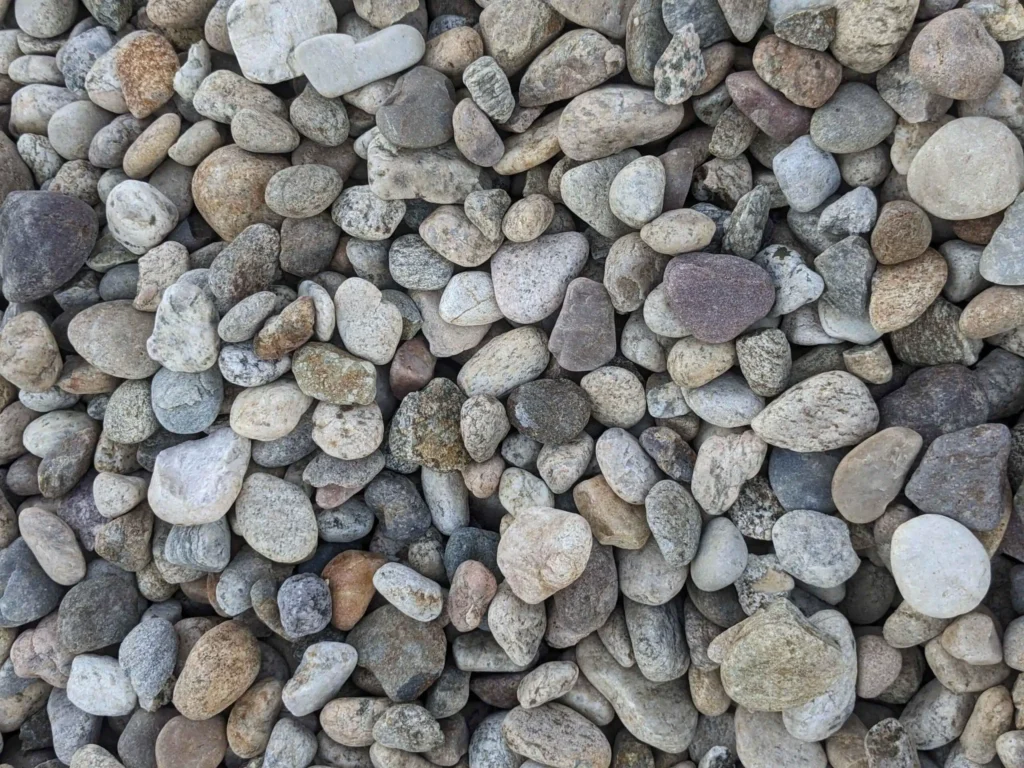
A river rock walkway turns a plain dirt track into a finished path without the cost of poured concrete or the labor of setting individual pavers. The stone used for this application runs 1 to 3 inches across in mixed natural coloring, and years of tumbling round every edge so nothing bites into bare feet, dog paws or a garden hose dragged across the surface. River Rock holds its color in full sun and does not crack, chip or need sealing the way concrete pavers can over time.
Because the stones are rounded rather than angular, water moves down through the gaps instead of sheeting across the top, which matters on any path that sees regular rain or snowmelt. That drainage is part of what makes a river rock pathway practical next to a house foundation or along a slope, in addition to looking good in a flat garden bed. The mixed natural coloring also means no two bags or loads look exactly the same, so a repaired or extended section blends into the original path instead of standing out as a patch.
Design and Sizing Choices for a River Rock Pathway
River rock pathway ideas range from a narrow ribbon of stone tucked between planting beds to a wide walkway that doubles as a dry creek border along the edge of a lawn. A river rock path with stepping stones is one of the most requested layouts: set flat pavers or natural flagstone at a comfortable stride length, then fill the gaps and edges with loose stone so the hard walking surface stays dry and level while the rock fills the visual gap and handles drainage.
A river rock and paver walkway works the same idea at a larger scale, with paver strips forming the main tread and bands of rock running along the border or between sections for contrast. For a straightforward diy river rock walkway, skip the stepping stones altogether and let the rock form the entire walking surface, contained by edging so it stays in the bed instead of migrating into the grass. Curve the path rather than running it in a straight line: curves read as more natural in a planted setting and slow foot traffic where the path meets a patio or door.
Depth, Base and Quantity
Depth for a river rock walkway runs 2 to 3 inches over landscape fabric. Go deeper and the stones sink into soft ground without adding any benefit; go shallower and bare soil shows through within a few months of foot traffic. Skip the fabric entirely and weeds will grow up through the rock before the first season is over.
Compact the soil first, and add a thin layer of angular base material underneath if the ground stays soft after rain, since river rock on its own is not a structural base. The rounded stones roll rather than lock together, so they sit on top of a base instead of forming one. River Rock weighs about 2,700 pounds per cubic yard and sells by the ton, so the amount you need depends on the length, width and depth of the finished path. Use the calculator to work out the tons for your dimensions before you order, since guessing on a curved or irregular layout usually leaves a delivery short.
Installation Steps for a River Rock Path
Installing a river rock walkway follows the same basic sequence whether the path is straight or curved, and most of the work happens before any stone gets spread.
- Mark the path with a hose or spray paint and adjust the curve before digging.
- Remove sod and loose soil to a depth that allows for the base, fabric and rock layer combined.
- Install edging along both sides to keep the stone contained.
- Lay landscape fabric across the excavated area, overlapping seams by a few inches.
- Add and compact a thin base layer if the soil stays soft after rain.
- Spread the river rock at the target depth and rake it level.
- Set stepping stones or paver strips now if the design calls for them, bedding each one so it sits flush with the surrounding rock.
- Walk the finished path and rake any low or thin spots level before calling the job done.
A short path can be finished in a single afternoon once the base and edging are in place, since spreading and raking loose stone moves quickly compared with cutting and setting pavers one at a time.
Maintenance and Common Mistakes
A river rock walkway needs less upkeep than mulch or bark, but it is not maintenance free. Leaves and organic debris collect between the stones and should be blown or raked out before they break down and feed weeds. Rake the rock periodically to redistribute stone that foot traffic pushes toward the edges, and top off any low spots where the rock has settled or scattered.
The most common mistake is skipping the landscape fabric to save a step, which lets weeds root directly in the soil under the rock within a season. The second is choosing a depth that is too shallow or too deep for the stone size, which either exposes bare ground or makes the surface unstable underfoot. The third is leaving out edging, which lets the rock spread into the lawn every time someone mows nearby or drags a hose across the path.
Cost and Ordering for a River Rock Walkway
River Rock ships by the ton, and most homeowners order a bit more than the calculator suggests to cover a path that narrows, widens or curves along its route rather than running in one straight, even band. Ordering everything in a single delivery also avoids a second trip and a possible color difference between batches.
If you are still deciding between stone types, compare walkway gravel options sized for a more compacted, uniform surface, or look at garden path gravel choices built for planting beds and casual foot traffic. Either page shows other stone sizes and colors sold for path use, so you can weigh a river rock walkway against a different finish before ordering enough material for the whole project. A single delivery of River Rock can also be split between a walkway and a nearby border or dry creek bed, since the same stone works for both without mixing sizes or colors partway through the yard.
River Rock for this project
Related project guides
Browse more
Related guides
GUIDEWhat to Put Under River Rock for Landscaping BedsHere is what to put under river rock landscaping: a compacted base where needed, then landscape fabric, then rock, to stop weeds and settling.Read guide →GUIDEHow to Clean River Rock and Restore Its ColorLearn how to clean river rock landscaping with rinsing, soap and vinegar methods, plus common mistakes to avoid for a brighter, longer lasting rock bed.Read guide → GUIDEGravel Size Chart: Pea Gravel to Crushed StoneA gravel size chart showing pea gravel, crushed stone and river rock diameters side by side, so you can match the right size to your project.Read guide →GUIDEThe Different Types of Gravel and How to ChooseA plain-language guide to the main types of gravel, covering pea gravel, crushed stone, river rock and decomposed granite.Read guide →
Frequently Asked Questions
How deep should a river rock walkway be?
Most river rock walkways use a depth of 2 to 3 inches over landscape fabric. That is enough to fully cover the fabric and give a stable walking surface without so much stone that it shifts underfoot. Going deeper does not add durability, since the base beneath the fabric carries foot traffic weight, not the rock layer on top.
What size river rock works best for a path?
Stone sized 1 to 3 inches across is the standard choice for a walkway. It is large enough to stay in place under normal foot traffic and small enough to feel comfortable underfoot compared to larger landscape boulders. Mixed natural coloring blends with most planting beds and hardscape without looking uniform or artificial.
Do I need landscape fabric under a river rock path?
Yes. Landscape fabric separates the rock from the soil beneath it, which stops weeds from rooting directly under the stone and keeps the rock from sinking into soft or wet ground over time. Skipping this step is the most common reason a river rock walkway needs weeding or topping off within the first year.
Can I mix river rock with pavers or stepping stones?
Yes, and it is one of the more popular layouts. Set flat pavers or flagstone as the main walking surface at a comfortable stride, then fill the surrounding gaps and borders with river rock. The stone handles drainage and fills the visual space around the hard surface without competing with it for foot traffic.
How do I keep river rock from spreading into the lawn?
Install edging along both sides of the path before you spread the stone. Edging holds the rock in the bed and stops it from migrating into the grass when someone mows nearby or drags a hose across the path. Without edging, a river rock walkway slowly loses stone at the borders every season.
Will a river rock walkway need weeding?
Some weeding is normal for any outdoor path, but a properly built river rock walkway needs very little. Landscape fabric under the stone blocks most weeds from rooting in the soil, so what does grow is usually windblown seed sitting in dust on top of the rock, which pulls out easily by hand.
Is river rock a good base material on its own?
No. River rock on top as the finished walking surface, not as the structural base itself.
How much river rock do I need for a walkway?
The amount depends on the length, width and depth of the finished path. River Rock weighs about 2,700 pounds per cubic yard and sells by the ton, so use the calculator with your path dimensions to get an exact figure rather than estimating, especially on a path that curves or changes width along its route.