
Riprap Med Delivery in Sacramento, CA
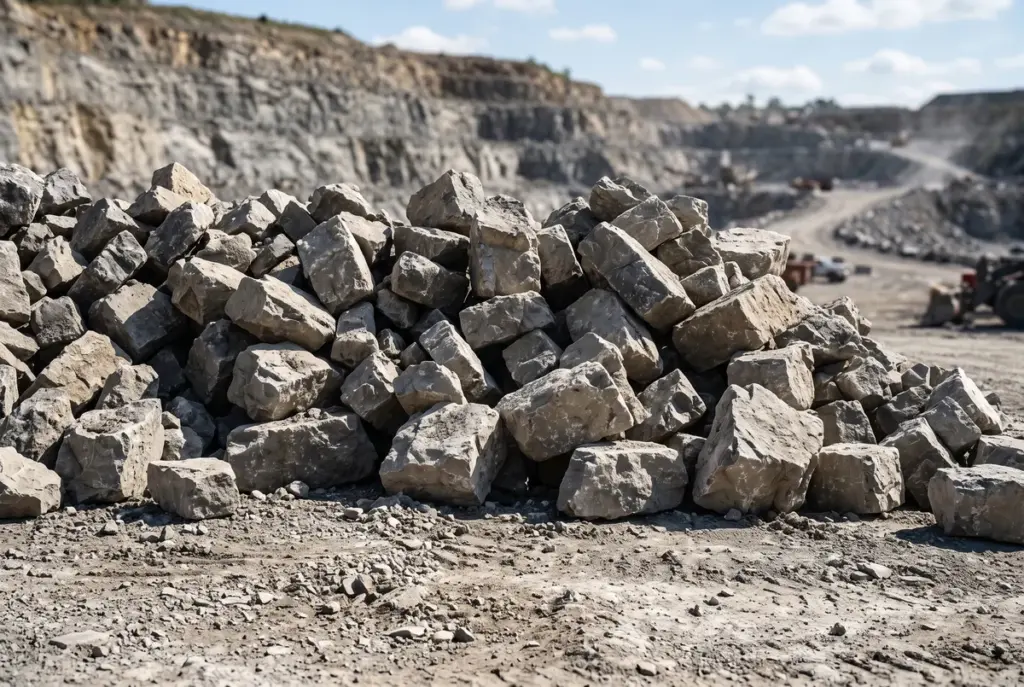
Bulk riprap med delivered in Sacramento, CA. Stone size 4 - 9. Gray color.
Riprap Med in Sacramento: The Workhorse Stone for Erosion Control in the Valley
Sacramento sits where the American and Sacramento rivers meet, and that confluence shapes nearly every drainage and shoreline problem property owners face here. When water moves fast, when levee-adjacent ground saturates through a wet winter, or when a channel bank starts sloughing after a storm, the answer almost always involves armoring the surface with heavy stone. Riprap Med is the size most Sacramento contractors reach for first. With individual pieces running roughly 4 to 9 inches and a gray, angular profile, it is large enough to stay put in moving water yet small enough that two people can place and key it by hand on a residential job.
We deliver Riprap Med across the Sacramento-Roseville-Folsom metro and out to the surrounding valley towns. Whether you are reinforcing a slough bank in the Delta lowlands, lining a culvert outlet near Folsom, or stabilizing a cut slope in the foothills above the city, this stone does the heavy lifting that finer aggregate simply cannot.
Why Sacramento Property Owners Choose Riprap Med
The Central Valley climate is a study in extremes. Sacramento bakes through long, dry summers and then takes the brunt of atmospheric river storms from November through March. That swing is exactly what tears up unprotected slopes and banks. Bare soil that holds firm in August turns to running mud in January, and the cost of a failed slope is far higher than the cost of armoring it correctly the first time. Riprap Med absorbs the energy of moving water and concentrated runoff, breaking up flow before it can scour the ground beneath.
Common uses we see across the Sacramento area include:
- Erosion control on graded lots, new-construction pads, and disturbed ground waiting to be planted.
- Slope armoring on the cut and fill banks common in the foothill subdivisions east of the city.
- Shoreline protection along ponds, sloughs, and the many waterways feeding the Delta.
- Culvert and pipe outlets where concentrated discharge needs an apron to dissipate energy and prevent undercutting.
- Heavy drainage swales that carry seasonal storm flow off large parcels and equestrian properties.
The angular shape matters here. Unlike rounded river stone that can roll under load, the fractured faces of Riprap Med interlock, so a properly placed layer behaves almost like a single armored mat. That is why the stone holds on Sacramento banks that see real velocity during the rainy season.
Local Delivery and Lead Times in the Sacramento Metro
We run bulk loads into Sacramento and the wider Sacramento-Roseville-Folsom region year round. For most ZIP codes in and around the 95814 core, smaller orders land in 1 to 2 business days, while mid-size and larger orders frequently qualify for same or next-day delivery depending on the route. Because Sacramento sits at the hub of Interstate 5, Highway 99, and Highway 50, our trucks reach the city quickly, and we routinely serve nearby Stockton (45 miles south) and the East Bay corridor toward Oakland (68 miles) on the same lanes.
If your project is out toward the Delta or up into the foothills, give us the access details when you order. Riprap is heavy freight, and a loaded truck needs room to maneuver and a firm surface to dump on. Soft, saturated ground after a storm can be a problem, so when you can, schedule delivery for a dry window and stage the stone on a stable pad near the work area.
How Much Riprap Med Do You Need?
Riprap Med is sold by the ton. The first step in any estimate is the surface area you are armoring and how thick the layer needs to be. For erosion protection on a moderate slope, a layer roughly 12 inches deep is typical, while heavier shoreline or high-velocity applications may call for 18 inches or more.
Here is a worked example. Say you are armoring a slough bank that measures 40 feet long by 15 feet of slope face, for 600 square feet, at a 12-inch depth. That is 600 cubic feet, or about 22.2 cubic yards. Riprap Med weighs roughly 2,700 pounds per cubic yard, so 22.2 cubic yards comes to about 30 tons of stone. A project that size lands squarely in our best pricing tier and would qualify for free delivery. For a smaller culvert apron of, say, 100 square feet at 12 inches, you would need roughly 5 tons. When in doubt, round up. It is far cheaper to have a little extra stone on hand than to stop placement and reorder.
Sacramento Pricing for Riprap Med
Pricing on Riprap Med in Sacramento starts on volume orders. Like most bulk aggregate, the per-ton cost drops as the load size grows, because freight is the largest single cost in any delivery. Here is how our tiers work for the Sacramento area:
- 1 ton or more: with a $286 delivery fee, arriving in 1 to 2 business days. This tier suits small repair jobs and touch-ups.
- 6 tons or more: with a reduced $154 delivery fee, often on a same or next-day schedule. This is the sweet spot for most residential slope and shoreline work.
- 16 tons or more: with free delivery. This tier covers full bank armoring, larger drainage projects, and any job where you can take a full truckload.
If your project sits near the 16-ton threshold, it is almost always worth bumping the order up to capture the free freight and the lowest per-ton rate. The savings on delivery alone frequently pay for the extra stone.
Placement and Installation Tips
Good riprap performance is mostly about what happens before the stone arrives. The single most common failure we see in the Sacramento area is riprap placed directly on bare, ungraded soil. Without a foundation, water finds its way underneath and the whole layer eventually slides. A few proven practices:
- Grade and compact the subgrade to a uniform slope before placing any stone.
- Lay a geotextile filter fabric over the soil to separate it from the rock and stop fines from washing out. This step is non-negotiable on shoreline and channel work.
- Consider a bedding layer of Drain Rock beneath the riprap on saturated sites. It promotes free drainage and keeps the larger stone from punching into soft ground.
- Place the largest pieces at the toe of the slope first, then work upward, keying each stone against its neighbors so the faces interlock.
- Avoid dropping stone from height onto fabric, which can tear it. Place, do not pour, on the critical edges.
For decorative transitions where the armored zone meets a finished landscape, many Sacramento homeowners blend the edge with River Rock to soften the look. And on budget-driven jobs away from waterways, some contractors use Crushed Concrete as an economical base under the riprap. Each has its place, but for the working face that takes the water, Riprap Med is the material that earns its keep.
Seasonal Notes for California Projects
Timing matters in the Valley. The best window to install erosion control is late summer through early fall, before the first storms arrive. Ground is dry, access is easy, and you want your armor in place and settled before water starts moving. If you are racing a forecast in late fall, focus on the toe and the highest-velocity sections first, since those fail first. During the wet season itself, Riprap Med is still the right emergency repair material when a bank gives way, but expect access challenges on soft ground, and let us know if a job site needs a truck with extra reach. In drought years, the same stone that controls erosion also makes excellent permanent dry-creek and swale lining around Sacramento and neighboring Stockton, channeling the runoff you do get without the maintenance of vegetated ditches.
However your project takes shape, a load of Sacramento-delivered Riprap Med is the durable, low-maintenance answer to moving water. Order by the ton, lock in the tier that fits your volume, and get the stone on site while the weather cooperates.
About Riprap Med
Riprap Med is a heavy, angular gray stone sized roughly 4 to 9 inches, engineered as a workhorse armoring material for erosion control, slope stabilization, shoreline protection, and high-flow drainage. It sits in the sweet spot of the riprap family: large enough to resist displacement in moving water, yet manageable enough to place by hand on residential and light commercial jobs without specialized equipment.
The stone is crushed rather than rounded, which is the key to its performance. The fractured faces grip one another when placed, forming an interlocked layer that behaves like a unified armored mat rather than a loose pile of rock. That interlocking action is what allows Riprap Med to hold on graded banks and channel sides that see real water velocity, where smoother stone would simply roll out of position.
Sold by the ton, Riprap Med weighs approximately 2,700 pounds per cubic yard, so a single cubic yard runs well over a ton of solid mass. Its gray tone blends naturally into most landscapes and weathers gracefully, developing a muted patina over time rather than fading or breaking down. Because it is a hard, dense aggregate, it resists freeze-thaw damage and the wet-dry cycling common in climates with sharp seasonal swings.
Typical applications include culvert and pipe outlet aprons, levee and pond shoreline armor, ditch and swale lining, bridge abutment scour protection, and slope facing on cut-and-fill banks. For best results, place Riprap Med over a geotextile filter fabric and, on saturated sites, a free-draining bedding layer. With minimal maintenance and a service life measured in decades, it is one of the most cost-effective forms of permanent water and soil protection available in bulk.
What Riprap Med costs in Sacramento
Local Sacramento yards quote riprap med by the ton; the delivered number includes fuel, the truck, and the haul. Send your ZIP and load size and we will send back a same-hour quote with the truck rate and the per-ton figure spelled out. A ton of this material spreads across about 80 sq ft when laid 3 inches deep, useful when you are sizing a patio base or a walkway run.
How crews use Riprap Med in Sacramento
In and around Sacramento, riprap med shows up most often on two project types. The most common deployment is erosion control, often in tight urban lots and infill builds in two to three inch lifts. Second on the list is drainage gravel, which we see in dense neighborhoods where curb access is short on partial-truck deliveries. At roughly 524,943 people, the Sacramento order mix leans toward 3 to 8 ton residential drops with the occasional 16 ton job for a contractor.
Delivery day in Sacramento
A typical Sacramento drop is dispatched from the closest yard with a two hour window and a heads-up call once the truck is loaded. Tandem trucks want a 12 ft lane in and out; tri-axles need 14 ft, and both want firm ground at the tipping spot so the load releases cleanly. Standard lead time on this lane is Mon-Sat, with same-day windows held open for orders that hit the desk before 11 AM and clear payment.
Related materials we deliver in Sacramento
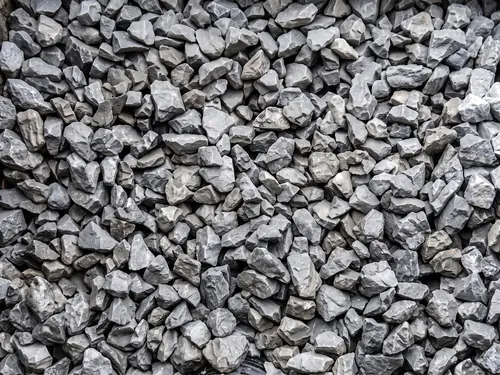
Estimate how much you need
Calculate Your Project
Estimate only. Add 10-15% for compaction and waste.
Browse more
Available in nearby cities
Plan your project
Related guides
 GUIDEHow Much Gravel Do I Need? Quick Sizing GuidePractical, field-tested guide: how much gravel do i need. Pulled from real US installer notes and 2026 supplier price data.Read guide →
 GUIDEWhat Is #57 Stone? Uses, Size, and Cost ExplainedPractical, field-tested guide: what is 57 stone. Pulled from real US installer notes and 2026 supplier price data.Read guide →
 GUIDEHow Deep Should a Gravel Driveway Be? Layer GuidePractical, field-tested guide: how deep should gravel driveway be. Pulled from real US installer notes and 2026 supplier price data.Read guide →
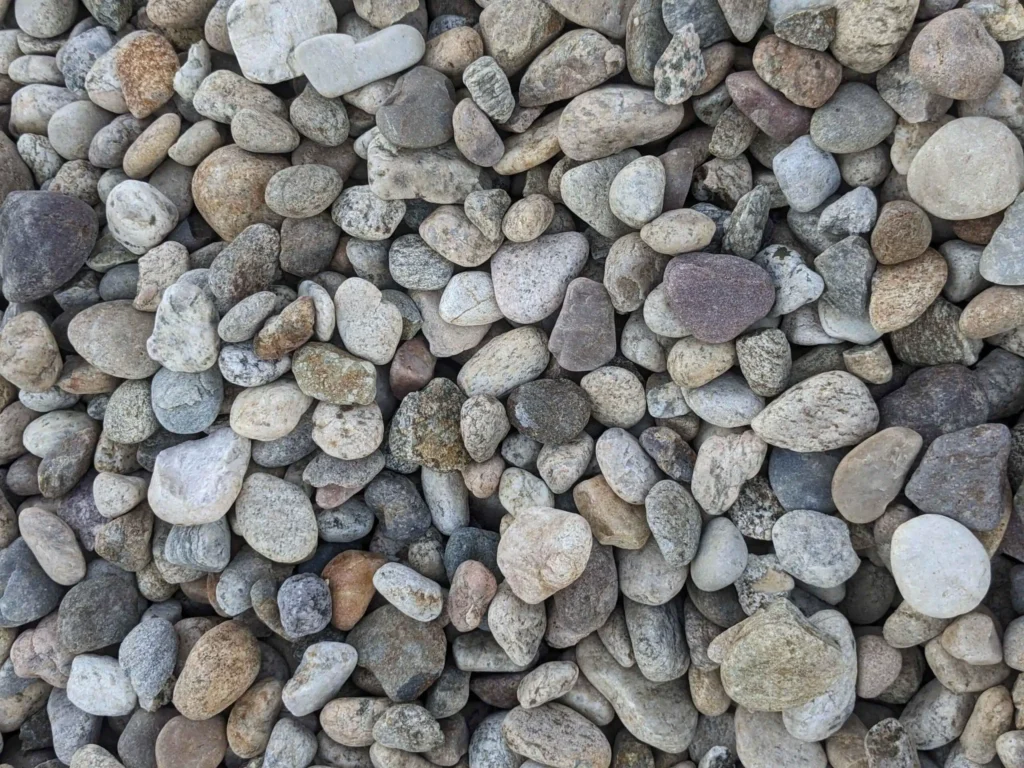 GUIDEHow Much Does River Rock Cost? By Ton or YardRiver rock cost depends on your ZIP code, order size, and whether you buy by the ton or the cubic yard. Here is how pricing works.Read guide →
Frequently Asked Questions
What size is Riprap Med and what is it used for in Sacramento?
Riprap Med is a gray, angular stone with individual pieces running roughly 4 to 9 inches. Around Sacramento it is used for erosion control, slope armoring, shoreline protection along sloughs and ponds, culvert outlets, and heavy drainage swales. It is large enough to stay put in moving water but small enough to place by hand on most residential jobs.
How fast can you deliver Riprap Med in the Sacramento area?
For most Sacramento ZIP codes, including the 95814 core, small orders arrive in 1 to 2 business days. Mid-size and larger orders frequently qualify for same or next-day delivery depending on the route. Sacramento sits at the hub of I-5, Highway 99, and Highway 50, so our trucks reach the metro and nearby Stockton quickly.
How many tons of Riprap Med do I need for my project?
Calculate the surface area you are armoring and multiply by your layer depth, usually 12 inches for slopes and 18 inches for high-velocity work. Convert to cubic yards, then multiply by about 1.35 since Riprap Med weighs roughly 2,700 pounds per cubic yard. For example, 600 square feet at 12 inches deep is about 22 cubic yards, or roughly 30 tons.
Should I use filter fabric under Riprap Med?
Yes, on nearly every application. A geotextile filter fabric separates the stone from the soil and stops fines from washing out from underneath, which is the most common cause of riprap failure. On shoreline and channel work near Sacramento waterways, filter fabric is essential rather than optional.
Can Riprap Med handle the Sacramento rainy season?
That is exactly what it is built for. Sacramento takes the brunt of atmospheric river storms from November through March, and Riprap Med absorbs the energy of fast-moving water before it can scour the ground. For best results, install your armor in late summer or early fall so it is settled and in place before the storms arrive.
What is the difference between Riprap Med and River Rock?
River Rock is rounded and smooth, which looks attractive but can roll under load, so it is best for decorative beds and transitions. Riprap Med for a finished look.
Do I need a bedding layer under Riprap Med?
On firm, well-drained ground you can often place riprap over fabric directly. On saturated or soft sites, common in the Delta lowlands and after heavy rain, a bedding layer of Drain Rock beneath the riprap promotes free drainage and keeps the larger stone from punching into the soil. It is cheap insurance against a slumped slope.
Can I use Crushed Concrete instead of Riprap Med?
Crushed Concrete is an economical option for a base or fill layer on budget-driven jobs away from waterways. However, for the working face that actually takes moving water, Riprap Med armor layer.
What area around Sacramento do you deliver to?
We deliver across the Sacramento-Roseville-Folsom metro and out to the surrounding valley, including nearby Stockton 45 miles south and the East Bay corridor toward Oakland. Just provide your delivery ZIP and site access details when you order, since loaded riprap trucks need room to maneuver and a firm surface to dump on.