
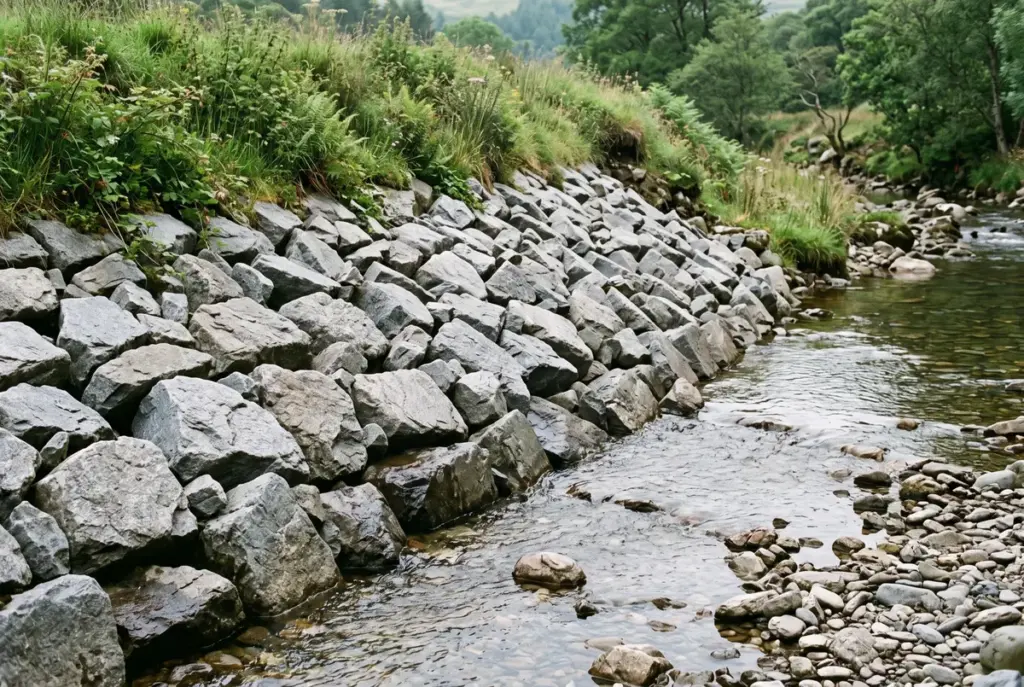
Riprap Med Delivery in San Francisco, CA
Bulk riprap med delivered in San Francisco, CA. Stone size 4 - 9. Gray color.
Riprap Med in San Francisco: Armor Stone Built for Bay Edges and Steep Ground
Few American cities throw as many erosion challenges at a site as San Francisco does. You have the saltwater edge of the Bay and the Pacific on three sides, hillsides that climb at angles most metros never see, a wet winter rainy season that dumps months of rain into a few short storms, and seismic ground that demands stable, flexible slope protection. Riprap Med, our gray angular armor stone graded at 4 to 9 inches and sold by the ton, is the material that answers all of those conditions at once. It locks together, drains freely, flexes with minor ground movement, and stays put when water hits it hard. For contractors and property owners working the shoreline, the hillside, or the storm-drain network anywhere in the San Francisco-Oakland-Berkeley metro, this is the stone that holds.
We deliver Riprap Med across San Francisco and into the East Bay and Peninsula, including Oakland just 8 miles across the Bay and San Jose 42 miles south.
Why San Francisco Sites Reach for Riprap Med
The Bay Area's geography concentrates erosion risk in ways that smaller fill simply cannot handle:
- Shoreline and Bay edge protection: Along the Bay margin, tidal action and wind-driven chop steadily attack unprotected banks and fill. The 4 to 9 inch grade resists wave wash and undercutting where smaller stone migrates away.
- Steep slope armoring: San Francisco's hills mean cut-and-fill slopes everywhere. Riprap Med's angular interlock holds a graded face in place through the winter rains that would otherwise trigger slumps and slides.
- Culvert and storm outlets: The city's intense, compressed rainy season sends huge flows through pipes and channels. A riprap apron at the discharge dissipates that energy and stops the scour hole.
- Creek and drainage channel lining: On the urban creeks and engineered channels that thread the region, medium riprap lines high-velocity reaches and keeps the grade.
Where a project also needs subsurface drainage behind a wall or under a slope, San Francisco crews commonly back the riprap with Drain Rock to relieve hydrostatic pressure. For visible landscape features in a Peninsula garden, River Rock reads softer. But for true structural armor against the Bay or a steep cut, Riprap Med is the workhorse.
Local Delivery and Lead Times in a Tight Metro
San Francisco is one of the most logistically demanding delivery markets in the country. Steep streets, tight access, parking and staging constraints, and bridge routing all factor into how a heavy load reaches your site. We plan around it. Single-ton and small orders ship in 1-2 business days. Mid-size loads of 6 tons and up can often arrive same or next day. Full-truck orders of 16 tons and over qualify for free delivery into the core metro, which matters a lot here where freight is the dominant cost on heavy stone.
Because of the city's access realities, tell us up front about street grade, available staging space, and whether a full-size truck can reach the drop point. If your site is on a narrow hillside street, we will plan the right equipment and timing rather than have a truck show up unable to place the load. East Bay deliveries through Oakland often route more simply than tight in-city addresses.
How Much Riprap Med Do You Need?
Riprap Med is sold by the ton, and the tonnage you need depends on placement thickness. For the 4 to 9 inch grade, plan on roughly 35 to 40 square feet of coverage per ton at a 12 inch placed depth, which is a common thickness for shoreline and slope armor in this region.
Here is a real San Francisco example. Suppose you are armoring a 50 foot run of Bay-edge bank, 9 feet up the face, at 12 inches thick. That is 450 square feet. At about 38 square feet per ton, you need roughly 12 tons. That puts you in the 6-ton tier, and rounding up to 16 tons for a longer run or a second slope drops your per-ton price to the lowest level and removes the delivery fee. Given how expensive freight is into the city, ordering to the free-delivery tier is usually the cheaper path per ton on any job of real size.
San Francisco Pricing Context
Riprap Med in San Francisco. The three bulk tiers are:
- 1 ton minimum: plus a $302 delivery fee, arriving in 1-2 business days. For small spot repairs.
- 6 ton minimum: with a reduced $162 delivery fee, often same or next day. The practical choice for a single slope or bank.
- 16 ton minimum: with free delivery. The best value for shoreline runs, full channels, or multi-area work.
Delivery into San Francisco carries real freight cost, so the gap between the 1-ton tier and the 16-ton tier is large once the waived fee is counted. If your project is near 16 tons, order to that line.
Installation and Spreading Tips
Good riprap depends on the base beneath it. On Bay Area fill and clay, the standard sequence is to grade the slope or bank to a stable angle, lay non-woven geotextile filter fabric over the soil, then place the stone to thickness. For local conditions:
- Use filter fabric on fine soils and Bay fill. It stops fines from pumping up through the stone during the heavy winter storms.
- Place the stone rather than dumping it. The 4 to 9 inch pieces should be keyed together with smaller pieces filling the voids so the face is tight and stable.
- Key the toe in below the slope or below the tidal low line on a shoreline so the placement cannot slide or be undercut.
- At a storm outlet, flare the apron wider than the pipe and carry it past the point where the flow spreads, so the compressed rainy-season discharge has somewhere to dissipate.
Where riprap meets a hardscape or path, Crushed Concrete makes an affordable, well-compacting base for the adjacent flatwork.
Seasonal Notes for California
The Bay Area's calendar is built around the wet season. Rains concentrate from roughly November through March, and that is exactly when unprotected slopes fail and shorelines erode. The smart play is to install armor during the dry months, late spring through early fall, when slopes are accessible and the ground is firm, so the protection is in place before the first atmospheric river arrives. Demand for erosion-control materials across the metro spikes in early fall as everyone races to beat the rains. If your project is on a slope or a Bay edge, order well ahead of October. Mild winters mean stone can be placed year-round, but working a wet, slick hillside in January is slower and riskier than getting ahead of it.
Whether you are protecting a Bay-edge bank, armoring a hillside cut above Oakland, or fixing a scoured storm outlet on the Peninsula, Riprap Med delivered is the durable, seismic-friendly armor that San Francisco conditions demand.
About Riprap Med
Riprap Med (4 to 9 inch Gray Stone)
Riprap Med is a heavy, angular gray armor stone graded between 4 and 9 inches, sold by the ton. Its job is to stay in place under moving water and the constant pressure of a slope. When placed correctly the angular faces interlock into a stable, free-draining mass that resists displacement far better than rounded or smaller aggregate, and that flexes slightly with minor ground movement rather than cracking.
This medium grade is the middle of the riprap family. It is larger and tougher than ditch-lining and filter stone, yet more manageable to place by hand or small machine than the heavy and grouted classes reserved for major rivers and bridge abutments. That balance makes it the most commonly specified riprap for residential and light commercial erosion control.
Typical uses include shoreline and Bay-edge protection, slope and embankment armoring, culvert and storm-outlet aprons, detention and retention pond edges, and lining for high-velocity drainage channels. The gray color blends naturally into both engineered and waterfront settings.
is dense and durable, and because it is angular it is quantified by weight (the ton) rather than a clean volume figure. For best long-term performance, place it over a non-woven geotextile filter fabric on fine soils or fill, key the toe of the placement into a trench, and build to the design thickness, usually a single stone layer to about 12 inches for medium-duty armor. Pair it with finer Drain Rock where subsurface drainage relief is also needed.
What Riprap Med costs in San Francisco
In the San Francisco market, riprap med is sold by the ton and priced at the gate before delivery is added on. Send your ZIP and load size and we will send back a same-hour quote with the truck rate and the per-ton figure spelled out. One ton covers about 80 sq ft at a 3 inch finished depth, so a 400 sq ft driveway pad runs roughly 5 tons.
How crews use Riprap Med in San Francisco
Crews working out of San Francisco tend to call for riprap med on a few repeat jobs each week. The first is erosion control, typically laid in tight urban lots and infill builds with a base lift compacted before the finish course goes on. The second is drainage gravel, which lands here in dense neighborhoods where curb access is short and usually ships as a 4 to 8 ton order. With a population around 873,965, San Francisco pulls a mix of single-truck homeowner orders and contractor full-loads through the season.
Delivery day in San Francisco
On the day of the drop, the dispatcher pulls the closest yard, batches your ticket with other San Francisco stops, and sends a window the night before. Tandem-axle dumps need at least 12 ft of clear width and 14 ft overhead to set the bed; tri-axles need 14 ft of clearance on both counts and a level pad to tip safely. Standard lead time on this lane is Mon-Sat, with same-day windows held open for orders that hit the desk before 11 AM and clear payment.
Related materials we deliver in San Francisco
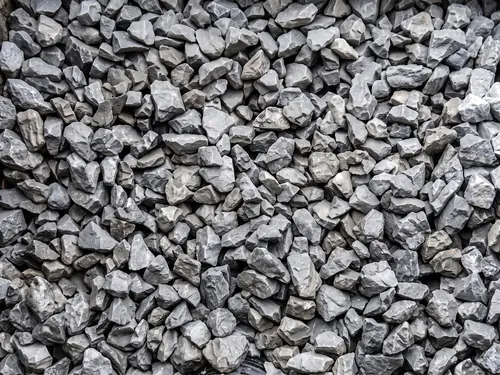
Estimate how much you need
Calculate Your Project
Estimate only. Add 10-15% for compaction and waste.
Browse more
Common uses for Riprap Med in San Francisco
Available in nearby cities
Plan your project
Related guides
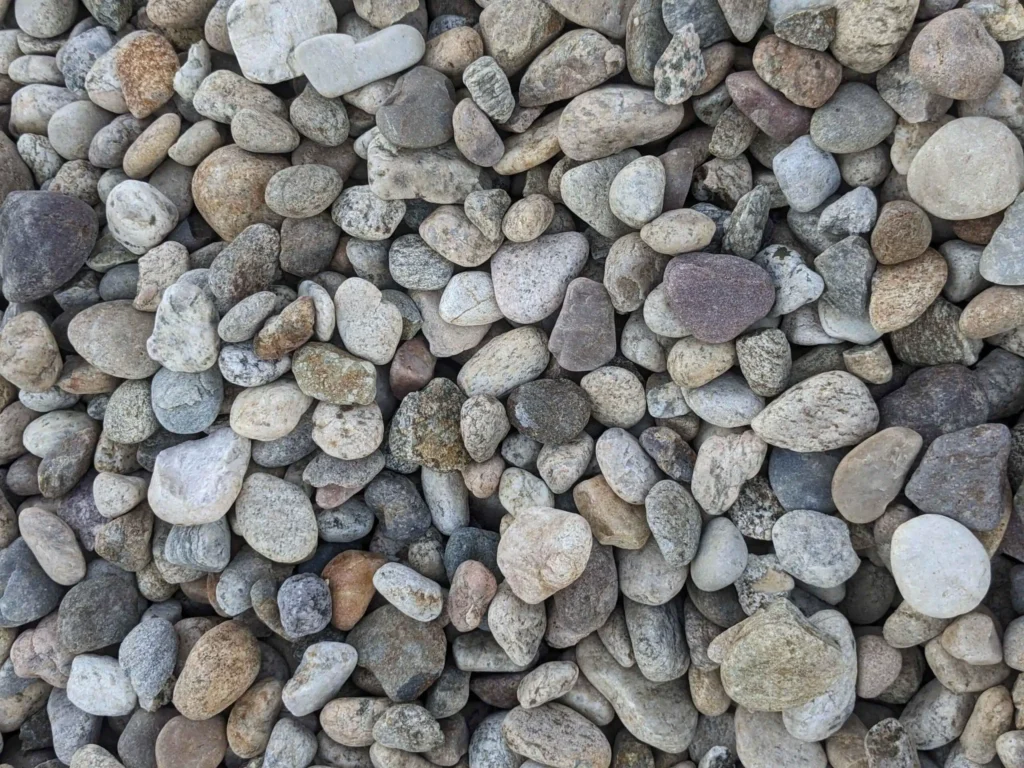 GUIDEHow Much Does River Rock Cost? By Ton or YardRiver rock cost depends on your ZIP code, order size, and whether you buy by the ton or the cubic yard. Here is how pricing works.Read guide →
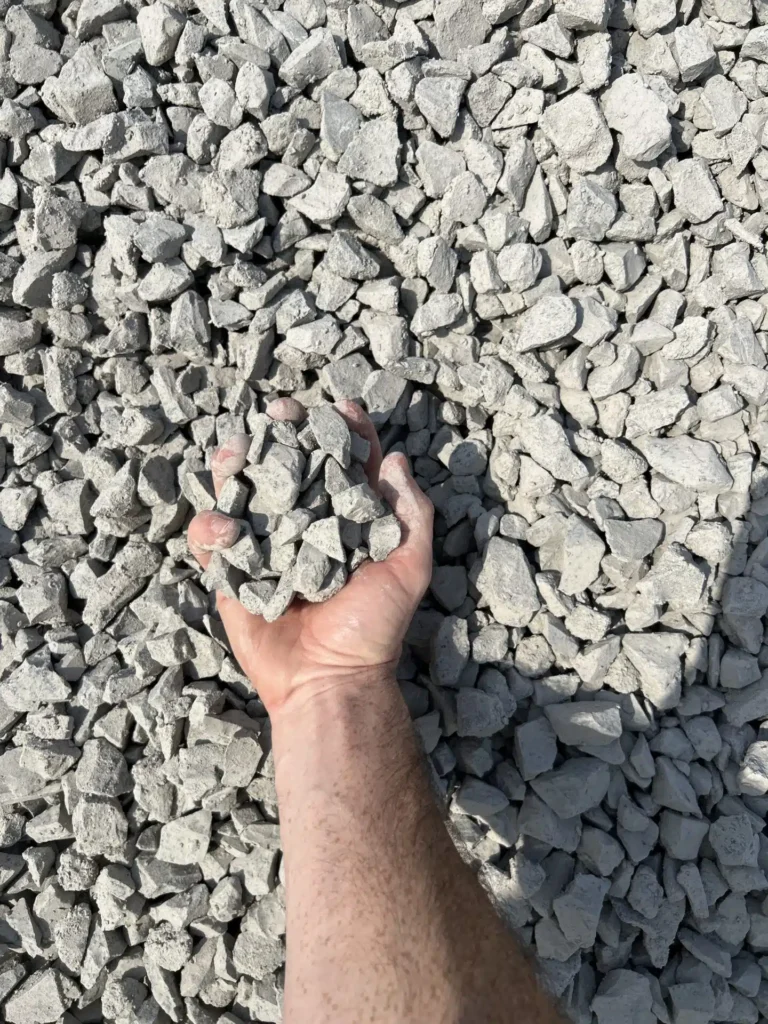 GUIDEWhat Size Crushed Stone Goes Under a Concrete SlabMost slabs need 4 to 6 inches of compacted crushed stone underneath. What size crushed stone under a concrete slab needs, and why it matters.Read guide →GUIDEWhat Is Crushed Stone? Sizes, Uses and Buying BasicsCrushed stone is quarried rock crushed and screened into angular pieces sold by the ton. Here is what it is, how it is graded, and where to use it.Read guide →
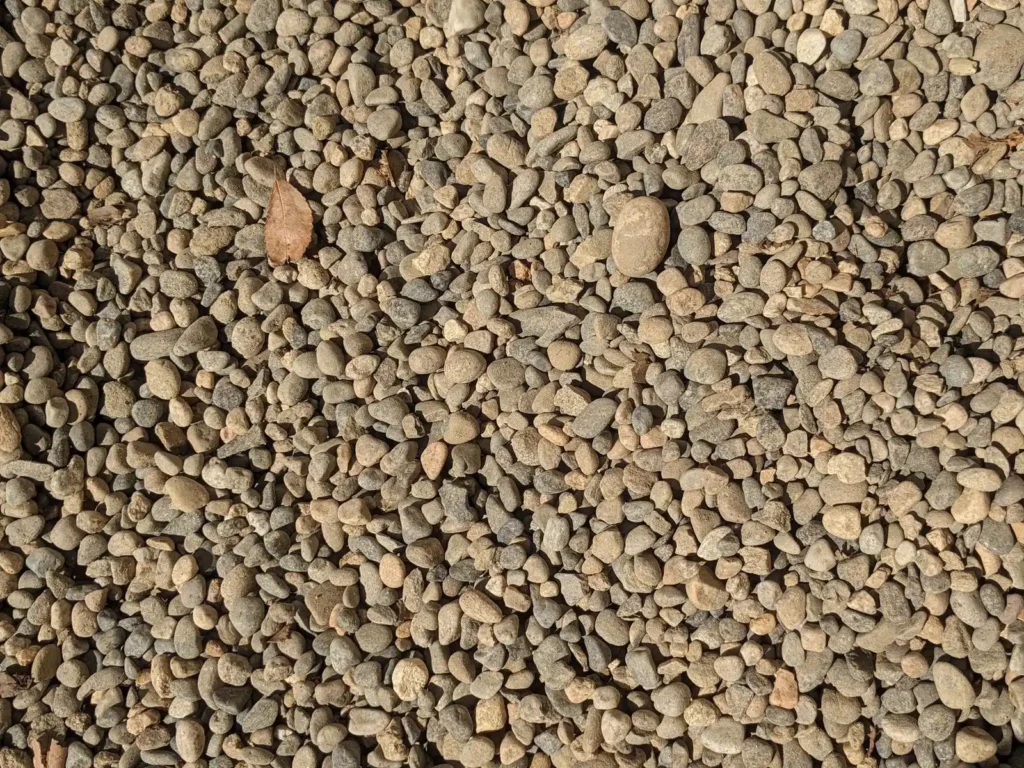 GUIDEHow Much Does Gravel Cost? A Practical Pricing GuideHow much does gravel cost and why does it vary? See the real factors behind ton pricing, delivery, and order size before you buy.Read guide →
Frequently Asked Questions
How much Riprap Med do I need for a San Francisco project?
Plan on roughly 35 to 40 square feet of coverage per ton at a 12 inch placed depth, a common thickness for shoreline and slope armor here. A 450 square foot bank section works out to about 12 tons. Send us your length, slope height, and target thickness and we will confirm the tonnage.
How does delivery work given San Francisco's steep, tight streets?
We plan around the city's access realities. Tell us about street grade, staging space, and whether a full truck can reach the drop point, and we will match the right equipment and timing. East Bay deliveries through Oakland often route more simply than tight in-city hillside addresses.
Can Riprap Med be used along the Bay shoreline?
Yes, shoreline protection is one of its core uses. The 4 to 9 inch grade resists wave wash, tidal undercutting, and wind-driven chop where smaller stone migrates away. Key the toe in below the tidal low line and place the stone over filter fabric for a lasting result.
Do I need filter fabric under riprap on Bay Area fill or clay?
Yes, on fine soils and Bay fill it is essential. Without a non-woven geotextile fabric between the soil and the stone, fines pump up through the riprap during the heavy winter storms and the placement settles. The fabric keeps the armor stable for the long term.
When should I install riprap in the Bay Area?
Install during the dry months, late spring through early fall, so protection is in place before the rainy season that runs roughly November through March. Demand for erosion-control materials spikes in early fall as crews race to beat the rains, so order ahead of October.
Is Riprap Med suitable for seismic ground?
Riprap is a flexible armor system. Unlike rigid concrete facing, an interlocked riprap blanket can accommodate minor ground movement and settling without cracking, then redistribute itself. That flexibility is one reason it is widely used for slope and shoreline protection across the seismically active Bay Area.
How is Riprap Med different from Drain Rock and River Rock?
Riprap Med is large angular armor stone that holds ground under moving water. Drain Rock is smaller aggregate used for subsurface drainage behind walls and under slopes. River Rock is smooth and rounded for decorative landscape features, not structural armor.
Do San Francisco storm outlets need a riprap apron?
If the compressed rainy-season discharge scours the soil or undermines the pipe, yes. A Riprap Med apron dissipates the flow energy and protects the channel. Flare it wider than the pipe and carry it past the point where the discharge spreads out.