Pipe Bedding Sand Calculator
Quickly estimate cubic yards, tons, and material cost for your Fill Sand project. Adjust the inputs below and the result updates in real time.
Calculate Your Project
Estimate only. Add 10-15% for compaction and waste.
How this calculator works
Cubic yards = (area × depth ÷ 12) ÷ 27
Tons = cubic yards × density × 27 ÷ 2000
Bedding sand around drainage or sewer pipe.
Enter your area and depth, and we'll compute cubic yards, tons, and a delivered material cost using current 2026 quarry pricing.
What the pipe bedding sand calculator computes
Pipe bedding sand cushions buried pipe (water lines, sewer lines, electrical conduit, irrigation lines) inside a trench. The calculator takes trench length, trench width, pipe diameter, and burial depth and returns cubic yards of Fill Sand needed. The math accounts for sand placement under the pipe (typically 4 inches), around the pipe (6 inches on each side), and over the pipe (6 to 12 inches depending on code).
A 100 foot run of 4 inch sewer pipe in an 18 inch wide trench at 36 inch depth needs about 5 to 6 tons of Fill Sand for full bedding and cover. Smaller pipe (1 inch irrigation tubing) at a 12 inch wide trench needs roughly half that. The trench geometry matters more than the pipe diameter for tonnage; wider trenches need more sand even with thin pipe inside.
Sand grade and why bedding matters
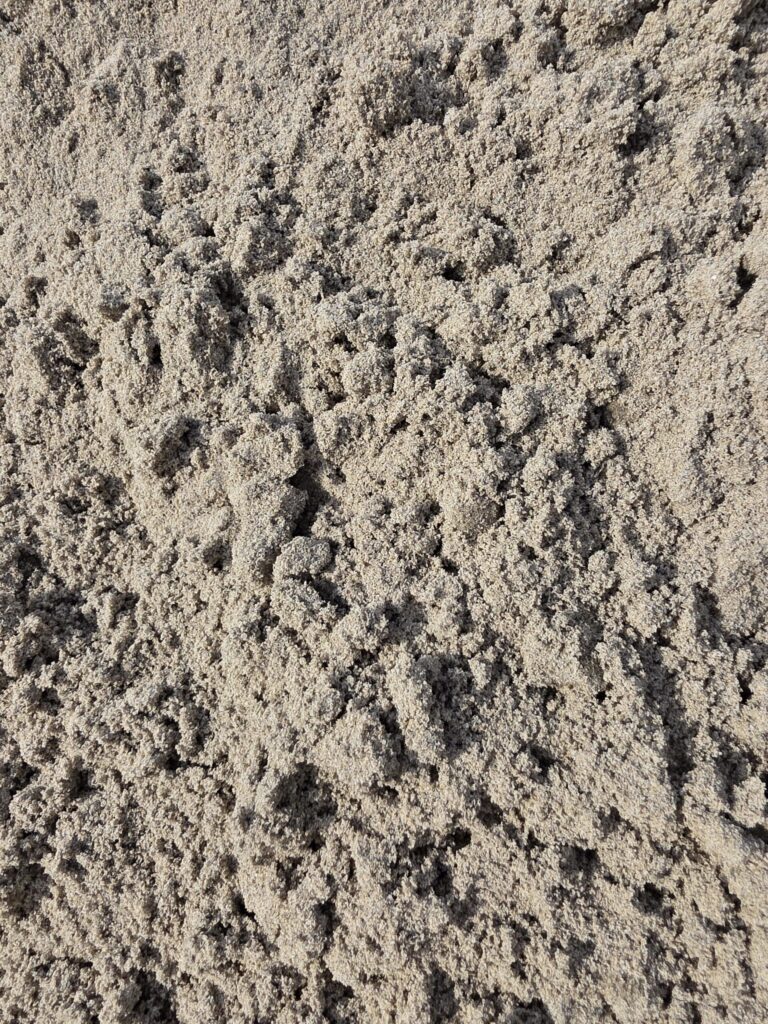
Fill Sand is the standard bedding grade: coarse, unwashed, less screened than Mason Sand hits all three criteria at the lowest price point ($33 to $86 per ton delivered).
also works for bedding but costs more without performance benefit ($41 to $307 per ton). Playground Sand is too clean and too fine for buried-pipe applications and washes out under groundwater flow. Pea Gravel and any larger aggregate are wrong; the angular fragments can cut pipe under settling load.
Bedding matters because soil contains stones, clay clumps, and roots that would otherwise concentrate point pressure on the pipe wall. Concentrated pressure over decades produces pinhole leaks (water lines) or cracked sections (sewer pipe). The sand bedding distributes load uniformly along the entire pipe length, eliminating point loads.
Trench geometry by pipe type
Different utilities have different bedding requirements. Sewer lines (4 to 6 inch diameter): 18 inch trench width, 4 inches of sand below the pipe, 6 inches of sand on each side, 12 inches of sand cover above the pipe before backfill begins.
Water lines (1 to 2 inch diameter copper or PEX): 12 inch trench width, 4 inches of sand below, 4 inches on each side, 6 inches of sand cover. Water lines also need burial below the local frost line (varies from 12 inches in southern states to 6 feet in northern states).
Electrical conduit (PVC or HDPE): 12 inch trench width, 4 inches of sand below, 4 inches on each side, 12 inches of sand cover. Above the cover sand, a warning tape (red for power, blue for water, green for sewer) is required by code in most jurisdictions to alert future digging.
Irrigation drip lines (3/4 inch tubing): minimum 6 inch burial, 2 inches of sand below and above, no side bedding needed. Drip lines are shallow enough that sand bedding is less critical than for deep utilities.
Install sequence and inspection
The install sequence is: trench to depth and slope, place 4 inches of Fill Sand at the bottom and level, lay pipe with required slope (1/4 inch per foot for sewer, level for water), shovel sand around pipe by hand to avoid disturbing alignment, place cover sand and tamp lightly, place warning tape if required, backfill with native soil in compacted lifts.
The "shovel by hand around the pipe" step is non-negotiable. Pushing sand around the pipe with a backhoe bucket invariably shifts the pipe out of grade, and a 0.5 inch slope deviation over 50 feet of sewer pipe makes the system non-functional. Pay the time penalty of hand-shoveling the first lift around the pipe.
Most jurisdictions require an inspector to verify pipe slope and bedding before backfill. Schedule the inspection in advance; if the inspector cannot come for a week, the trench sits open for a week. Better to know the inspection schedule before excavation starts.
Pricing and project planning
Fill Sand cost runs $140 to $210. Add the same again in delivery fees if the order is too small for combined pricing breaks. Most pipe projects also need backfill material above the sand (Crusher Run or compacted native soil), and aggregate yards can usually deliver both on the same truck.
Same-day delivery before 11 AM with 1 to 2 day lead times. Pipe bedding projects often involve a few hours of utility marking, then digging, then plumbing, then inspection, then backfill. Sequence the sand delivery for the day before digging starts so it is staged and ready when the trench opens. Sand left on the ground for more than a week starts to wash and lose its bedding properties; do not order weeks in advance.
For larger commercial pipe projects, switch from Fill Sand to a specified gradation sand (often called "Type II" or "Class A" sand) that meets ASTM or local-code requirements. Residential work universally accepts Fill Sand without additional specification.
Locating utilities before digging
Before any trench digs for pipe bedding, call 811 (the national one-call utility locator) at least 48 hours before excavation starts. The service is free in all 50 states and dispatches representatives of every utility with buried lines on the property (electric, gas, water, sewer, fiber, cable). Each utility marks their lines with colored paint or flags within the requested dig area.
The standard color code: red for electric, yellow for gas, blue for water, green for sewer, orange for telecommunications, purple for reclaimed water, pink for survey markings, white for proposed excavation. Photograph the markings before digging starts; rain or foot traffic wipes them out within days.
Even with utility marks, dig carefully within 18 inches of any marked line. Hand-dig the first 12 inches around marked utilities; mechanical excavation only after manual exposure confirms the actual line location. Marking accuracy is typically plus or minus 18 inches; relying on the paint alone has hit countless lines.
For lines marked but never used (abandoned electric service, old water laterals), confirm before cutting. Old "abandoned" lines sometimes turn out to be active service to a different meter or address. The local utility company can de-energize, isolate, or remove abandoned lines on request; the work is typically free if the line is in their easement.
Marking flags and paint indicate horizontal location but not depth. Buried utilities range from 6 inches deep (some irrigation drip lines) to 6 feet deep (deep sewer mains in northern states). Hand-dig with a digging bar or a small spade to find the line conservatively; mechanical excavation only after the line has been physically exposed and depth confirmed.
Materials this calculator covers
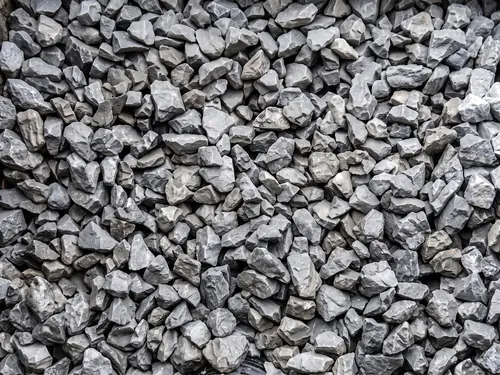
Other calculators
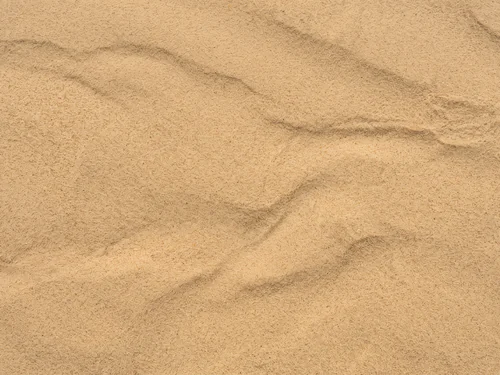 CALCULATORSand CalculatorUse this sand calculator to convert project length, width and depth into cubic yards and tons of Mason Sand, Concrete Sand or Fill Sand.Open calculator →CALCULATORPolymeric Paver Sand CalculatorPolymeric paver sand for filling joints between pavers.Open calculator →
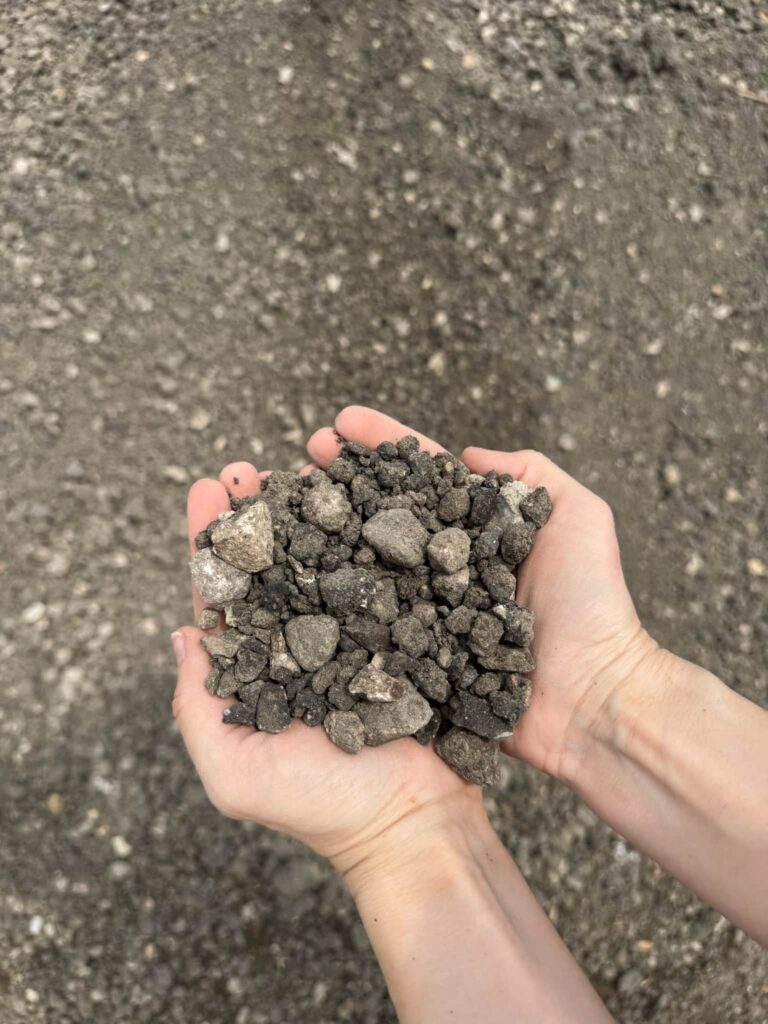 CALCULATORAsphalt Millings CalculatorUse this asphalt millings calculator to convert your area and depth into tons, based on the material's real density.Open calculator →
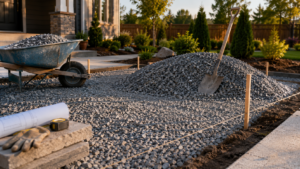 CALCULATORCubic Yards to Tons ConverterFree Cubic Yards to Tons Converter - enter your area in square feet and depth in inches and get instant tons, cubic yards, and an estimated material cost.Open calculator →
Related guides
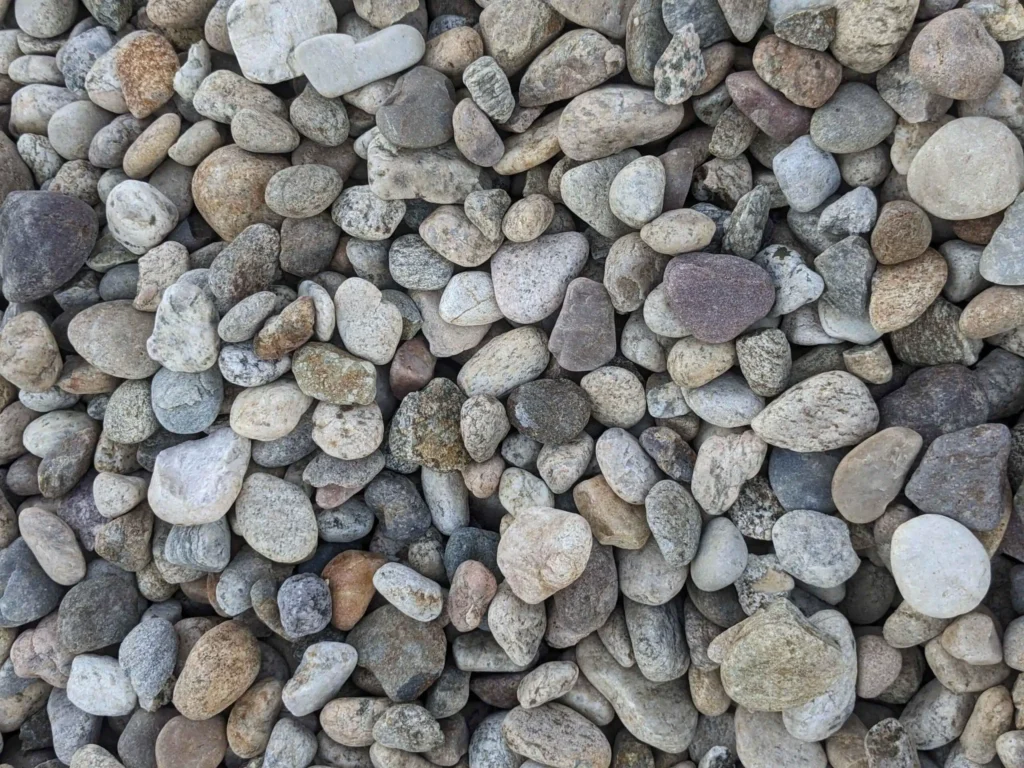 GUIDEHow to Clean River Rock and Restore Its ColorLearn how to clean river rock landscaping with rinsing, soap and vinegar methods, plus common mistakes to avoid for a brighter, longer lasting rock bed.Read guide →
 GUIDEHow to Lay a Gravel Driveway: Step-by-Step GuidePractical, field-tested guide: how to lay gravel driveway. Pulled from real US installer notes and 2026 supplier price data.Read guide →
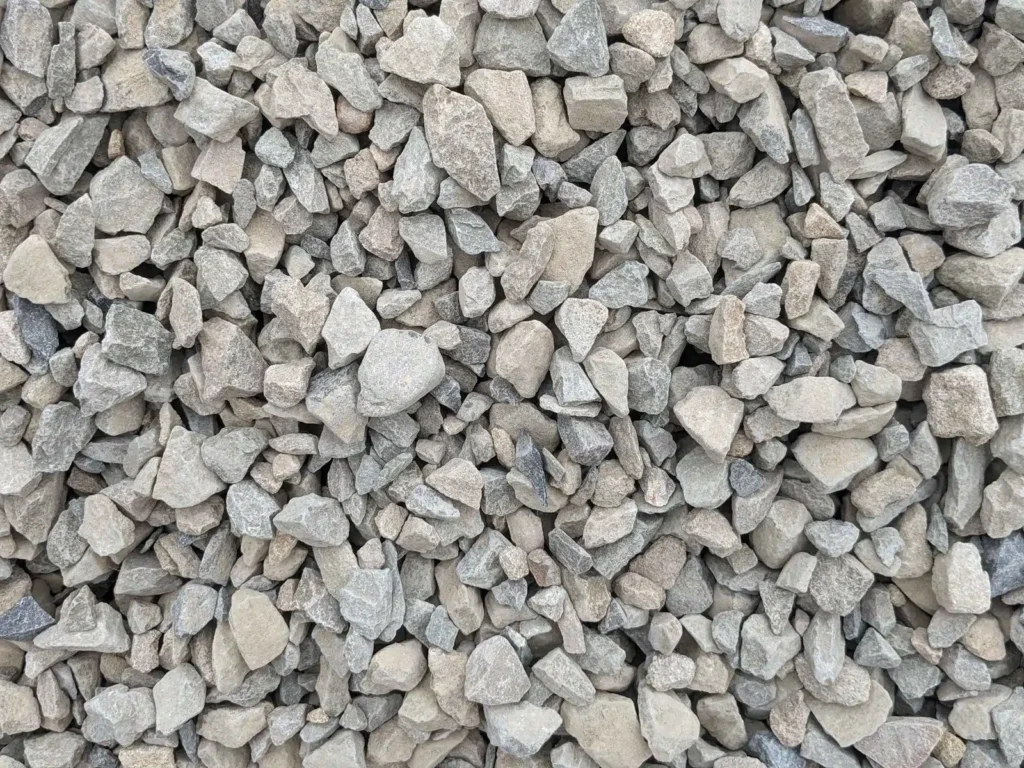 GUIDEDoes Gravel Stop Weeds? Honest Answer + What WorksPractical, field-tested guide: does gravel stop weeds. Pulled from real US installer notes and 2026 supplier price data.Read guide →
 GUIDEHow Much Gravel Do I Need? Quick Sizing GuidePractical, field-tested guide: how much gravel do i need. Pulled from real US installer notes and 2026 supplier price data.Read guide →
Frequently Asked Questions
How does this calculator work?
Enter area in sq ft and depth in inches. We convert to cubic yards, multiply by density to get tons, and divide by 2,000.
What if I don't know the depth?
Most projects use 4 inches. Drainage applications go deeper (6-12 in).
Why is the estimate different from my supplier quote?
Within 10% is normal - supplier quotes include delivery + minimum-load surcharges that depend on your distance from the quarry.
Should I round up?
Yes - round up to the nearest half-ton. The price-per-ton usually drops on larger orders.
Does this include delivery cost?
No - the result is material cost only. Get a delivered quote with your ZIP for the full price.
Can I use this for another material?
Density varies by material. This calculator is tuned for fill-sand; switch to the matching calculator for accurate results.