
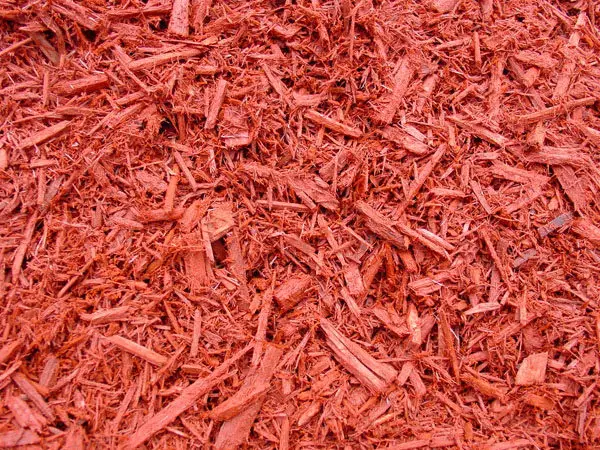
Red Mulch Delivery in Denver, CO
Bulk red mulch delivered in Denver, CO. Red color.
From $87.00/ton delivered, free delivery on full loads
Red Mulch in Denver: Color and Moisture Control at a Mile High
Denver gardening is a different game from most of the country. At 5,280 feet, the air is thin and dry, the sun is intense, and the soil tends toward heavy clay. Those conditions make mulch less of a decorative afterthought and more of a working tool, and red mulch by the cubic yard across Denver and the wider Denver-Aurora-Centennial metro, with loads sized from a single bed to full commercial and HOA grounds.
Why Denver Yards Use Red Mulch
In a city where many front yards lean into water-wise design, red mulch is a popular way to add color without adding thirsty plants. A red bed surrounding ornamental grasses, yuccas, and boulders gives a xeriscape warmth and finish. Beyond looks, the practical jobs are familiar across the metro: foundation and shrub beds, tree rings around the maples and ash that line older Denver streets, perennial and pollinator beds, and the spring color refresh homeowners do once the last hard frost passes. Property managers across Lakewood, Arvada, and Aurora specify red for the uniform, maintained look it gives commercial entries.
Common local projects
- Xeriscape accent beds where red color complements grasses, stone, and drought-tolerant plantings.
- Tree rings that protect roots and hold scarce moisture around street trees and yard maples.
- Foundation and entry beds where a red border lifts curb appeal on Denver's brick and stucco homes.
- Commercial and HOA grounds in Westminster, Thornton, and Aurora maintained for a consistent appearance.
Where a more natural tone fits, gardeners often pair red front beds with Brown Shredded Mulch in side and back areas, or use Hardwood Mulch on utility paths and slopes where color is secondary to coverage.
Local Delivery and Lead Times in Denver
We run loads through the Denver metro daily, and most of the surrounding suburbs are short hops from the city. Smaller orders starting at 3 tons reach most Denver addresses in 1-2 business days with a delivery fee of $226. Step up to an 8-ton load and most addresses get same or next day service with the fee dropping to $122. Order 15 tons or more and delivery is free, which is how most contractors and HOA jobs buy. Our standard service ring covers Lakewood and Arvada at about 5 to 7 miles out, plus Westminster, Aurora, and Thornton within roughly 9 miles, all without a surcharge.
Timing here is dictated by Denver's surprisingly late and unpredictable spring. A warm March can be followed by a heavy April or even May snow, so most experienced gardeners hold their main mulching until after the typical last-frost window in mid-May. Demand peaks from then through June, so booking a day or two ahead in late spring keeps your crew on schedule. Fall mulching is also smart, insulating roots before the dry, cold winter sets in.
How Much Red Mulch Do You Need?
Red mulch is sold by the cubic yard, and one yard covers about 100 square feet at a 3-inch depth, the standard for color and weed suppression. To estimate, measure your bed area in square feet, divide by 100, and that is your yard count for a 3-inch layer.
A practical Denver example: a typical xeriscaped front yard with an accent bed and two tree rings might total 700 square feet, which is roughly 7 cubic yards at 3 inches. A larger lot in Centennial or Aurora with multiple perennial beds and tree rings can reach 12 to 15 yards, which is exactly where the free-delivery tier becomes the obvious choice.
Denver Pricing Context
Bulk red mulch in Denver starts from $87 per yard at our best volume tier. Pricing steps down with the load: $117 per ton on a 3-ton minimum order, $99 per ton at the 8-ton mark, and $87 per ton once you reach 15 tons. Consolidating pays. A single 15-ton load beats three small ones on per-ton cost and removes the $226 delivery fee a small order carries, so a whole-property job is best handled in one larger drop.
Installation and Spreading Tips
Pull weeds and lightly cultivate the top of any old mulch so water can penetrate the layer. Edge beds cleanly; steel edging holds a crisp line in Denver's clay soils better than a cut edge that crumbles in dry weather. Spread to a consistent 3 inches and keep mulch pulled two to three inches off trunks and stems. In Denver's intense high-altitude sun, water the bed thoroughly right after spreading; this settles the red color, reduces dye runoff, and is good practice given how fast the dry air pulls moisture from a freshly disturbed bed.
Holding color in high-altitude sun
Denver's elevation means stronger UV than most cities, so colored mulch will soften over a full season more than it would at sea level. Quality red holds well, but plan on a light top-dress the following spring to restore the tone. Because local soils are clay-heavy and low in organic matter, this is also a good moment to work a thin layer of Compost into the bed before mulching, feeding the plants and improving the soil without changing the finished red surface.
Seasonal Notes for Colorado
Colorado's semi-arid, high-altitude climate brings low humidity, big day-to-night temperature swings, and a real winter. A 3-inch red layer earns its keep by slowing evaporation through the dry summer, buffering soil temperature against those daily swings, and insulating roots through the cold months. Watch the late-frost risk: holding your main spread until mid-May avoids burying tender new growth right before a surprise snow. Avoid spreading on saturated beds after a spring storm; let the clay drain a day first. For gardeners after a darker, more contemporary look against stone and grasses, Black Shredded Mulch is the common alternative, but red stays a Denver favorite for the warmth it brings to water-wise landscapes.
Planning a Bulk Delivery in the Denver Metro
A delivered bulk load saves you dozens of trips to the store, but it needs a landing spot, so plan the pile before the truck arrives. A driveway or a tarped patch of yard near your beds works best, and on most Denver and suburban lots the driveway apron is the natural choice. Think through the barrow run as well. If your beds are in a fenced backyard, stage the drop near the gate to keep your wheelbarrow trips short. For the larger lots common out in Centennial, Aurora, and Thornton, crews often have the truck split a 15-ton load into two staging points to halve the longest runs.
Doing the bed prep ahead of delivery day pays off, especially in Denver's dry air. Pulling weeds, edging, and cultivating in advance lets you move straight from the drop to spreading while the material is fresh, which matters because the surface dye on colored mulch sets best before the pile weathers. A full 15-ton load spread to 3 inches covers roughly 1,500 square feet of beds, a comfortable one-day project for a small crew that can transform the look of a xeriscaped front yard in a weekend.
Buying for the season
Once you have measured your beds, your yard count is easy to reuse. If you mulch every year, keep that number handy so you can reorder the same volume and lock in the better per-ton tier each spring. Because Denver's intense sun and dry air work on a freshly spread bed quickly, order close to your install date and water thoroughly right after spreading; fresh material always spreads and holds color best.
About Red Mulch
About Red Mulch
Red Mulch is a shredded wood mulch finished with a colorfast red colorant that gives beds a bold, uniform tone. It is made from clean, recycled wood fiber that is ground, screened, and dyed with iron-oxide and vegetable-based colorants that are safe for plants, pets, and people once cured. The result is a consistent brick-red product that resists the dull, patchy fading that undyed mulch shows as it weathers.
The material weighs about 800 pounds per cubic yard, light enough to handle and spread by hand yet dense enough to stay put on slopes and in wind. It is sold in bulk by the cubic yard, so you order exactly the volume your beds need without the waste and expense of bagged material. A 3-inch application is standard for both color impact and weed suppression, and one cubic yard covers roughly 100 square feet at that depth.
also moderates soil temperature, conserves moisture, and suppresses weeds while it slowly breaks down to improve the soil beneath. For a more natural appearance it pairs well with Brown Shredded Mulch or Hardwood Mulch in adjacent areas, and a base layer of Compost can be worked in beneath it when soil enrichment is part of the project.
What Red Mulch costs in Denver
Around Denver, red mulch is quoted by the ton with delivery layered in based on distance from the closest yard. Pricing in Denver starts at $87 per ton on full-truck loads, which works out to roughly $35 per cubic yard at the typical density of 800 lb per yard. Plan on roughly 270 sq ft of coverage per ton at 3 inches deep, which puts a single-car driveway in the 3 to 5 ton bracket.
How crews use Red Mulch in Denver
Denver contractors keep red mulch on the order sheet for a short list of standard installs. Top of the list is planting bed gravel, where the material is rolled out in tight urban lots and infill builds and screeded to grade. Right behind that is weed barrier gravel, common in dense neighborhoods where curb access is short and often paired with edging or fabric below the lift. Denver sits at about 713,252 residents, which means we see steady weekday traffic from landscape crews and weekend pickups from owner-builders.
Delivery day in Denver
Delivery in Denver runs out of the nearest pit; you get a two hour arrival window the evening prior and a call when the driver leaves the scale. Plan for 12 ft of clear path for a tandem and 14 ft for a tri-axle, plus a level area at the dump point so the bed lifts straight. Standard lead time on this lane is Mon-Sat, with same-day windows held open for orders that hit the desk before 11 AM and clear payment.
Related materials we deliver in Denver
Delivered pricing in Denver
| Order size | Price / ton | Delivery fee | Lead time |
|---|---|---|---|
| 3+ tons | $117 | $226 | 1-2 business days |
| 8+ tons | $99.00 | $122 | Same/next day |
| 15+ tons | $87.00 | Included | Free delivery |
Estimate how much you need
Calculate Your Project
Estimate only. Add 10-15% for compaction and waste.
Browse more
Available in nearby cities
Plan your project
Related guides
 GUIDEThe Different Types of Gravel and How to ChooseA plain-language guide to the main types of gravel, covering pea gravel, crushed stone, river rock and decomposed granite.Read guide →
 GUIDEWhat Are Screenings? A Guide to Crushed Stone FinesScreenings are fine crushed stone used for paver bases, joint fill and walkways. See what screenings are, common types, and mistakes to avoid.Read guide →GUIDEWhat to Put Under River Rock for Landscaping BedsHere is what to put under river rock landscaping: a compacted base where needed, then landscape fabric, then rock, to stop weeds and settling.Read guide →GUIDEHow to Clean River Rock and Restore Its ColorLearn how to clean river rock landscaping with rinsing, soap and vinegar methods, plus common mistakes to avoid for a brighter, longer lasting rock bed.Read guide →
Frequently Asked Questions
How much red mulch do I need for a Denver xeriscape bed?
Measure the bed area in square feet and divide by 100 for a 3-inch depth. A typical xeriscaped front yard with an accent bed and two tree rings, around 700 square feet, needs about 7 cubic yards. Larger lots can reach 12 to 15 yards.
How fast can you deliver red mulch in Denver?
A 3-ton order arrives in 1 to 2 business days. An 8-ton load usually qualifies for same or next-day delivery to most Denver addresses. During the late-spring peak we recommend booking a day or two ahead.
What is the minimum order for bulk red mulch in Denver?
The smallest delivered tier is 3 tons at $117 per ton with a $226 delivery fee. An 8-ton load is $99 per ton with a $122 fee, and 15 tons or more is $87 per ton with free delivery.
Do you deliver red mulch to Lakewood, Arvada, and Aurora?
Yes. Lakewood and Arvada are about 5 to 7 miles out, and Westminster, Aurora, and Thornton are within roughly 9 miles, all inside our standard Denver service ring with no surcharge.
When should I mulch in Denver given the late frosts?
Most experienced Denver gardeners hold their main spread until after the typical last-frost window in mid-May, because a warm March can be followed by an April or May snow. Fall is also a good time to mulch and insulate roots before winter.
Will the red color fade at Denver's altitude?
Denver's elevation means stronger UV than most cities, so colored mulch softens over a season more than it would at sea level. Quality red holds well, and a light top-dress the following spring restores the tone.
Does red mulch help with Denver's dry climate?
Yes. A 3-inch layer slows the rapid evaporation that the high-desert air drives all summer and buffers soil against Denver's big day-to-night temperature swings. Watering thoroughly right after spreading is good practice in the dry air.
Is red mulch a good fit for xeriscaping?
Very much so. It adds warm color around grasses, yuccas, and boulders without adding thirsty plants, and it conserves moisture in the beds. That combination makes it a popular choice for Denver's water-wise front yards.
Should I amend the soil before spreading red mulch in Denver?
It is worth considering. Denver's clay-heavy soils are often low in organic matter, so working a thin layer of compost into the bed before mulching feeds the plants and improves the soil without changing the finished red surface.
How much does red mulch cost per yard in Denver?
Bulk red mulch starts from $87 per yard at the 15-ton tier. Smaller loads cost more per unit and carry a delivery fee, so consolidating a whole-property job into one larger drop lowers your rate and removes the fee.