
Crushed Concrete Driveway Guide: Depth, Base and Cost
Everything you need to plan a crushed concrete driveway: base depth, sizing, installation steps and what it costs to order.
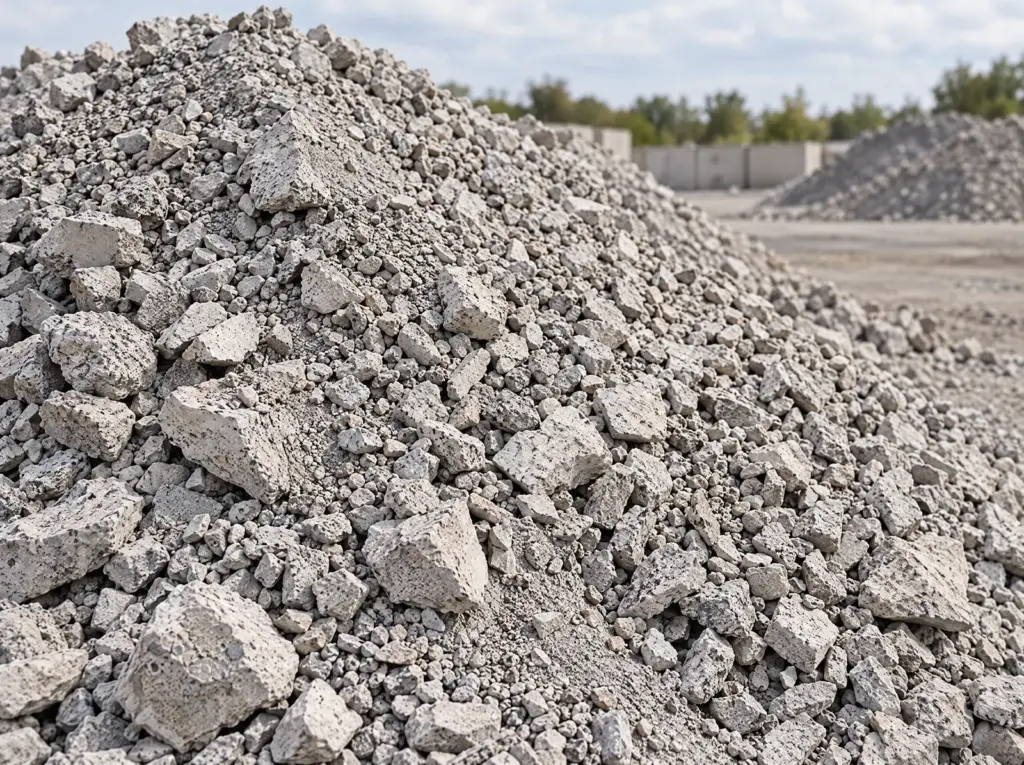
A crushed concrete driveway starts with reclaimed concrete: old slabs, sidewalks and foundations that have been broken down and screened into an angular, gravel like material. The crushed pieces compact into a hard, stable surface that handles vehicle traffic well, which is why it has become a popular material for driveway gravel among homeowners replacing loose stone or repairing a washed out drive.
This page covers how to plan, size and install a crushed concrete driveway, from picking a depth to keeping the surface in good shape once it is down.
Why Crushed Concrete Suits a Driveway
Crushed concrete compacts tighter than round pea gravel because its broken, angular faces lock together instead of rolling past each other. That interlock is what makes it good for a driveway: once compacted, the surface resists rutting under a parked car, a trailer or a delivery truck, and it sheds water instead of holding puddles the way loose stone can. When people compare crushed concrete vs gravel, the difference comes down to shape. Natural gravel is rounded and tends to shift underfoot and under tires, while crushed concrete's broken edges bind into a firmer crust once it has been rolled or driven over a few times.
Is crushed concrete good for driveways specifically, as opposed to a walkway or a parking pad? For a base layer and for the finished surface on a working driveway, yes. It holds up under regular vehicle weight, does not rut as easily as pea gravel, and needs less frequent topping off once it has been properly compacted. It also handles freeze and thaw cycles reasonably well, since the compacted, angular material drains rather than trapping water that could heave under a frozen surface. You can read more about the base material itself, including how it is produced and where it is used, on the Crushed Concrete material page.
Design and Sizing for a Crushed Concrete Driveway
Plan the width and slope before you order material. A single car crushed concrete driveway usually needs to be wide enough for one vehicle plus some working clearance, while a double wide drive needs roughly twice that width. Crown the center of the drive or slope the whole surface slightly to one side so rainwater runs off instead of pooling in the compacted material. Think through where the driveway meets the street or garage apron too, since a smooth transition there keeps the crushed concrete from washing out or catching a bumper on the first hard rain.
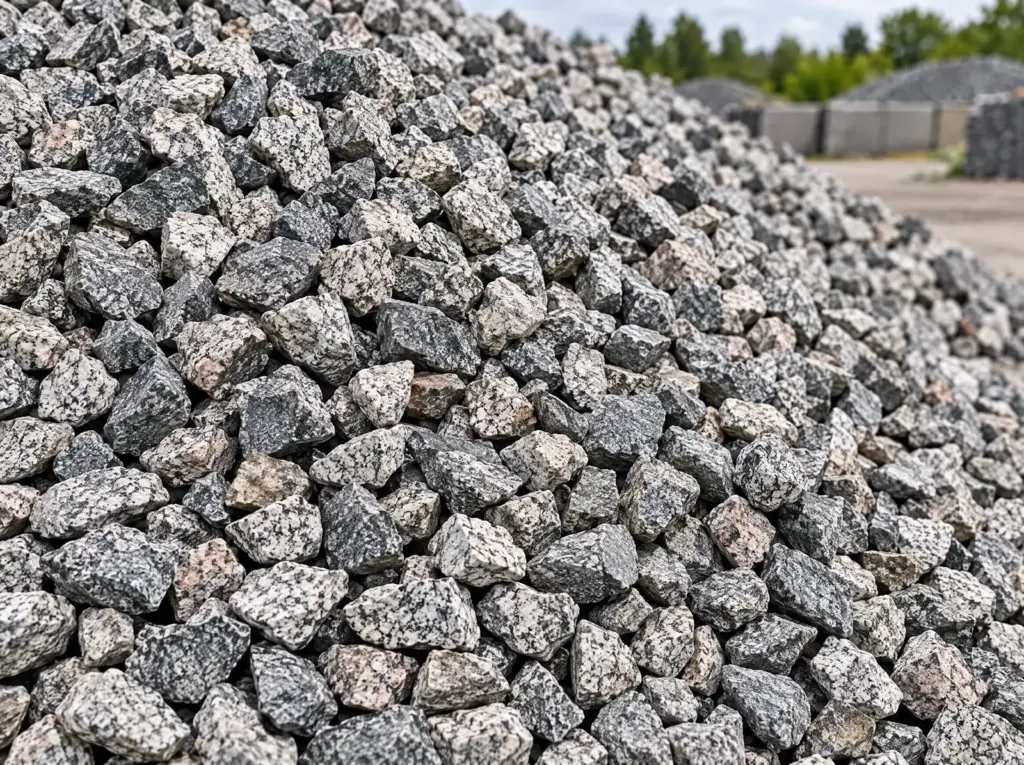
Because piece size in a load of crushed concrete varies, expect a mix of finer material and larger chunks in the same load. The larger pieces tend to settle toward the base of the lift, while the finer material works up into the surface once you run a plate compactor over it. The finished color runs gray to white, since crushed concrete carries the tone of the original slab it came from, so expect some variation from load to load rather than one uniform shade across the whole driveway.
Depth, Base and How Much to Order
Crushed concrete driveways are typically built in two lifts: a compacted base course several inches deep, topped with a finer wearing course that gets compacted again once it is spread and raked to grade. Depth needs vary with soil conditions and traffic, so plan on more material under a driveway that regularly carries a truck or trailer than under a drive used only for passenger cars.
Because crushed concrete is sold by the ton, and a cubic yard of it weighs about 2,500 pounds, it does not take a large area at a modest depth to add up to several tons of material. Rather than estimate the quantity by hand, run your driveway's length, width and target depth through the calculator to get a ton figure you can order against.
Installing a Crushed Concrete Driveway
Once you know the depth and the ton figure, installation follows a standard sequence. Working in two compacted lifts rather than dumping the full depth in one pass is what keeps the surface dense from top to bottom instead of loose underneath a firm looking crust.
- Mark the driveway's edges and remove grass, topsoil and any soft or organic material down to firm subgrade.
- Lay geotextile fabric over the exposed subgrade if the native soil is soft or wet, to keep the crushed concrete from working down into the mud over time.
- Spread the base lift of crushed concrete in an even layer and run a plate compactor or roller over it until it stops moving underfoot.
- Add the top lift, rake it to the crown or slope you planned, and compact again in overlapping passes.
- Check the surface for low spots that could hold water and add material to fill them before the final compaction pass.
- Install edge restraint, such as steel or plastic edging, along the sides if you want to keep the crushed concrete from spreading into the lawn.
Maintenance and Mistakes to Avoid
A well built crushed concrete driveway needs little upkeep beyond an occasional pass with a rake or a drag mat to redistribute material that has shifted toward the edges or a low spot. Close ruts as soon as they appear, since a small rut left alone tends to channel water and grow with the next hard rain. Keep an eye on the edges where lawn meets driveway too, since grass and soil can creep in over a season or two if there is no edge restraint holding the line.
- Skipping compaction between lifts, which leaves the driveway soft and prone to rutting under the first heavy vehicle.
- Building the surface flat instead of crowned or sloped, so water sits on the drive instead of running off.
- Spreading crushed concrete too thin over soft native soil without a fabric layer, which lets the base work down into the mud.
- Driving heavily on the new surface before the final compaction pass has set the material.
Cost and Ordering
Crushed concrete is sold and delivered by the ton, priced to your ZIP code, so the amount you order should match the ton figure from your depth and area calculation rather than a rough guess. If you are still weighing crushed concrete against another reclaimed material for the same driveway, the asphalt millings vs crushed concrete comparison lays out how the two perform side by side.
Crushed Concrete for this project
Related project guides
Browse more
Related guides
 GUIDEWhat Is #57 Stone? Uses, Size, and Cost ExplainedPractical, field-tested guide: what is 57 stone. Pulled from real US installer notes and 2026 supplier price data.Read guide →
 GUIDEHow Deep Should a Gravel Driveway Be? Layer GuidePractical, field-tested guide: how deep should gravel driveway be. Pulled from real US installer notes and 2026 supplier price data.Read guide →
 GUIDEHow Much Does River Rock Cost? By Ton or YardRiver rock cost depends on your ZIP code, order size, and whether you buy by the ton or the cubic yard. Here is how pricing works.Read guide →
 GUIDEWhat Size Crushed Stone Goes Under a Concrete SlabMost slabs need 4 to 6 inches of compacted crushed stone underneath. What size crushed stone under a concrete slab needs, and why it matters.Read guide →
Frequently Asked Questions
How thick should the base layer be under a crushed concrete driveway?
Most crushed concrete driveways use a base lift several inches deep, compacted, followed by a thinner top lift that is compacted again. Exact depth depends on your soil and the weight of the vehicles using the drive: heavier trucks or trailers call for a deeper base than a driveway used only for passenger cars. Use the calculator to match depth to your driveway's dimensions before you order.
What is the difference between crushed concrete vs gravel for a driveway?
Crushed concrete generally holds its shape longer between regradings.
Is crushed concrete good for driveways that see heavy vehicle traffic?
Yes, within reason. Once properly compacted in lifts, crushed concrete forms a dense, interlocked surface that handles the weight of trucks and trailers better than loose gravel. A deeper base and a thorough compaction pass matter more as the vehicles using the driveway get heavier, so plan extra base depth for a drive that regularly sees commercial traffic.
Does a crushed concrete driveway need geotextile fabric underneath it?
Fabric is not required on every driveway, but it helps on soft, wet or clay heavy native soil. It keeps the crushed concrete base from working down into the mud over time, which would otherwise let the driveway settle and rut unevenly. On firm, well drained subgrade, many installers skip it and compact the base directly onto the native soil.
How soon can I drive on a new crushed concrete driveway?
Wait until the final lift has been fully compacted and checked for low spots before regular driving. Light foot traffic is fine right away, but heavy vehicles driven over an uncompacted or partly compacted surface can push material out of place and create ruts that are harder to fix later, once the driveway is in daily use.
Does a crushed concrete driveway need maintenance every year?
Plan on periodic upkeep rather than a strict annual schedule. Rake or drag the surface to redistribute material that has migrated toward the edges, and close up any ruts as soon as they appear. How often that is needed depends on rainfall, traffic and how well the driveway was crowned and compacted during installation.
What color should I expect from a crushed concrete driveway?
Crushed concrete runs gray to white, since it takes on the color of the original concrete slabs it was made from. Expect some variation from load to load, and even within the same load, rather than one uniform shade across the whole driveway surface once it is spread and compacted.
How much does crushed concrete weigh for planning a delivery?
A cubic yard of crushed concrete weighs about 2,500 pounds. Since the material is sold and delivered by the ton, that weight is what determines how many tons a given driveway area and depth will need. Use the calculator with your driveway's length, width and target depth to get an accurate ton figure before you order.