Concrete Sand Delivery in Philadelphia, PA
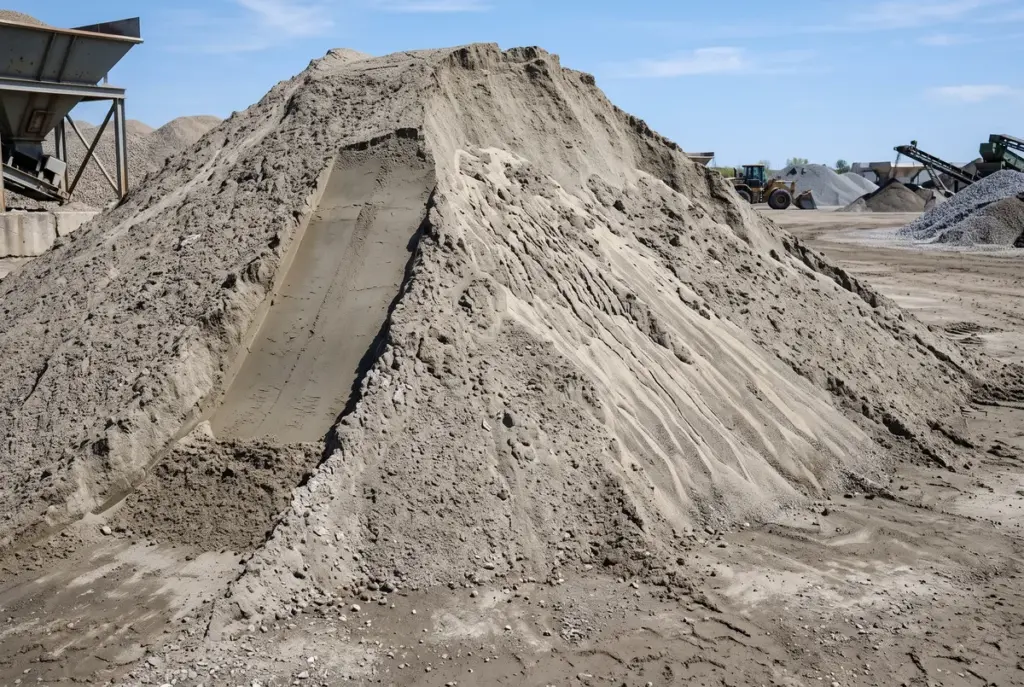
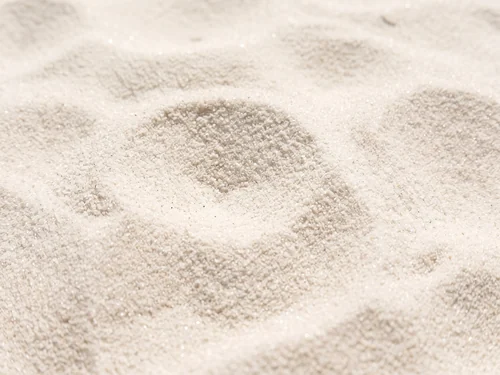
Bulk concrete sand delivered in Philadelphia, PA. Stone size 0 - 3/8. Tan / gray color.
Concrete Sand in Philadelphia, PA: The Workhorse Aggregate for City Builds
If you are pouring footings in Fishtown, bedding pavers in a South Philly rowhome backyard, or batching concrete on a job in University City, concrete sand is the aggregate that ties the work together. This is a coarse, washed sand, graded from 0 to 3/8 inch in a tan to gray tone, and it is the gritty backbone of nearly every structural pour and hardscape base across the city. MyGravelBuddy delivers it bulk by the ton throughout Philadelphia and the wider Philadelphia-Camden-Wilmington metro, with pricing that.
Philadelphia crews lean on concrete sand for a simple reason: its angular, well-graded particles lock together and create the friction and void structure that cement paste needs to cure into something strong. Unlike a fine play sand or a soft mason blend, concrete sand carries load. That matters in a city where freeze-thaw cycles, dense clay-heavy soils east of the Schuylkill, and a century of settling masonry all conspire against a sloppy base.
Why Local Builders Use Concrete Sand
Contractors and homeowners across Philly reach for concrete sand on four main jobs:
- Concrete mixing. It is the fine aggregate in standard concrete mixes, blended with stone and Portland cement for slabs, footings, steps, and curbs.
- Paver bedding. A screeded one inch layer of concrete sand gives brick and concrete pavers a firm, drainable setting bed, ideal for the patios and walkways common in Chestnut Hill and Mount Airy.
- Pipe bedding. Its coarse, free-draining grade cradles utility and drainage pipe without point loading, a must under Philadelphia's tight permit and inspection regime.
- Masonry work. While fine joint work calls for Mason Sand, concrete sand is the go-to body sand for parge coats, scratch coats, and bulk masonry mortar where strength outranks finish smoothness.
For deeper base lifts under a driveway or heavy patio, many local crews pair concrete sand with Paver Base for the structural foundation and reserve Fill Sand for non-structural grade raising and backfill. Knowing which sand does which job saves money and prevents callbacks.
Local Delivery and Lead Times in Philadelphia
We run bulk dump deliveries into every Philadelphia zip from Center City out through the Northeast, Northwest, and Southwest neighborhoods, and into the surrounding metro toward Bethlehem, Reading, and Allentown roughly 48 miles out. Smaller single-ton orders typically land in 1 to 2 business days. Mid-size loads of 6 tons and up often arrive same or next day, and full 16-ton-plus loads move on our own scheduled routes. City logistics are real here: narrow rowhouse streets, residential parking permits, and trolley and bus lanes all factor in. Tell us your access at order time so we can size the truck right, whether that means a tandem-axle dump for a tight South Philly block or a full tri-axle for a commercial site in the Navy Yard.
How Much Concrete Sand Do You Need?
Concrete sand is sold by the ton, and at roughly 2,700 pounds per cubic yard it runs close to 1.35 tons per yard. For a quick estimate, a one-inch screeded paver bedding layer covers about 300 to 320 square feet per ton. So a 600 square foot patio in Roxborough needs roughly 2 tons of bedding sand. For a deeper application, picture a pipe-bedding trench 80 feet long, 2 feet wide, with 6 inches of sand under and around the pipe: that is about 0.6 cubic yards, just under 1 ton. Always round up; it is cheaper to have a little extra than to halt a pour and wait on a second delivery.
Philadelphia Pricing Context
Bulk concrete sand delivered in Philadelphia, with the per-ton rate dropping as your load grows. Our three delivery tiers work like this:
- 1 ton minimum: plus a $291 delivery fee, arriving in 1 to 2 business days. Best for small repairs and top-ups.
- 6 ton minimum: plus a $157 delivery fee, with same or next day delivery. This is the sweet spot for a typical patio or driveway base.
- 16 ton minimum: with free delivery. The best value for full pours, large hardscape jobs, and contractor stocking.
The jump from the 6-ton to the 16-ton tier is where the real savings live: dropping the delivery fee to zero and the per-ton rate to $112 can shave hundreds off a project once you are moving real volume. If you are coordinating a multi-phase build in the metro, consolidating into one 16-ton drop almost always beats splitting it into smaller hauls.
Placement and Installation Tips
Concrete sand wants to be screeded, not dumped and left. For paver beds, set your screed rails to a true one inch and pull a straight edge across them for a flat, consistent setting layer. Do not compact the bedding sand before laying pavers; compact afterward with a plate so the units settle into place. For concrete batching, keep your sand under cover or tarped so its moisture content stays predictable, since wet sand throws off your water-cement ratio. When backfilling a pipe trench, place sand in lifts and tamp lightly so you support the pipe without crushing it. On Philadelphia rowhome jobs where the sand pile sits in a shared alley or on the sidewalk, work it down quickly so you are not tying up the right of way, and shovel directly from the heel of the pile to keep the material clean. A neat, well-managed pile also keeps the peace with neighbors and inspectors on tight city blocks.
Seasonal Notes for Pennsylvania
Philadelphia's climate swings hard, and concrete sand work has to respect it. Spring is the busiest delivery window as the ground thaws and patio and driveway projects kick off across the metro. Summer pours are fine but watch sand temperature in direct sun, since hot sand accelerates set time. The real caution is winter: Pennsylvania's freeze-thaw cycle is brutal on any base laid over saturated, frost-heaving soil. If you must work in late fall, place and compact your base before the first hard freeze, and never bed pavers on frozen sand. Stockpiled concrete sand can clump and freeze, so order close to your install date in the colder months and keep the pile tarped. Order ahead in March and April when demand from Philadelphia, Reading, and Allentown contractors stacks up our routes.
Whether you are a homeowner squaring up a backyard in the Northeast or a contractor batching concrete on a commercial slab downtown, MyGravelBuddy gets clean, consistent concrete sand to your Philadelphia jobsite on a schedule that keeps the crew working.
About Concrete Sand
Concrete sand is a coarse, washed sand graded from 0 to 3/8 inch, with a natural tan to gray color and an angular particle shape that makes it the standard fine aggregate for structural concrete. Sold by the ton and weighing roughly 2,700 pounds per cubic yard, it is one of the most versatile aggregates on any jobsite.
The defining quality of concrete sand is its gradation. Because the particles range across a spread of sizes rather than sitting all at one fineness, they pack with a controlled void structure that cement paste fills and binds. That gives finished concrete its compressive strength and durability. The same coarse, free-draining nature makes concrete sand an excellent setting bed for pavers and a clean cradle for utility and drainage pipe.
Compared with finer products, concrete sand is built for load rather than finish. Mason Sand is softer and finer, tuned for smooth mortar joints and tight masonry work. Fill Sand is an economical, less-processed material for raising grade and backfilling non-structural areas. Paver Base, a crushed and graded stone product, handles the deep structural sub-base beneath a hardscape, with concrete sand screeded on top as the final bedding layer. Used together, these materials build a base system that lasts.
Concrete sand is washed to remove silt, clay, and organic fines, so it batches cleanly and drains well. It works in standard concrete mixes, mortar bodies, parge and scratch coats, pipe and conduit bedding, and as the bedding course under brick, flagstone, and concrete pavers. Its strength, drainage, and consistency make it the dependable choice wherever a project needs sand that performs under pressure rather than just filling space.
What Concrete Sand costs in Philadelphia
Local Philadelphia yards quote concrete sand by the ton; the delivered number includes fuel, the truck, and the haul. Send your ZIP and load size and we will send back a same-hour quote with the truck rate and the per-ton figure spelled out. A ton of this material spreads across about 80 sq ft when laid 3 inches deep, useful when you are sizing a patio base or a walkway run.
How crews use Concrete Sand in Philadelphia
In and around Philadelphia, concrete sand shows up most often on two project types. The most common deployment is pipe bedding, often in tight urban lots and infill builds in two to three inch lifts. Second on the list is base course gravel, which we see in dense neighborhoods where curb access is short on partial-truck deliveries. At roughly 1,603,797 people, the Philadelphia order mix leans toward 3 to 8 ton residential drops with the occasional 16 ton job for a contractor.
Delivery day in Philadelphia
A typical Philadelphia drop is dispatched from the closest yard with a two hour window and a heads-up call once the truck is loaded. Tandem trucks want a 12 ft lane in and out; tri-axles need 14 ft, and both want firm ground at the tipping spot so the load releases cleanly. Standard lead time on this lane is Mon-Sat, with same-day windows held open for orders that hit the desk before 11 AM and clear payment.
Related materials we deliver in Philadelphia
Estimate how much you need
Calculate Your Project
Estimate only. Add 10-15% for compaction and waste.
Browse more
Common uses for Concrete Sand in Philadelphia
Available in nearby cities
Plan your project
Related guides
 GUIDEHow Deep Should a Gravel Driveway Be? Layer GuidePractical, field-tested guide: how deep should gravel driveway be. Pulled from real US installer notes and 2026 supplier price data.Read guide →
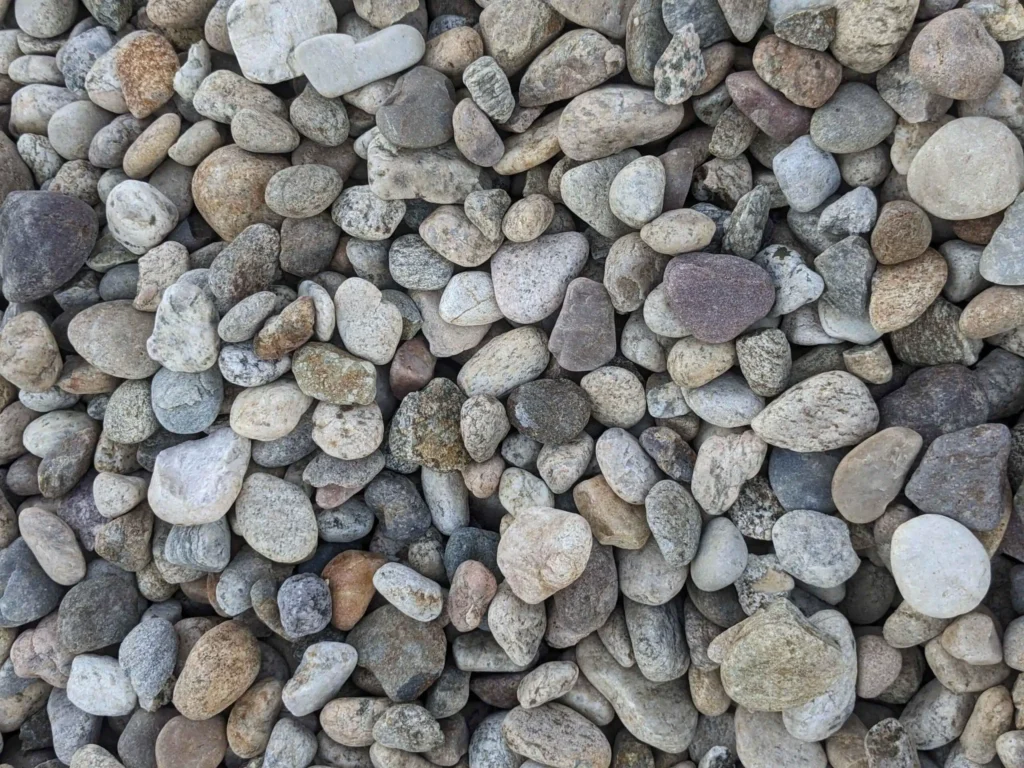 GUIDEHow Much Does River Rock Cost? By Ton or YardRiver rock cost depends on your ZIP code, order size, and whether you buy by the ton or the cubic yard. Here is how pricing works.Read guide →
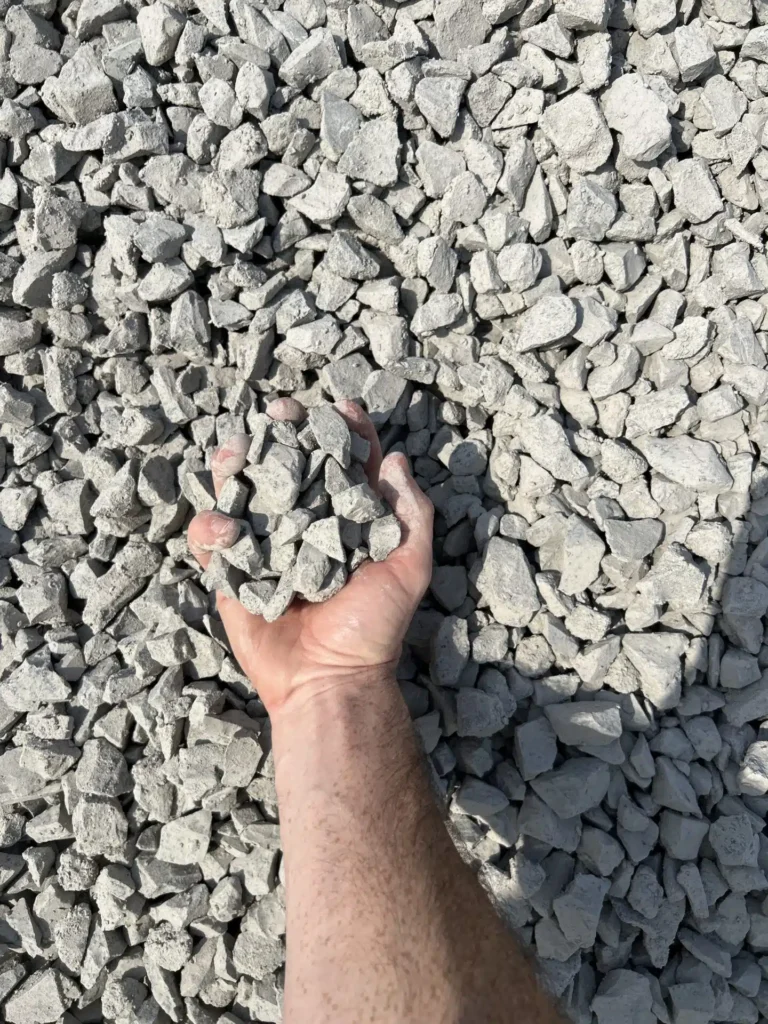 GUIDEWhat Size Crushed Stone Goes Under a Concrete SlabMost slabs need 4 to 6 inches of compacted crushed stone underneath. What size crushed stone under a concrete slab needs, and why it matters.Read guide →GUIDEWhat Is Crushed Stone? Sizes, Uses and Buying BasicsCrushed stone is quarried rock crushed and screened into angular pieces sold by the ton. Here is what it is, how it is graded, and where to use it.Read guide →
Frequently Asked Questions
What is concrete sand used for in Philadelphia?
Philadelphia crews use concrete sand as the fine aggregate in concrete mixes, as a screeded bedding layer under pavers, as free-draining pipe bedding, and as a body sand for masonry parge and scratch coats. Its coarse, angular grade carries load and drains well, which suits the city's clay-heavy soils and freeze-thaw climate.
How fast can you deliver concrete sand in Philadelphia?
Single-ton orders typically arrive in 1 to 2 business days. Loads of 6 tons or more often deliver same or next day, and full 16-ton loads move on our scheduled routes. Tell us about street access at order time so we can match the right truck to your block.
How much concrete sand do I need for a patio?
For a one-inch paver bedding layer, one ton of concrete sand covers roughly 300 to 320 square feet. A 600 square foot patio needs about 2 tons of bedding sand. Always round up slightly so you are not waiting on a second delivery mid-job.
What is the difference between concrete sand and mason sand?
Concrete sand is coarse and angular, built for strength in concrete and as a paver bedding layer. Mason Sand where joint smoothness matters.
Can I use concrete sand for paver bedding?
Yes, concrete sand is the standard bedding material under brick and concrete pavers in Philadelphia. Screed it to a true one inch over a compacted Paver Base, set your pavers, then compact with a plate. Do not compact the bedding sand before laying the pavers.
Do you deliver concrete sand outside Philadelphia?
Yes, we deliver throughout the Philadelphia-Camden-Wilmington metro and out to nearby Pennsylvania cities including Bethlehem, Reading, and Allentown, each roughly 48 miles from Center City. Consolidating into a 16-ton load for free delivery usually gives the best value on out-of-town drops.
How should I store concrete sand in winter?
Pennsylvania winters can freeze and clump a stockpile, so order close to your install date in cold months and keep the pile tarped. Never bed pavers on frozen sand, and place and compact any base before the first hard freeze to avoid frost heave problems in spring.
How much does concrete sand weigh per cubic yard?
Concrete sand weighs roughly 2,700 pounds per cubic yard, which works out to about 1.35 tons per yard. We sell it by the ton, so factor that conversion when you are estimating volume for a slab, trench, or bedding layer.
Is concrete sand the same as fill sand?
No. Concrete sand is washed and graded for structural use in concrete and bedding. Fill Sand where strength or clean drainage is required.