Road Base Calculator
Quickly estimate cubic yards, tons, and material cost for your Class 5 Base project. Adjust the inputs below and the result updates in real time.
Calculate Your Project
Estimate only. Add 10-15% for compaction and waste.
How this calculator works
Cubic yards = (area × depth ÷ 12) ÷ 27
Tons = cubic yards × density × 27 ÷ 2000
For driveway base courses and rural road repair - Class 5 base estimator.
Enter your area and depth, and we'll compute cubic yards, tons, and a delivered material cost using current 2026 quarry pricing.
What the Road Base calculator computes
Road Base density runs about 2,850 lb per cubic yard.
The calculator handles two common scenarios. For driveway and walkway base, the depth is 4 to 6 inches in two compacted lifts. For commercial road and parking lot base, the depth is 8 to 12 inches in two or three lifts. A 1,000 square foot driveway base at 6 inches compacted depth needs about 18 cubic yards or 26 tons.
Road Base composition and regional names
Road Base goes by different names in different US regions. Class 5 Base is the Upper Midwest term (Minnesota, Wisconsin, the Dakotas) for the same product. Crusher Run is the Southeast term. Quarry-Process or "QP" is used in parts of the Northeast. All refer to the same general product: a graded blend of stone dust through 1 to 1.5 inch crushed stone fragments.
from a single-size aggregate like #57 Crushed Stone or Pea Gravel, which cannot achieve the same compacted density because there are no fines to fill voids.
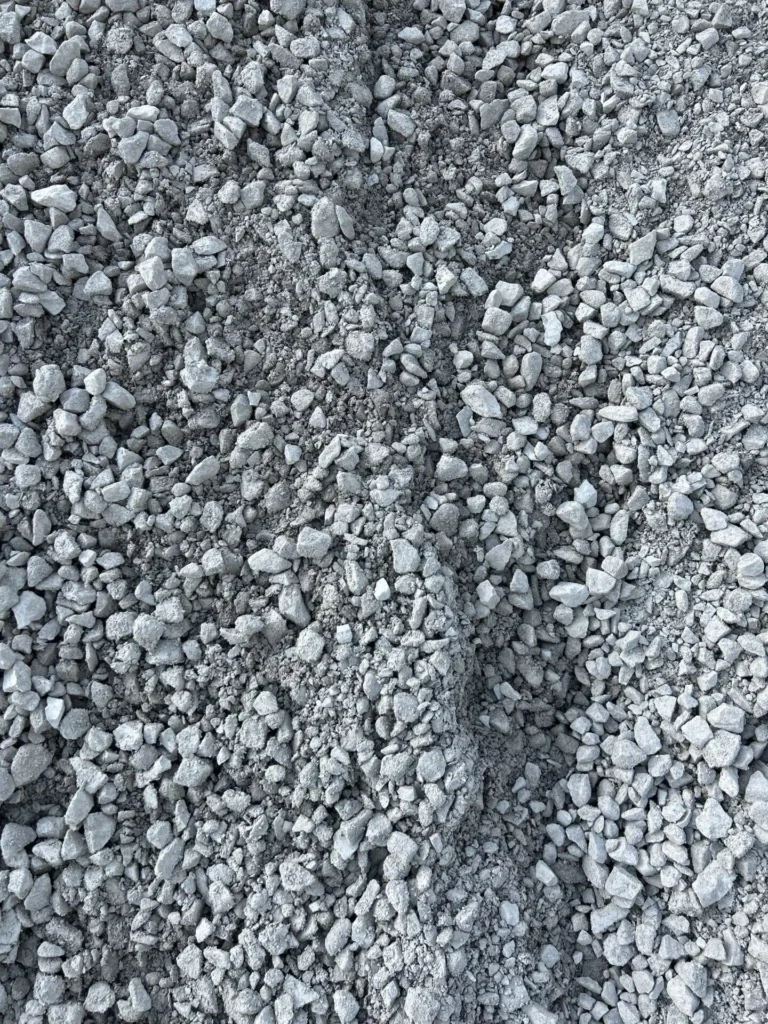
The visual cue at the yard is the fines content. Road Base looks darker and dustier than single-size aggregates because of the fine fraction. A handful contains visible sand-sized particles mixed with stone fragments.
Compaction technique for Road Base
Compaction is the entire reason Road Base is just unscreened gravel that performs no better than common Fill Dirt achieves 95 to 100 percent of natural soil density and behaves like a paved slab under load.
The compaction sequence: place Road Base in lifts no thicker than 4 inches (uncompacted depth). Run a vibratory roller or plate compactor in overlapping passes across the lift. Repeat until the surface stops settling under additional passes. For commercial projects, lab-tested compaction (Proctor test) confirms density before the next lift is placed.
Moisture matters too. Road Base compacts best at 4 to 6 percent moisture content. Bone-dry base does not bind; saturated base squishes rather than locking. Mist the lift lightly with a garden hose before compaction if the material is dust-dry from a hot dry delivery day.
When Road Base is the right choice
Use Road Base for any application where compacted aggregate needs to support load. Residential driveway base under #57 Crushed Stone or Pea Gravel where the dust binds the top surface into a paved-feeling drive. Parking lot base under asphalt or concrete paving. Shed pad foundation under a poured slab. Retaining wall base under the first block course.
Use Crusher Run terminology; the products are interchangeable. Use Paver Base specifically for paver-stone installs where the bedding layer needs to be more uniform.
Do not use Road Base for drainage trenches, French drains, or anywhere water needs to flow through void space. The fines content that makes Road Base great for load support also clogs the void space that drainage applications need.
Pricing and project planning
Road Base at $1,000 to $1,400 delivered. Add the finish course (Crusher Run, #57 Crushed Stone, or asphalt paving) on top of the base for the complete driveway cost.
Same-day delivery windows are usually open before 11 AM with 1 to 2 business day lead times. Plan the delivery for a dry day; Road Base in heavy rain becomes harder to compact and the install timeline slips. Stage the drop on the existing driveway near the project area to minimize wheelbarrow distance during install.
Compactor rental for the install runs $60 to $120 per day for a plate compactor (residential scale) or $200 to $400 for a vibratory roller (commercial scale). Rent the equipment in advance; the post-delivery rush to find a compactor is the most common reason base courses get under-compacted.
Geotextile fabric on soft-soil sites
Road Base over poorly draining clay or organic soil settles and fails despite proper compaction because the base pumps fines from the underlying soil up into itself over time, losing strength gradually. Geotextile fabric between the native soil and the base course solves this problem by physically separating the two layers.
Two fabric types apply. Woven geotextile (the lower-cost, higher-strength option) handles separation and reinforcement. Non-woven geotextile (the higher-cost, more permeable option) handles separation and drainage. For most driveway and parking applications over normal soils, woven works at $0.30 to $0.60 per square foot. For wet sites or sites needing drainage flow through the fabric, non-woven runs $0.50 to $1.10 per square foot.
Install the fabric directly on the prepared subgrade before any base material goes down. Overlap adjacent fabric strips by 12 to 18 inches at seams. Pin the fabric to the soil with 6 inch landscape staples every 18 inches along edges and seams to keep it in place during base placement.
The fabric pays back its cost within 5 to 7 years on weak soil sites by extending base course life. On stable soils (well-drained sand or gravel subgrade), the fabric is overkill and adds cost without benefit. The decision rule: if water pools on the prepared subgrade after a heavy rain or your shovel sinks easily, use the fabric; if the subgrade drains within an hour, skip it.
Sites with high water tables also benefit from drainage stone above the fabric layer. A 4 to 6 inch layer of Drain Rock) costs roughly 30 percent more than the basic two-layer install but doubles or triples expected life on chronically wet sites.
Materials this calculator covers
From $41.27/ton- SizeDense-graded, varies
- Density2900 lb/yd³
- ColorGray
From $41.27/ton- SizeDense-graded, varies
- Density2900 lb/yd³
- ColorGray
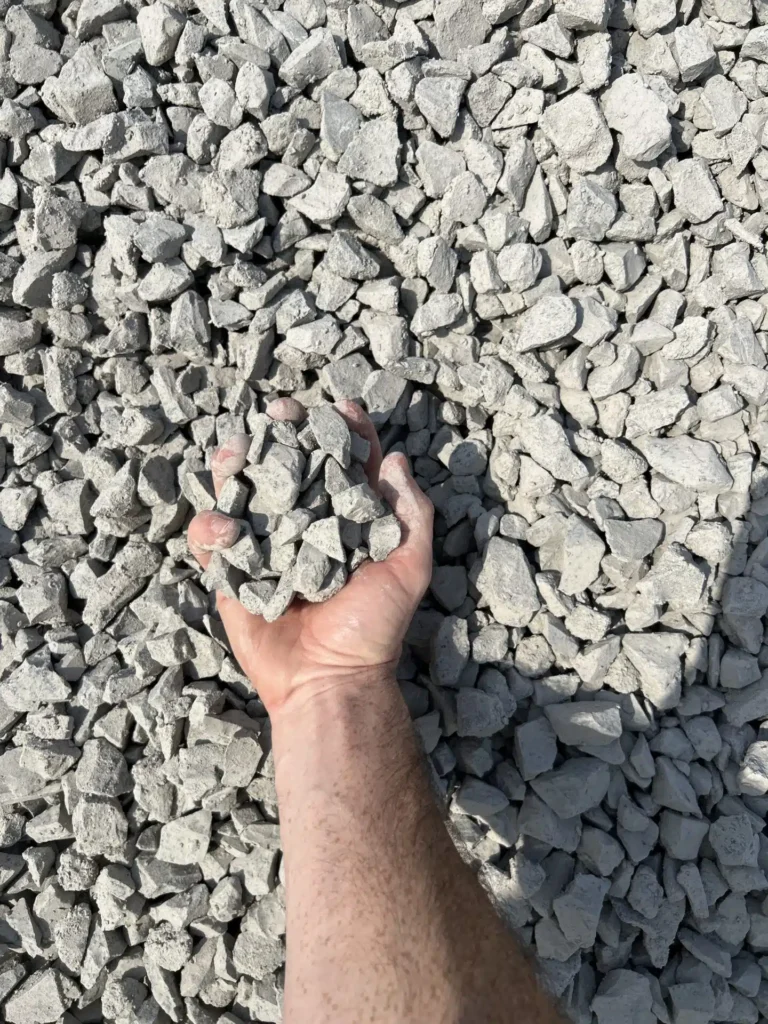 From $48.68/ton
- Size3/4 - 1″
- Density2700 lb/yd³
- ColorGray
Other calculators
 CALCULATORStone Dust CalculatorUse the stone dust calculator to convert your length, width and depth into the tons of stone dust you need to order.Open calculator →
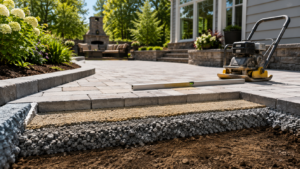 CALCULATORPaver Base CalculatorEstimate the paver base + sand bedding for a patio, walkway, or pool deck install.Open calculator →
 CALCULATORFrench Drain CalculatorHow much drain rock does a French drain need? Enter length, width, and depth - get tons and material cost.Open calculator →
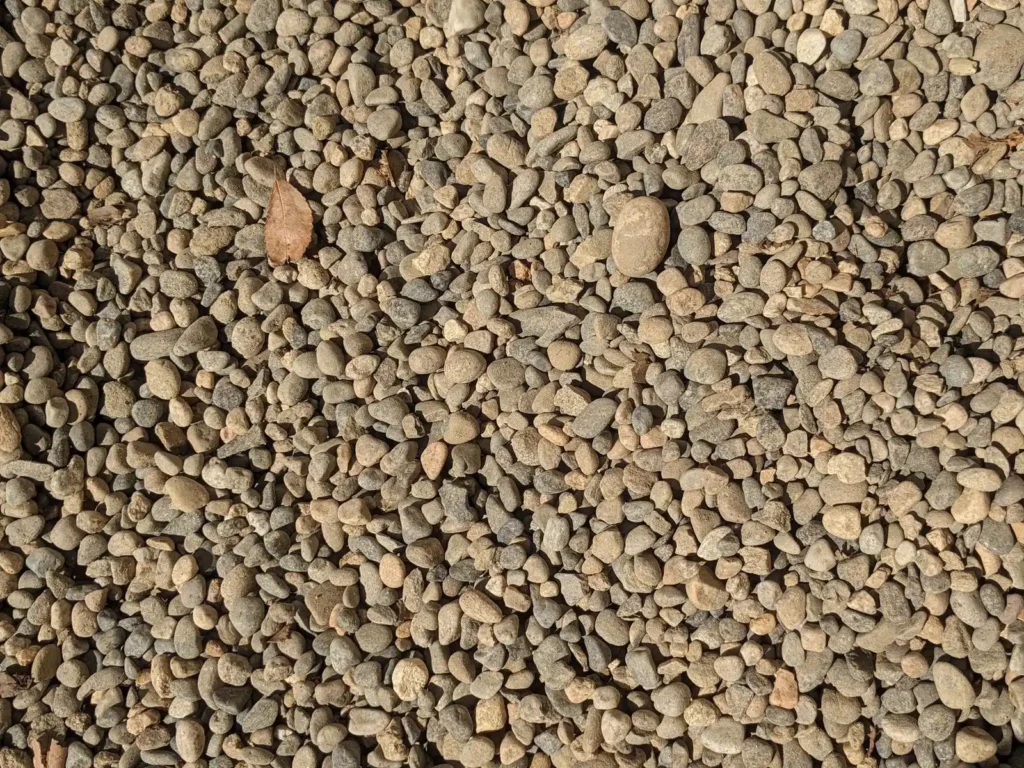 CALCULATORPool Deck Gravel CalculatorPool surround gravel calculator. Defaults to 4" depth of pea gravel; adjusts to river rock or DG.Open calculator →
Related guides
GUIDEWhat Size Crushed Stone Goes Under a Concrete SlabMost slabs need 4 to 6 inches of compacted crushed stone underneath. What size crushed stone under a concrete slab needs, and why it matters.Read guide →GUIDEWhat Is Crushed Stone? Sizes, Uses and Buying BasicsCrushed stone is quarried rock crushed and screened into angular pieces sold by the ton. Here is what it is, how it is graded, and where to use it.Read guide →GUIDEHow Much Does Gravel Cost? A Practical Pricing GuideHow much does gravel cost and why does it vary? See the real factors behind ton pricing, delivery, and order size before you buy.Read guide →GUIDEGravel Size Chart: Pea Gravel to Crushed StoneA gravel size chart showing pea gravel, crushed stone and river rock diameters side by side, so you can match the right size to your project.Read guide →Frequently Asked Questions
How does this calculator work?
Enter area in sq ft and depth in inches. We convert to cubic yards, multiply by density to get tons, and divide by 2,000.
What if I don't know the depth?
Most projects use 4 inches. Drainage applications go deeper (6-12 in).
Why is the estimate different from my supplier quote?
Within 10% is normal - supplier quotes include delivery + minimum-load surcharges that depend on your distance from the quarry.
Should I round up?
Yes - round up to the nearest half-ton. The price-per-ton usually drops on larger orders.
Does this include delivery cost?
No - the result is material cost only. Get a delivered quote with your ZIP for the full price.
Can I use this for another material?
Density varies by material. This calculator is tuned for class-5-base; switch to the matching calculator for accurate results.