
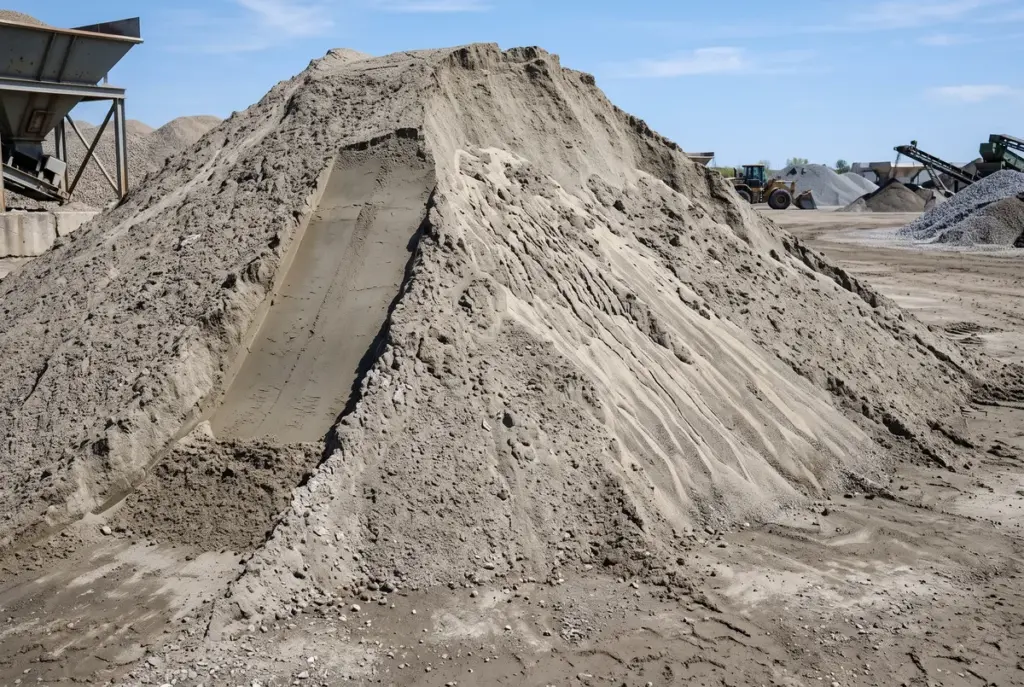
Concrete Sand Delivery in Denver, CO
Bulk concrete sand delivered in Denver, CO. Stone size 0 - 3/8. Tan / gray color.
Concrete Sand in Denver: Sharp Sand for a High Altitude Climate
Denver builds in a climate of extremes. The Mile High City sees intense sun, dramatic daily temperature swings, hard winter freezes and the expansive clay soils of the Front Range, and every one of those factors puts stress on concrete. The fine aggregate you mix into that concrete has to hold up, and concrete sand does. It is a coarse, washed sand graded from 0 to 3/8 inch, tan to gray, weighing about 2,700 pounds per cubic yard, with sharp angular grains that lock into cement paste and give a Denver pour the strength to resist cracking through freeze and thaw cycles.
Contractors across the Denver-Aurora-Centennial metro reach for concrete sand because it does structural work that finer sands cannot. The angular grains interlock instead of rolling, the washed gradation keeps silt and clay out of the mix, and the coarse profile drains fast over Front Range clay. For a region where driveways, garage pads, patios and foundations all have to survive brutal winters and shifting soils, that performance is essential. Whether you are pouring footings in Lakewood, bedding pavers in Arvada or cradling pipe in a Westminster trench, concrete sand is the sand crews specify.
Why Denver Builders Choose Concrete Sand
This sand is the fine aggregate that puts the concrete in concrete. Blended with stone, cement and water, its sharp grains fill the voids and bond with the paste to build a slab that resists load and cracking. But Denver crews use it for plenty more.
- Concrete mixing: the fine aggregate in slabs, footings, driveways and foundations across the Front Range.
- Paver bedding: a screeded 1 inch setting course under interlocking pavers on patios and walkways throughout the metro.
- Pipe bedding: a stable, free draining cradle around water, sewer and drain lines that resists settling in expansive clay.
- Masonry work: a coarse base sand for grout, parging and block work on the area's stone and CMU walls.
When your job calls for a finer, smoother sand, like brick mortar or a stucco coat, choose our Mason Sand instead. For backfilling or raising grade over Front Range clay, our economical Fill Sand is the smarter buy. And for a paver installation that survives Denver winters, compact our crushed Paver Base first as the engineered sub-base, then screed concrete sand over it as the setting bed.
Local Delivery and Lead Times Across the Denver Metro
We deliver concrete sand throughout the Denver-Aurora-Centennial MSA, covering the city core and the close in suburbs that ring it. Our trucks reach Lakewood just 5 miles out, Arvada and Westminster around 7 miles, Aurora about 8 miles, and Thornton roughly 9 miles, all on routine routes. Because these communities sit so close to the city, delivery across the metro is fast and efficient.
Lead times scale with how much you order. A single ton typically arrives within 1 to 2 business days. Step up to 6 tons or more and we can usually deliver the same or next day. Order 16 tons or more and delivery is free and earns priority routing. Denver's afternoon thunderstorms and quick weather changes can affect a pour, so we recommend scheduling your delivery to land in a dry, workable window and ahead of any incoming front.
How Much Concrete Sand Do You Need?
Concrete sand is sold by the ton, and at 2,700 pounds per cubic yard one ton is just under three quarters of a cubic yard. For paver bedding, estimate by depth. A 1 inch setting bed over a 400 square foot patio is about 33 cubic feet, roughly 1.25 cubic yards, or close to 1.7 tons. Round up to 2 tons so you have screed material to spare on a Front Range lot.
For concrete, fine aggregate is usually about a third of the mix volume. A 12 by 20 foot driveway slab poured 4 inches thick is about 3 cubic yards of finished concrete, calling for roughly 2.5 to 3 tons of concrete sand alongside your stone and cement. For pipe bedding, multiply trench width by bedding depth by length, convert to tons, and add 10 percent for compaction loss in clay. Send us your dimensions and we will confirm the tonnage before you order.
Denver Pricing: What Concrete Sand Costs Here
Concrete sand in Denver starts on our best volume tier, with pricing that scales down as your order grows:
- 1 ton or more: with a $283 delivery fee, in 1 to 2 business days.
- 6 tons or more: with a reduced $153 delivery fee, same or next day.
- 16 tons or more: with free delivery.
The difference between a single ton and a full 16 ton load is meaningful here. You save 38 dollars per ton and the delivery fee disappears entirely. For a contractor pouring multiple driveways or patios across Aurora, Arvada and the metro, consolidating into one 16 ton order is the most economical way to buy concrete sand in Denver.
Placement and Installation Tips
On expansive Front Range clay, a stable, well drained base is critical. Compact your Paver Base thoroughly, then screed concrete sand to a uniform 1 inch and do not compact the loose sand before laying pavers. Set the stones and finish with a plate compactor to lock the surface. For concrete, keep the sand dry and covered so the dry Denver air does not skew your moisture content, and account for fast evaporation under the high altitude sun when you batch. For pipe bedding, place sand in lifts and tamp gently around the haunches so the line is fully supported and resists settling in clay.
Seasonal Notes for Colorado
Colorado's high altitude climate makes timing everything. Hard freezes run from late fall into early spring, so pour concrete and set pavers when daytime temperatures hold reliably above 40 degrees and overnight frost is not in the forecast. Concrete sand demand peaks from late spring through early fall, the prime building stretch on the Front Range. Watch for sudden afternoon storms in summer that can rain out a fresh pour. If you stockpile sand on site over winter, cover it to keep it from freezing into clumps. Order ahead during the busy summer months so a truck is ready when your crew is.
From a garage pad in Westminster to a bedded patio in Arvada, our washed concrete sand is sharp, consistent and built for the Front Range. Tell us the tonnage and the address and we will get a truck rolling.
About Concrete Sand
Concrete sand is a coarse, washed, well graded sand engineered as the fine aggregate in concrete and as a structural bedding material. Sized from 0 to 3/8 inch and tan to gray in color, it weighs roughly 2,700 pounds per cubic yard. The grains are angular and sharp rather than rounded, which gives it the interlock and bonding strength that finer sands cannot match.
Its primary use is in concrete, where it fills the voids between the larger stone and binds with cement paste to produce a strong, durable slab. Because it is washed, it carries very little silt or clay, so it will not weaken the mix or hold unwanted moisture. That same clean, free draining nature makes it the standard choice for a paver setting bed, where it is screeded to a uniform inch and supports interlocking pavers without pumping or rutting under traffic.
Contractors also rely on concrete sand for pipe bedding and haunching, where its stability cradles water, sewer and drain lines and resists settling over time. In masonry it serves as a coarse base sand for grout and parging. It compacts well, drains fast and stays put once placed.
is not the same as fine mason sand or as cheap fill sand whenever the application is structural or load bearing and demands a clean, sharp, consistent aggregate. Sold by the ton and delivered in bulk, it is the everyday workhorse sand on job sites nationwide.
What Concrete Sand costs in Denver
Around Denver, concrete sand is quoted by the ton with delivery layered in based on distance from the closest yard. Send your ZIP and load size and we will send back a same-hour quote with the truck rate and the per-ton figure spelled out. Plan on roughly 80 sq ft of coverage per ton at 3 inches deep, which puts a single-car driveway in the 4 to 8 ton bracket.
How crews use Concrete Sand in Denver
Denver contractors keep concrete sand on the order sheet for a short list of standard installs. Top of the list is pipe bedding, where the material is rolled out in tight urban lots and infill builds and screeded to grade. Right behind that is base course gravel, common in dense neighborhoods where curb access is short and often paired with edging or fabric below the lift. Denver sits at about 713,252 residents, which means we see steady weekday traffic from landscape crews and weekend pickups from owner-builders.
Delivery day in Denver
Delivery in Denver runs out of the nearest pit; you get a two hour arrival window the evening prior and a call when the driver leaves the scale. Plan for 12 ft of clear path for a tandem and 14 ft for a tri-axle, plus a level area at the dump point so the bed lifts straight. Standard lead time on this lane is Mon-Sat, with same-day windows held open for orders that hit the desk before 11 AM and clear payment.
Related materials we deliver in Denver
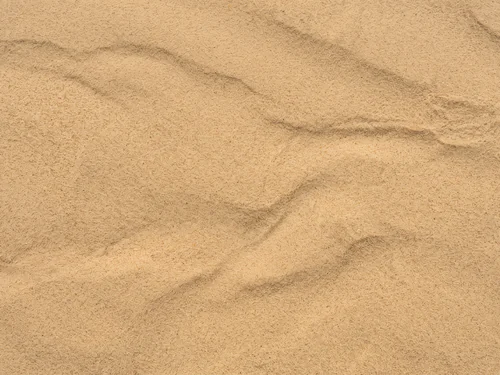
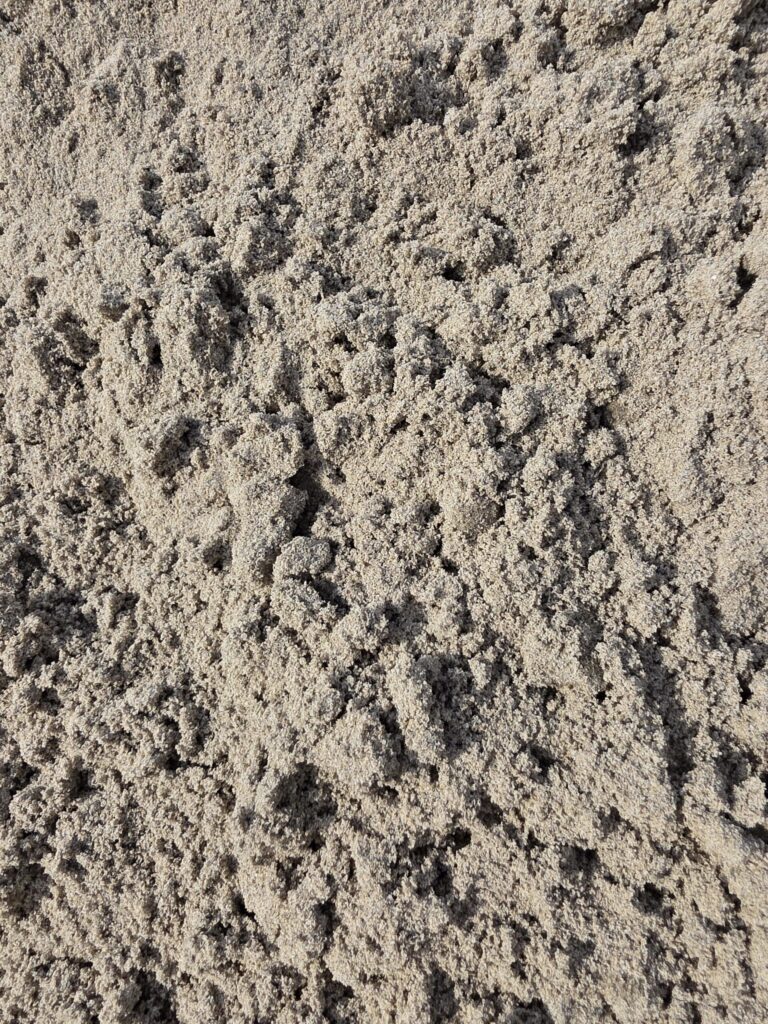
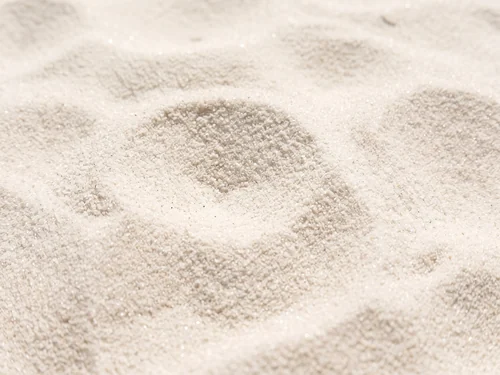
Estimate how much you need
Calculate Your Project
Estimate only. Add 10-15% for compaction and waste.
Browse more
Common uses for Concrete Sand in Denver
Available in nearby cities
Plan your project
Related guides
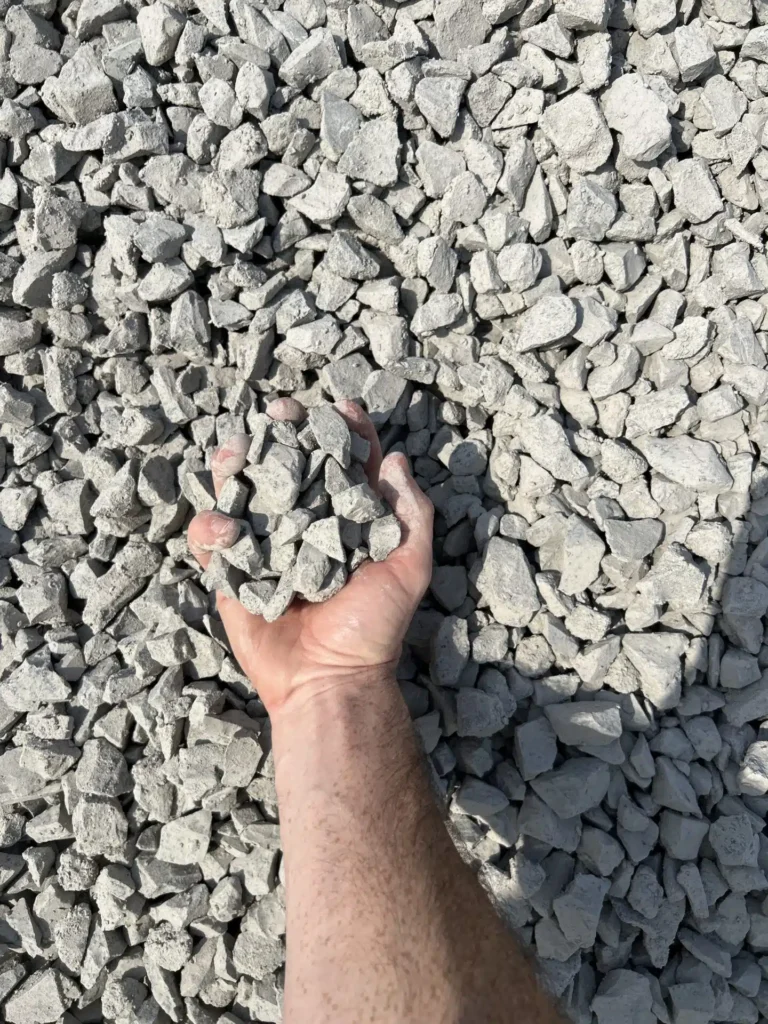 GUIDEGravel Size Chart: Pea Gravel to Crushed StoneA gravel size chart showing pea gravel, crushed stone and river rock diameters side by side, so you can match the right size to your project.Read guide →
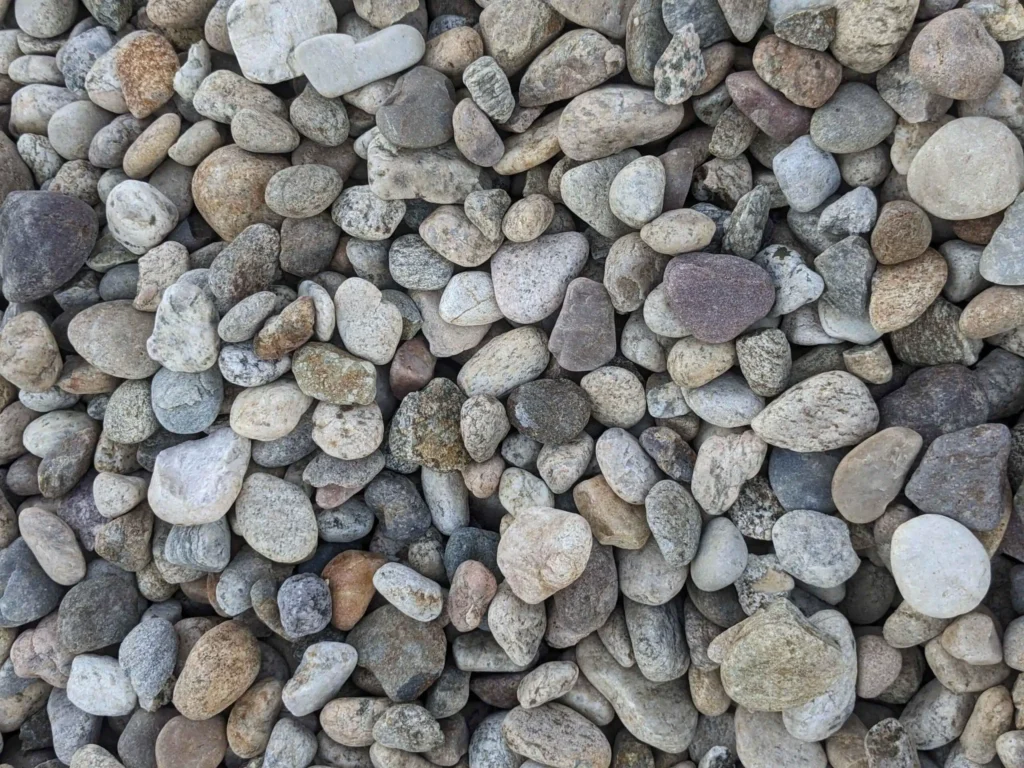 GUIDEThe Different Types of Gravel and How to ChooseA plain-language guide to the main types of gravel, covering pea gravel, crushed stone, river rock and decomposed granite.Read guide →
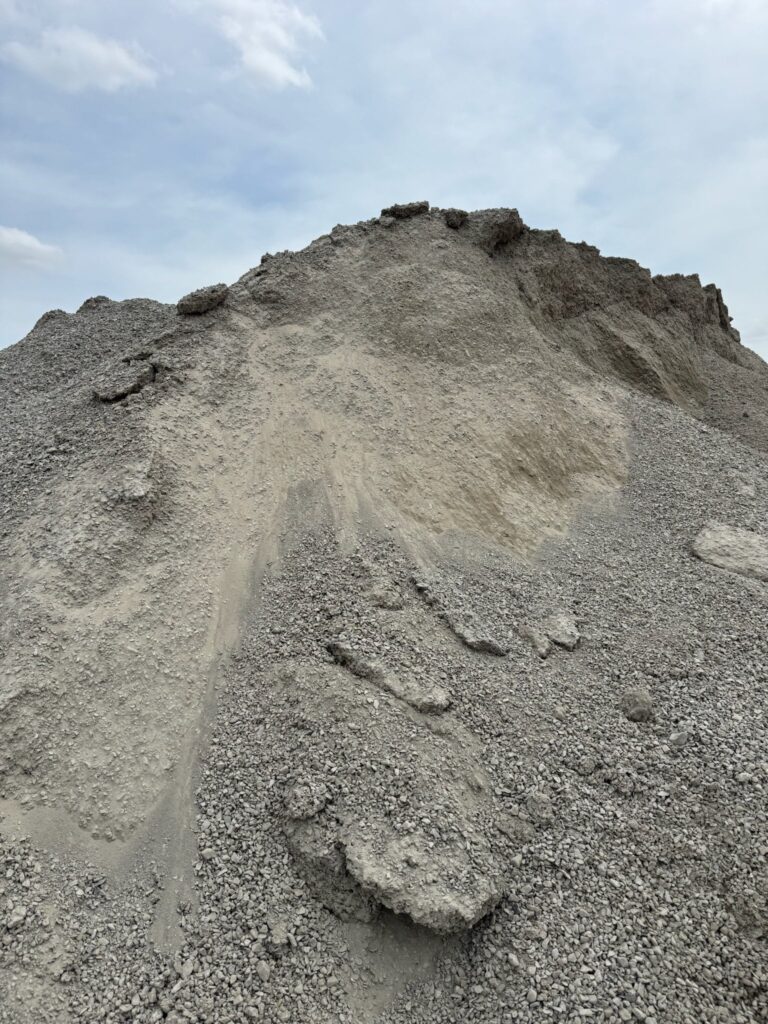 GUIDEWhat Are Screenings? A Guide to Crushed Stone FinesScreenings are fine crushed stone used for paver bases, joint fill and walkways. See what screenings are, common types, and mistakes to avoid.Read guide →GUIDEWhat to Put Under River Rock for Landscaping BedsHere is what to put under river rock landscaping: a compacted base where needed, then landscape fabric, then rock, to stop weeds and settling.Read guide →
Frequently Asked Questions
What is concrete sand used for in Denver?
In Denver, concrete sand is used as the fine aggregate in concrete for driveways, slabs, footings and foundations. It is also the standard material for paver setting beds, pipe bedding and coarse masonry work. Its sharp, washed grains bond with cement and help concrete resist cracking through Front Range freeze and thaw cycles.
How fast can you deliver concrete sand in Denver?
Single ton orders typically arrive within 1 to 2 business days. Orders of 6 tons or more usually ship same or next day, and full 16 ton loads earn priority routing plus free delivery. We cover Denver and close in suburbs like Lakewood, Arvada, Westminster, Aurora and Thornton.
Does concrete sand work well over Front Range clay soils?
Yes. Concrete sand drains freely and stays stable, which helps it resist the settling that expansive Front Range clay can cause. For pipe bedding it cradles the line and reduces movement, and under pavers it provides a firm setting course over a compacted base.
How many tons of concrete sand do I need for a patio?
For a 1 inch setting bed under pavers, a 400 square foot patio needs about 1.7 tons of concrete sand. We recommend rounding up to 2 tons to leave screed material to spare. Tell us your square footage and bed depth and we will calculate the exact amount.
Is concrete sand the same as mason sand?
No. Concrete sand is coarser and sharper, graded to 3/8 inch for structural concrete and bedding. Mason Sand.
Should I order Paver Base with my concrete sand?
Yes, for a paver installation that lasts through Denver winters. Paver Base is the compacted crushed sub-base that goes down first for stability and drainage, then the concrete sand is the 1 inch setting course on top. Using both protects the surface against freeze and thaw movement.
Do you deliver concrete sand to Aurora and Arvada?
Yes. Aurora is about 8 miles out and Arvada around 7 miles, and both are on our routine Denver metro routes along with Lakewood, Westminster and Thornton. Because these suburbs sit so close to the city, delivery is fast and efficient.
When is the best time to pour concrete in Denver?
Pour and set pavers when daytime temperatures hold above 40 degrees and overnight frost is not forecast, which generally means late spring through early fall. Hard freezes run from late fall into spring, and summer afternoon storms can rain out a fresh pour, so watch the forecast closely.
How is concrete sand sold and how much does a ton cover?
Concrete sand is sold by the ton. At about 2,700 pounds per cubic yard, one ton is just under three quarters of a cubic yard. As a quick reference, one ton spread 1 inch deep covers roughly 200 square feet.