
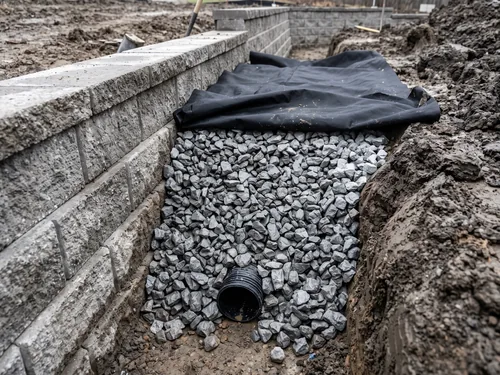
French Drain Calculator
Quickly estimate cubic yards, tons, and material cost for your Drain Rock project. Adjust the inputs below and the result updates in real time.
Calculate Your Project
Estimate only. Add 10-15% for compaction and waste.

How this calculator works
Cubic yards = (area × depth ÷ 12) ÷ 27
Tons = cubic yards × density × 27 ÷ 2000
How much drain rock does a French drain need? Enter length, width, and depth - get tons and material cost.
Enter your area and depth, and we'll compute cubic yards, tons, and a delivered material cost using current 2026 quarry pricing.
What the French drain calculator computes
A French drain is a specific type of drainage trench: a gravel-filled trench with a perforated pipe at the bottom, designed to collect subsurface water and move it away from a structure or low spot. The calculator takes drain length, trench width (typically 8 to 12 inches for residential), and depth (typically 18 to 30 inches) and returns the volume of drainage stone needed in cubic yards and tons.
For a 40 foot French drain at 10 inches wide and 24 inches deep, expect about 2.5 tons of washed stone. Add 10 percent overage to handle the irregular trench geometry around the pipe and the slight bulge where the trench meets the daylight outlet.
The pipe is 4 inch perforated corrugated drain pipe (the black flexible kind in 100 foot rolls). Solid pipe is wrong for a French drain because water needs to flow into the pipe through the perforations; solid pipe just routes whatever water you pour into it. Some homeowners buy solid pipe by mistake; check the side of the pipe for visible holes before installation.
French drain versus generic drainage trench
The terms get used interchangeably in casual conversation but they mean specific things. A drainage trench is any trench filled with stone for water management. A French drain specifically includes a perforated pipe at the bottom for higher-volume water transport. The pipe is what distinguishes the two.
Use a generic stone-filled trench (no pipe) for low-volume situations: a slight slope across a yard, perimeter drainage on a single-story foundation in dry climates, swale management. The stone column alone moves enough water for these uses.
Use a French drain (with pipe) for high-volume situations: basement perimeter drains, full-perimeter foundation drainage in wet climates, drainage under a driveway, downspout extension drains. The pipe handles flow rates that exceed what stone-only trenches can manage during heavy rain.
Pipe choice, slope, and connections
Four inch perforated pipe is the residential standard. It moves 60 to 80 gallons per minute under typical drainage conditions, more than enough for any residential basement drain or yard drainage situation. Six inch perforated pipe is overkill for residential use and harder to source.
The pipe needs continuous slope from the high end to the daylight outlet. 1 percent minimum (1 inch of fall per 100 inches of run), 2 percent is better and easier to achieve. Measure with a transit level or a long board and a bubble level. Avoid horizontal sections; even short flat runs in the pipe create pooling points that silt up over time.
The daylight outlet needs to be lower than the entire pipe run so water flows out by gravity. If the lot does not have enough drop, the drain terminates in a dry well (a 4 foot deep gravel pit) that holds the collected water until it percolates into the surrounding soil. Dry wells work but are slower than daylight outlets; size them generously for high-rainfall regions.
Material spec, fabric, and pricing
Drain Rock (1 to 2 inch washed stone) is the contractor-favorite material around perforated pipe. The larger size preserves void space under load and the smaller fines are absent so flow is not impeded. 3/4" Crushed Stone (washed) works equally well in narrower trenches.
Wrap the entire drainage column in 4 to 6 ounce filter fabric. The fabric goes between the trench walls and the stone, and folds over the top of the stone column before the topsoil cap. Some installers also wrap the pipe itself in fabric for extra silt protection; this is belt-and-braces but adds 2 to 3 years of drain life in silty-soil conditions.
For a 40 foot French drain at typical residential dimensions, materials cost runs $200 to $350 total: about $150 to $220 in washed stone, $40 to $70 in perforated pipe, $30 to $50 in filter fabric, $20 to $30 in fittings. Same-day delivery on the stone usually works for orders placed before 11 AM with a 1 to 2 day lead time as standard.
Common French drain failure patterns
Three failure patterns account for most French drain problems. First, holes facing up. The corrugated perforated pipe has rows of holes on one side. Installation calls for the holes to face DOWN so water enters from the bottom and flows along the inside of the pipe. Holes facing up means water has to enter from above, which works but slowly, and the pipe silts up faster. This is the single most common DIY install error.
Second, no filter fabric or fabric wrapped only around the pipe. Soil migrates from the trench walls into the stone column and clogs the voids. Within 5 to 10 years the drain stops working. Fabric around the entire stone column (not just the pipe) prevents this completely.
Third, insufficient outlet slope. The drain pipe slope is fine but the outlet is too shallow or backsloped. Water collects in the pipe and stagnates. Verify the outlet has positive drop all the way to the discharge point; do not just trust that "downhill" means "downhill enough" by eye.
Surface drains versus French drains
French drains are designed for subsurface water (water already in the soil). Surface drains handle water that is on top of the ground (rain runoff from roofs, hardscapes, low spots). The two systems address different problems and using the wrong one wastes the install effort.
Surface drains are typically catch basins or area drains with a grate at grade, piped to a daylight outlet or storm system. They handle high-volume short-duration flow from storms. Use surface drains anywhere stormwater pools on the surface: low spots in yards, areas where downspouts overflow, parking pad surfaces that collect rain.
French drains handle persistent subsurface water: water that saturates soil and migrates against foundations or into basements. They handle low-volume continuous flow over weeks. Use them around foundations of buildings, along the uphill side of structures on sloped lots, and across yards where the soil stays soggy after rain has ended.
Some installs need both. A house at the bottom of a hill might have a French drain around the foundation perimeter to handle subsurface flow plus a surface catch basin to collect roof runoff before it reaches the foundation. Each system has its own pipe path to the outlet; do not connect them because the surface system can overwhelm the French drain capacity during storms.
For combined storm-and-sub-drainage projects, install the surface drains first, then route their outlet line through a separate trench to the same daylight discharge as the French drain. Surface drains use solid PVC for the outlet pipe (no perforations) so collected water flows directly to discharge without leaking into surrounding soil along the way. Mismatched pipe types (perforated for storm, solid for drainage) is a common DIY error.
Materials this calculator covers
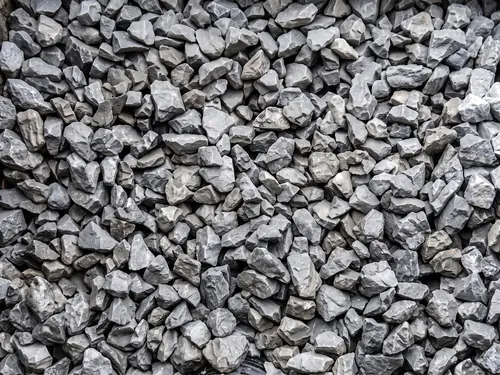 From $44.41/ton
- Size1 - 2″
- Density2700 lb/yd³
- ColorGray
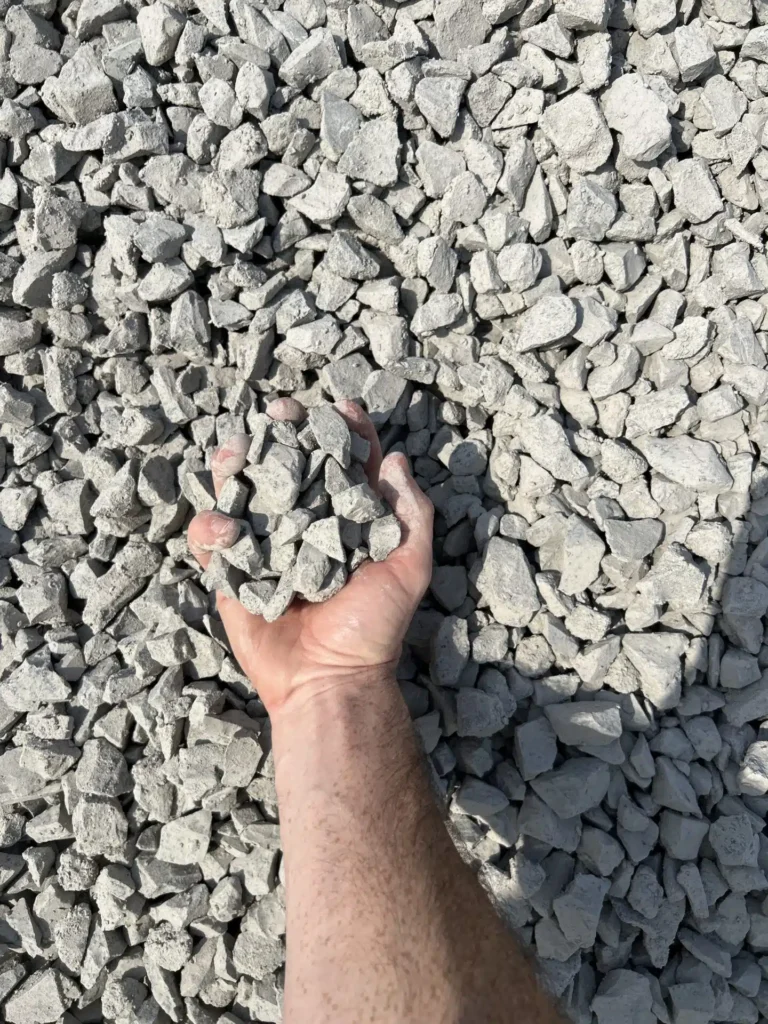 From $48.68/ton
- Size3/4 - 1″
- Density2700 lb/yd³
- ColorGray
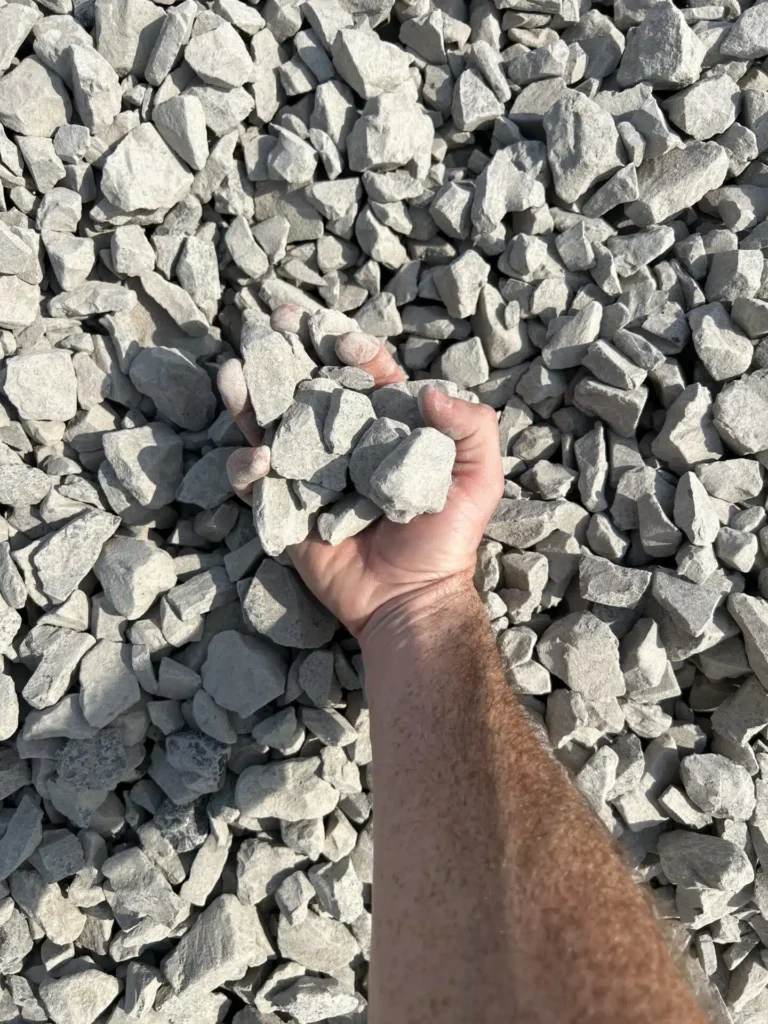 From $56.90/ton
- Size1.5 - 2.5″
- Density2800 lb/yd³
- ColorGray
Other calculators
CALCULATORDrainage Trench CalculatorEstimate cubic yards of drain rock for a French drain, foundation perimeter, or yard drainage trench.Open calculator →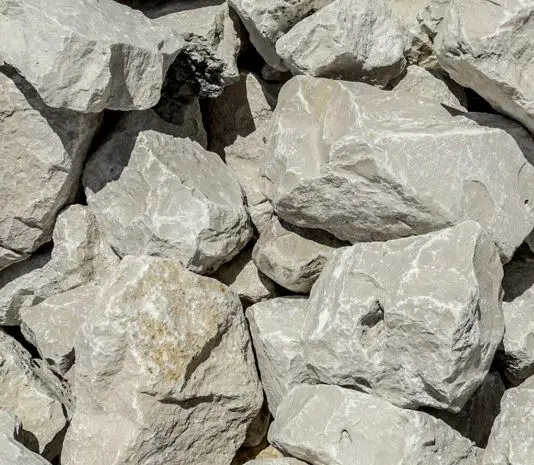 CALCULATORRip Rap CalculatorEnter length, width and depth in our rip rap calculator to see how many tons of Riprap Med your slope or bank protection project needs.Open calculator →CALCULATORSeptic Field Aggregate CalculatorEstimate drain rock for a septic leach field. Includes lateral spacing math.Open calculator →
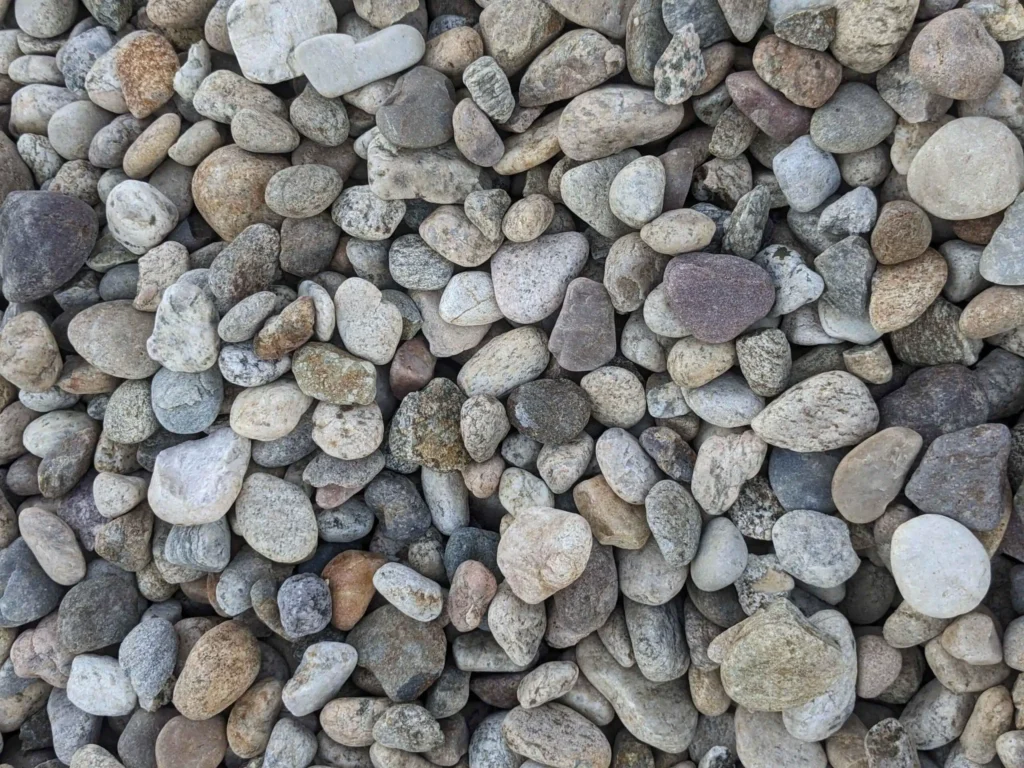 CALCULATORFire Pit Gravel CalculatorDecorative gravel around a fire pit. River rock is heat-stable; pea gravel can spall - use this calc to plan.Open calculator →
Related guides
GUIDEWhat Size Crushed Stone Goes Under a Concrete SlabMost slabs need 4 to 6 inches of compacted crushed stone underneath. What size crushed stone under a concrete slab needs, and why it matters.Read guide →GUIDEWhat Is Crushed Stone? Sizes, Uses and Buying BasicsCrushed stone is quarried rock crushed and screened into angular pieces sold by the ton. Here is what it is, how it is graded, and where to use it.Read guide → GUIDEHow Much Does Gravel Cost? A Practical Pricing GuideHow much does gravel cost and why does it vary? See the real factors behind ton pricing, delivery, and order size before you buy.Read guide →GUIDEGravel Size Chart: Pea Gravel to Crushed StoneA gravel size chart showing pea gravel, crushed stone and river rock diameters side by side, so you can match the right size to your project.Read guide →
Frequently Asked Questions
How does this calculator work?
Enter area in sq ft and depth in inches. We convert to cubic yards, multiply by density to get tons, and divide by 2,000.
What if I don't know the depth?
Most projects use 4 inches. Drainage applications go deeper (6-12 in).
Why is the estimate different from my supplier quote?
Within 10% is normal - supplier quotes include delivery + minimum-load surcharges that depend on your distance from the quarry.
Should I round up?
Yes - round up to the nearest half-ton. The price-per-ton usually drops on larger orders.
Does this include delivery cost?
No - the result is material cost only. Get a delivered quote with your ZIP for the full price.
Can I use this for another material?
Density varies by material. This calculator is tuned for drain-rock; switch to the matching calculator for accurate results.