
Gravel Driveway Calculator
Quickly estimate cubic yards, tons, and material cost for your #57 Crushed Stone project. Adjust the inputs below and the result updates in real time.
Calculate Your Project
Estimate only. Add 10-15% for compaction and waste.

How this calculator works
Cubic yards = (area sq ft × depth in ÷ 12) ÷ 27
Tons = cubic yards × density × 27 ÷ 2000
Estimated price = tons × price per ton
Free Gravel Driveway Calculator - enter your area in square feet and depth in inches and get instant tons, cubic yards, and an estimated material cost.
Built for US contractors and DIY homeowners. Densities updated to reflect 2026 quarry stockpile measurements.
What the gravel driveway calculator computes
A gravel driveway calculator turns three numbers (length, width, and finished depth) into the two values your supplier actually quotes against: cubic yards of material and the equivalent weight in tons. The math is straightforward but the variables matter. Length and width are usually known to within a foot. Depth is where most homeowners overshoot or undershoot. A residential driveway top course settles to about 3 inches once compacted and driven on for a season. The compacted base lift adds another 4 to 6 inches below that. So a 50 by 12 foot driveway with the full base and top combination needs 5.5 cubic yards of base plus 1.85 cubic yards of #57 Crushed Stone on top, roughly 9 tons total when you convert through the 2,700 lb per cubic yard density of common driveway aggregate.
and Crusher Run because those are the two most-shipped materials for residential drives. If you spec a heavier aggregate like #4 Crushed Stone (closer to 2,800 lb per cubic yard), bump the result up. If you go with a lighter rounded gravel like Pea Gravel for a softer surface, the result is close enough not to worry about. Always order 10 percent overage to cover compaction loss, spillage during install, and the inevitable thin spot you find after the first heavy rain.
How to size base and finish for the driveway type
Three driveway profiles cover roughly 95 percent of residential installs. The first is the most common: 4 to 6 inches of Crusher Run compacted in two lifts, topped with 2 to 3 inches of #57 Crushed Stone or 3/4" Crushed Stone for the visible finish. This is the install you see on every contractor-built driveway in suburban America. It handles a passenger car and an occasional small truck for 15 to 20 years before needing a top-up.
The second profile is heavier-duty for rural driveways and acreage roads. Use 8 inches of Crusher Run in two compacted lifts, top with 3 inches of #57 Crushed Stone or 1.5" Crushed Gravel. The deeper base handles truck traffic, equipment, and the freeze-thaw cycles common in northern climates without rutting.
The third profile is the budget approach for short rural lanes and farm drives: 4 inches of Asphalt Millings or Crushed Concrete and reads as a finished surface within a few weeks of use.
Material picks and why they work
The two-step base-plus-finish formula relies on two specific products doing two specific jobs. Crusher Run is the base because it is a graded blend of stone dust through 3/4 inch fragments. The fines fill the voids between the larger pieces, and when compacted with a plate compactor or vibratory roller the mass interlocks into a near-concrete-hard layer. Use it anywhere the driveway will see vehicle weight.
The finish course needs angular fractured stone that locks against the base course without migrating under tires. #57 Crushed Stone (3/4 to 1 inch) is the universal pick. It is large enough not to track into shoes or onto the lawn, small enough to compact tight against the base, and produced at nearly every quarry in the country at a predictable price. For a refined look, #67 Stone (1/2 to 3/4 inch) reads as a slightly smaller scale and works well on shorter urban drives. For heavy-base situations, #4 Crushed Stone (1.5 to 2.5 inch) buried under a thicker pad gives extra load support.
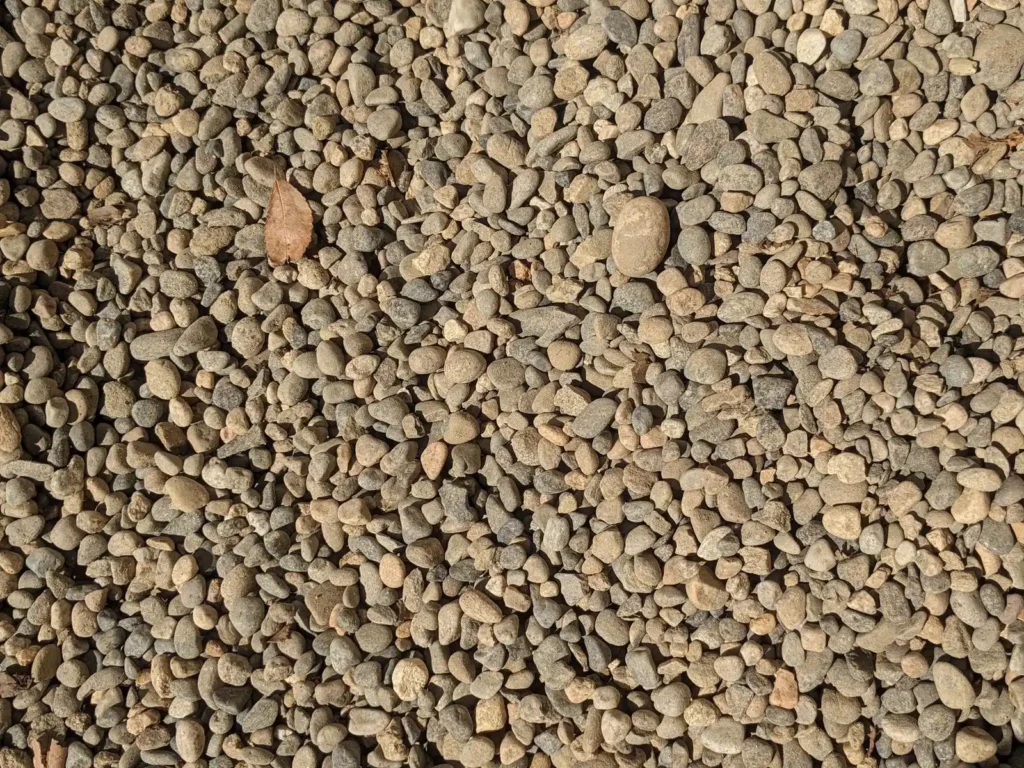
Avoid rounded gravels like Pea Gravel and River Rock as a driveway finish surface. They look great in beds and on patios but spread under tire weight, leaving wheel ruts and a perimeter of stone in the lawn after one season.
Delivery and pricing for a residential driveway
Most residential driveways need between 8 and 16 tons of material total (base plus finish). That fits one tandem-axle truck (10 to 12 ton capacity) for the smaller jobs or one tri-axle (20 to 22 tons) for everything else. Splitting a smaller order across two trips costs more in delivery fees than ordering a slightly larger volume in one drop.
2026 delivered pricing for #57 Crushed Stone runs $49 to $214 per ton across our service area. Crusher Run is cheaper at $41 to $163 per ton because it skips the additional screening pass. Full-truck orders of 16 tons or more save roughly 15 to 20 percent off the per-ton rate because the yard avoids a partial-return trip. Same-day delivery windows are usually open for orders placed before 11 AM with a 1 to 2 business day lead time as standard.
Plan the delivery for a dry day if you can. Wet stone compacts harder than dry but is messier to spread, and a heavy truck on saturated soil can leave deep ruts that take weeks to recover. Stage the drop on the existing driveway or a tarped area if the yard is soft.
Common driveway mistakes to avoid
The three install patterns that cause every common driveway failure are predictable. First, a single thick lift of base material does not compact tight. The top three inches lock together but the bottom inch stays loose, and a winter of freeze and thaw lifts the surface into rolling waves. Always run two lifts of 3 to 4 inches each with a compaction pass between them.
Second, skipping the base entirely and laying #57 Crushed Stone or 3/4" Crushed Stone directly on graded clay soil. The finish stone sinks into the soil over the first wet season and you end up with a thin gravel-and-mud surface. Crusher Run or Road Base is the foundation, not optional.
Third, no edging. Driveways that border lawn or landscape beds need a physical edge (galvanized steel strip, treated 2x6 lumber buried on edge, or a poured concrete curb) to hold the stone in place. Without edging the stone migrates into the lawn at a rate of about one ton per year on a typical 600 square foot drive, and the lawn mower destroys itself trying to cut around displaced gravel. A $200 metal edging install pays for itself in saved blade replacements and saved top-ups.
Climate and regional driveway considerations
Driveway specs shift with regional climate. Northern installs (anywhere with hard freeze-thaw cycles) need 6 to 8 inches of Crusher Run base instead of the standard 4 to 6, plus 2 to 3 inches of #57 Crushed Stone on top. The extra base depth absorbs the seasonal frost heave that would otherwise lift the surface into rolling waves by year three. In hard-freeze regions, also avoid Pea Gravel as a surface entirely; rounded gravel rolls under tire weight after freeze cycles and migrates off the drive.
Southern installs (hot dry climates) can run the lighter 4 inch base spec because frost is not a design factor. The concern instead is UV degradation of any binder used and the heat radiating off the surface. Lighter-colored aggregate like Decomposed Granite or Asphalt Millings.
Coastal installs face salt corrosion. Standard galvanized steel edging rusts within 5 to 7 years near saltwater; switch to aluminum or composite edging in coastal zones. Limestone-based aggregates also weather faster in salt air than granite-based products; ask your supplier about the parent rock when ordering in coastal regions.
Materials this calculator covers
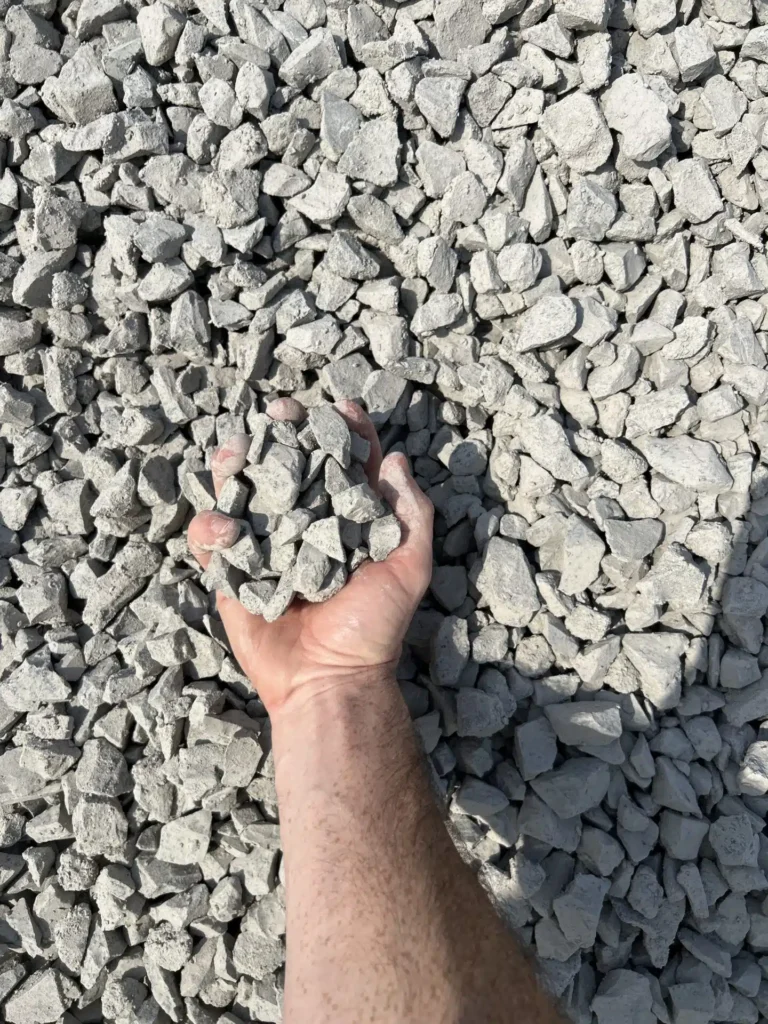
From $48.68/ton- Size3/4 - 1″
- Density2700 lb/yd³
- ColorGray
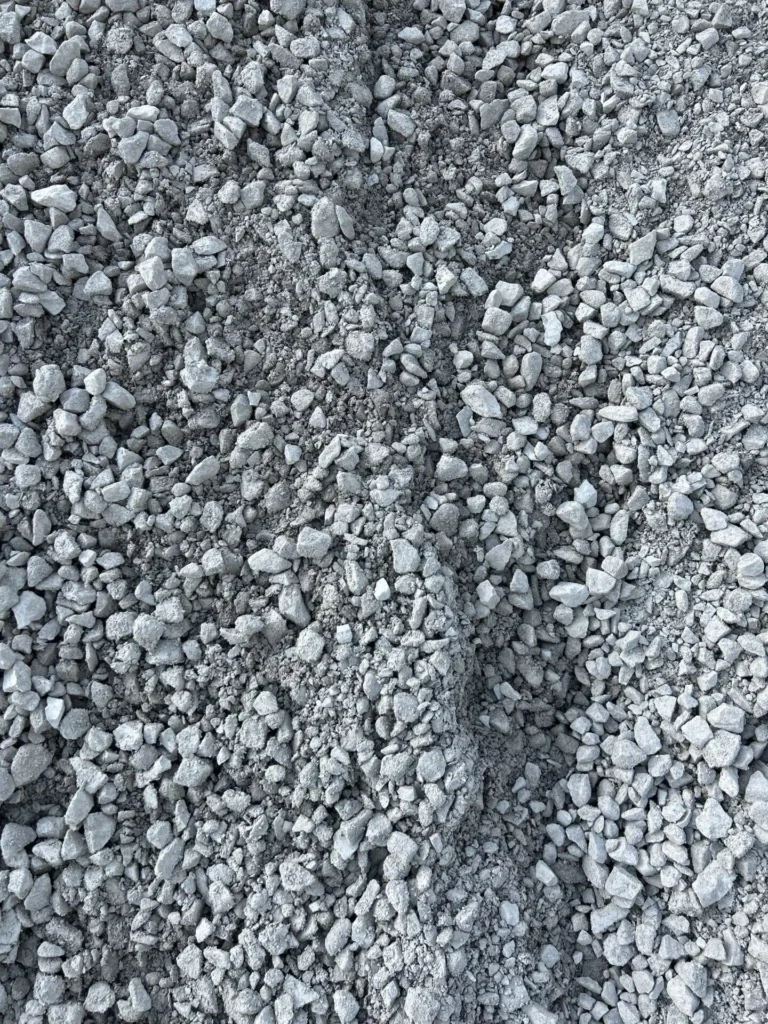 From $41.27/ton
- SizeDense-graded, varies
- Density2900 lb/yd³
- ColorGray
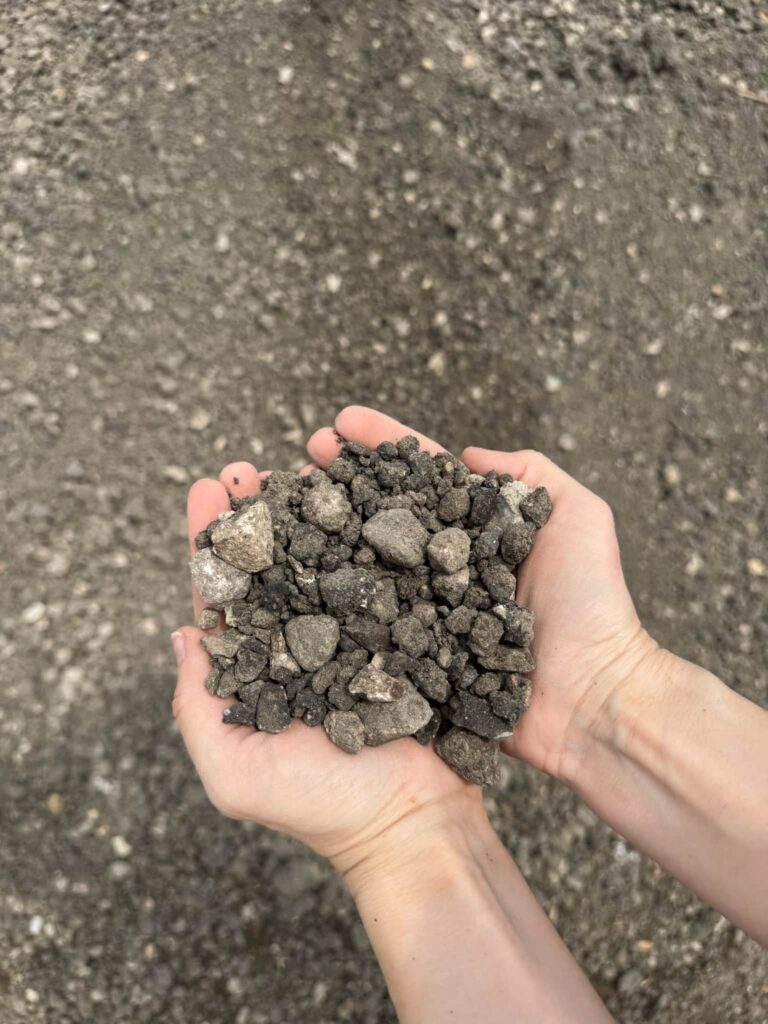 From $38.70/ton
- SizeDense-graded, varies
- Density2400 lb/yd³
- ColorBlack
Other calculators
CALCULATORCrushed Stone CalculatorUse the crushed stone calculator to turn a project's length, width and depth into the tons of crushed stone to order, with the density math shown.Open calculator →CALCULATORGravel CalculatorUse this gravel calculator to convert length, width, and depth into cubic yards or tons for #57 crushed stone, pea gravel, and driveway gravel.Open calculator →CALCULATOR57 Stone CalculatorUse this 57 stone calculator to find how many tons of #57 crushed stone your project needs, with depth and density guidance included.Open calculator →CALCULATORParking Lot Gravel CalculatorCommercial parking lot aggregate planner. Defaults to 6" depth of crusher run.Open calculator →Related guides
 GUIDEHow Much Does Gravel Cost? A Practical Pricing GuideHow much does gravel cost and why does it vary? See the real factors behind ton pricing, delivery, and order size before you buy.Read guide →GUIDEWhat Size Crushed Stone Goes Under a Concrete SlabMost slabs need 4 to 6 inches of compacted crushed stone underneath. What size crushed stone under a concrete slab needs, and why it matters.Read guide →GUIDEWhat Is Crushed Stone? Sizes, Uses and Buying BasicsCrushed stone is quarried rock crushed and screened into angular pieces sold by the ton. Here is what it is, how it is graded, and where to use it.Read guide →
 GUIDEWhat Are Screenings? A Guide to Crushed Stone FinesScreenings are fine crushed stone used for paver bases, joint fill and walkways. See what screenings are, common types, and mistakes to avoid.Read guide →
Frequently Asked Questions
How does this calculator work?
Enter your area in square feet and depth in inches. We convert to cubic yards, multiply by density to get weight, and divide by 2,000 to get tons.
What if I don't know the depth?
Driveways: 4 inches. Patios: 2-3 inches. Drainage trenches: 6-12 inches. Decorative beds: 2 inches over fabric.
Why are tons and yards different?
Cubic yards measure volume; tons measure weight. Density (lbs per cubic foot) is the conversion factor - heavier rock means more tons per yard.
How accurate is the estimate?
Within 10% for typical residential jobs. Always order a little extra (5-10%) to cover compaction, spillage, and edge waste.
Does the price include delivery?
The calculator shows material cost only. Delivery fees vary by distance and load size - get a real quote for a delivered total.
Can I use this for mulch or topsoil?
Use the dedicated mulch or topsoil calculator - densities differ from gravel, and the math changes.
What's the standard truck load size?
Tandem dump trucks haul about 15 tons or 10 cubic yards. Smaller 5-yard trucks are available for tight access.
Should I round up the order?
Yes - round up to the nearest half-ton or full yard. The price-per-ton drops on larger orders.