
Compost Delivery in Chicago, IL
Bulk compost delivered in Chicago, IL. Dark brown color.
From $87.00/ton delivered, free delivery on full loads
Bulk Compost Delivery in Chicago, IL
Anyone who has tried to dig a garden bed in Chicago knows the city's defining soil challenge: dense, slow-draining clay. The glacial lakebed that the metro sits on left behind ground that turns to brick in August and a sticky paste after a spring storm. Add a short, intense growing season squeezed between a late thaw and an early frost, and you understand why Chicago gardeners lean so hard on organic matter. Bulk Compost is the single best tool for the job. Our dark brown, fully screened compost runs about 1,000 pounds per cubic yard and arrives ready to dig in, top-dress, or blend, with delivery to Chicago starting at just $87 per yard.
From a Logan Square parkway garden to a Beverly backyard to a community plot on the South Side, compost is what turns heavy clay into ground that drains, breathes, and grows a real harvest in the months the city gives you.
Why Chicago Gardeners Use Compost
Clay is rich in minerals but starved for structure. Without organic matter it compacts, holds water at the surface, and suffocates roots. Compost fixes all three problems at once. Here is where it earns its place across the city:
- Breaking up heavy clay: Forked into the top 6 inches of a bed, compost creates air pockets that let water drain and roots spread, the number-one improvement most Chicago soils need.
- Raised garden beds: Growers across Albany Park and Pilsen blend compost with Garden Soil to build warm, well-drained beds that can be planted earlier in the short season.
- Lawn topdressing: A thin spring layer over Chicago's clay lawns feeds the turf and slowly improves the dense ground beneath. Use Topsoil to fill any winter-heaved low spots first.
- Bed and parkway blending: Perennial borders and parkway plantings benefit from a yearly compost addition that buffers them against soggy springs and droughty late summers.
After amending, top your beds with Hardwood Mulch to hold moisture, moderate soil temperature, and protect crowns through the freeze-thaw swings of a Chicago winter.
Local Delivery and Lead Times in Chicago
We deliver compost across the Chicago-Naperville-Elgin metro, from the lakefront neighborhoods out to the collar suburbs. Chicago's grid makes access straightforward in most areas, but alley deliveries and narrow city lots need a clear staging spot where the truck can tip the load, a driveway, alley apron, or legal curb space. Smaller orders around 3 yards typically arrive within 1 to 2 business days. Mid-size loads near 8 yards often ship same or next day. Full truckloads of 15 yards and up move on our free-delivery tier.
We also serve the surrounding region, including Hammond (21 mi), South Bend (72 mi), Milwaukee (81 mi), Fort Wayne (140 mi), and Carmel (153 mi). Customers in the farther markets such as Fort Wayne or Carmel should add a day for scheduling, especially during the compressed spring rush when everyone wants soil at once.
How Much Compost Do You Need
Compost is sold by the cubic yard, and one cubic yard covers 324 square feet at a 1-inch depth. For a 20-foot by 30-foot backyard you want to amend 2 inches deep before planting, you would order about 3.7 yards, so round to 4. To build a new 4-foot by 8-foot raised bed filled 12 inches deep, plan on roughly 1.2 yards after settling. A typical parkway-and-backyard makeover in a bungalow neighborhood often runs 4 to 7 yards.
Here is a quick coverage example. Say you have a 1,200 square foot bluegrass lawn in Oak Park and want a half-inch spring topdressing to improve the clay. That works out to about 1.9 cubic yards. Round up to 3 yards so you can also amend the foundation beds along the house.
Chicago Compost Pricing
Our bulk tiers are built so larger loads cost less per ton, which rewards anyone amending a whole yard at once. Compost in Chicago starts at $87 per yard. The delivered tiers break down as follows:
- 3-ton minimum: $117 per ton with a $226 delivery fee, arriving in 1 to 2 business days. Right for a single backyard or a couple of beds.
- 8-ton minimum: $100 per ton with a reduced $122 delivery fee, often same or next day. A solid fit for a full-yard project.
- 15-ton minimum: $87 per ton with free delivery. The best value for community gardens, landscapers, and large suburban lots.
Because compost weighs around 1,000 pounds per yard, a 15-ton load equals roughly 30 yards, enough to amend a large yard and refill a season of beds in a single drop before the planting window closes.
Spreading and Installation Tips
Topdressing Clay Lawns
Spread compost no more than half an inch at a time and rake it down into the turf so the grass blades stay above it. On Chicago clay, repeating this thin topdressing each spring does more long-term good than one heavy application.
Building Beds That Drain
For raised beds, blend compost with Topsoil and Garden Soil rather than planting into straight compost, which can stay waterlogged over the clay subsoil. A balanced mix gives roots both fertility and drainage.
Working Clay in the Right Window
Fork 2 to 3 inches of compost into the top 6 inches of a bed when the soil is moist but not wet. Working clay when it is sopping smears it into clods, so wait a few dry days after a spring rain before you dig.
Compost for Chicago Parkways and Community Plots
The parkway, that strip of city-owned ground between the sidewalk and the curb, is a Chicago institution, and it is also some of the worst soil in any neighborhood. Decades of road salt, dog traffic, snow piling, and construction backfill leave parkway dirt compacted and chemically beat up. Gardeners who want flowers, native plants, or pollinator strips out front lean on compost to rehabilitate that ground before they plant. Forking several inches of compost into a parkway bed dilutes the salt load, restores some biology, and gives new plantings a fighting chance against the harsh curbside conditions. Because the strips are narrow, even a modest 3-yard order amends a long run of parkway and leaves enough to dress the foundation beds too.
Community gardens across the South and West Sides face a related problem, since many sit on former vacant lots where the soil was scraped, filled, or contaminated. Bringing in bulk compost, often blended with clean Topsoil, is how these gardens build a safe growing layer above whatever lies beneath. A shared 8-yard or 15-yard load split among plot holders is far cheaper than bagged product and refreshes a whole garden in one delivery.
Surviving the Chicago Freeze-Thaw
Few climates put soil through what a Chicago winter does, freezing hard, thawing, and refreezing repeatedly. Organic matter worked in during fall keeps the soil from setting up as solid as raw clay, so spring beds are workable sooner. Compost also moderates how fast the surface warms and cools, buffering tender crowns against the wild swings of a Midwest March. Consider these freeze-related practices:
- Fall amendment: Dig compost in before the freeze so the freeze-thaw cycle blends it deeper over winter at no labor cost to you.
- Mulch the crowns: Top perennial beds with Hardwood Mulch in late fall to protect roots from heaving during repeated thaws.
Whether your garden is inside the city or out toward Milwaukee and the collar suburbs, building organic matter every year is the surest way to work with, rather than against, the lakebed clay.
Seasonal Notes for Illinois
Chicago's growing season is short and bracketed by hard frosts, so timing matters. Spring, from the April thaw through May, is the busiest stretch and the best window to amend beds before planting, which means ordering early to beat the rush. Fall, from September until the ground freezes, is excellent for working compost into beds so it breaks down further over winter and the freeze-thaw cycle does the mixing for you. Avoid digging clay when it is saturated. Because the metro's heavy lakebed clay benefits so much from organic matter, a yearly compost addition is one of the highest-return investments a Chicago gardener can make.
Ready to schedule a drop on the North Side, South Side, or out in the suburbs? Tell us your access setup and target depth, and we will size the right load for your project.
About Compost
About Our Compost
Our bulk compost is a fully matured, screened soil amendment with a deep dark brown color and a clean, earthy aroma that signals it is finished and biologically stable. It is made from yard trimmings, leaf litter, and clean organic feedstock that is windrowed, turned, and cured until it reaches a uniform crumb texture. We screen the finished material to remove sticks, stones, and clumps, so it spreads cleanly and blends without trouble.
is lighter than topsoil adds the structure that dense soils lack, opening up air pockets that improve drainage and root growth.
and Garden Soil for a custom root-zone mix, then finish planting areas with Hardwood Mulch to retain moisture and moderate temperature. It is suitable for organic growing and serves as the biological foundation of any soil-building program.
Compost settles a little after spreading, so order about 10 to 15 percent more than your bare coverage math suggests. Sold by the cubic yard in bulk, it offers far better value than bagged product for any project larger than a single small bed, and it ships loose for direct dumping or staged placement on site.
What Compost costs in Chicago
Local Chicago yards quote compost by the ton; the delivered number includes fuel, the truck, and the haul. Pricing in Chicago starts at $87 per ton on full-truck loads, which works out to roughly $44 per cubic yard at the typical density of 1000 lb per yard. A ton of this material spreads across about 216 sq ft when laid 3 inches deep, useful when you are sizing a patio base or a walkway run.
How crews use Compost in Chicago
In and around Chicago, compost shows up most often on two project types. The most common deployment is planting bed gravel, often in tight urban lots and infill builds in two to three inch lifts. At roughly 2,746,388 people, the Chicago order mix leans toward 3 to 8 ton residential drops with the occasional 16 ton job for a contractor.
Delivery day in Chicago
A typical Chicago drop is dispatched from the closest yard with a two hour window and a heads-up call once the truck is loaded. Tandem trucks want a 12 ft lane in and out; tri-axles need 14 ft, and both want firm ground at the tipping spot so the load releases cleanly. Standard lead time on this lane is Mon-Sat, with same-day windows held open for orders that hit the desk before 11 AM and clear payment.
Related materials we deliver in Chicago
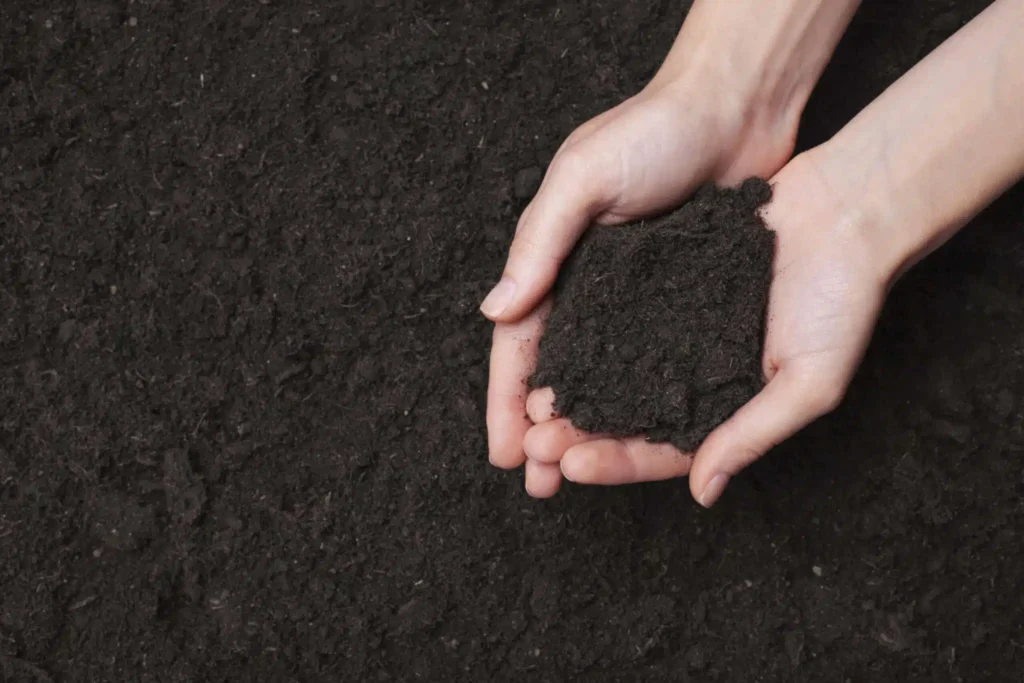 From $44.03/yard
- SizeScreened, no size grade
- Density2200 lb/yd³
- ColorDark brown
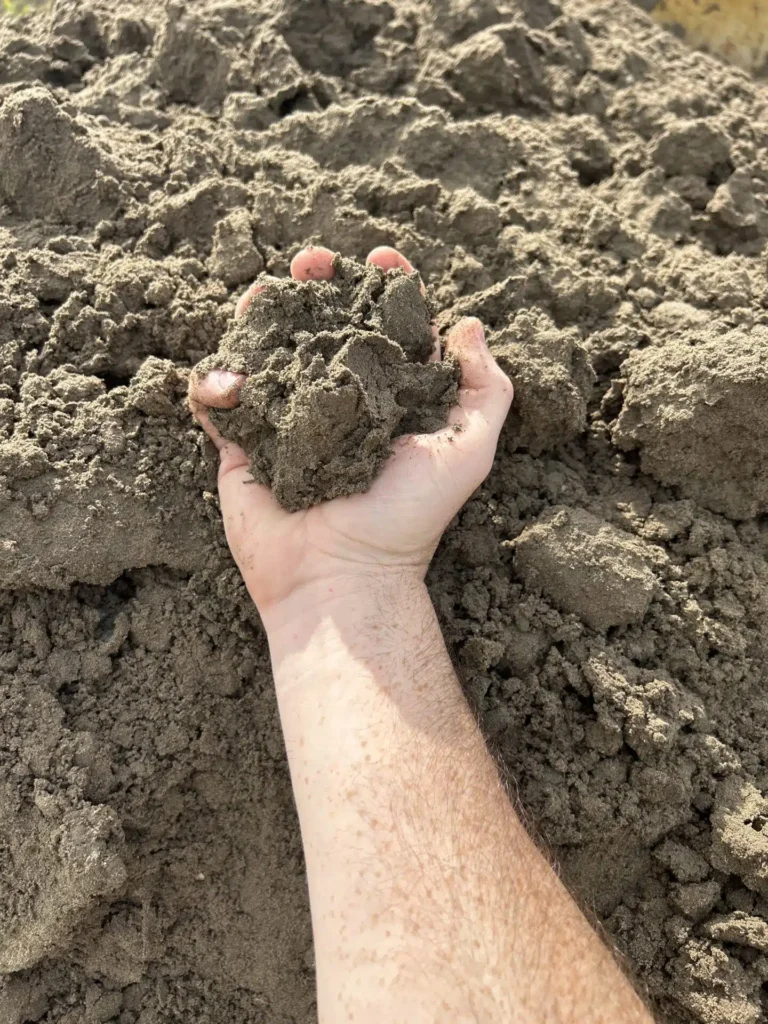 From $40.95/yard
- Density2200 lb/yd³
- ColorBrown
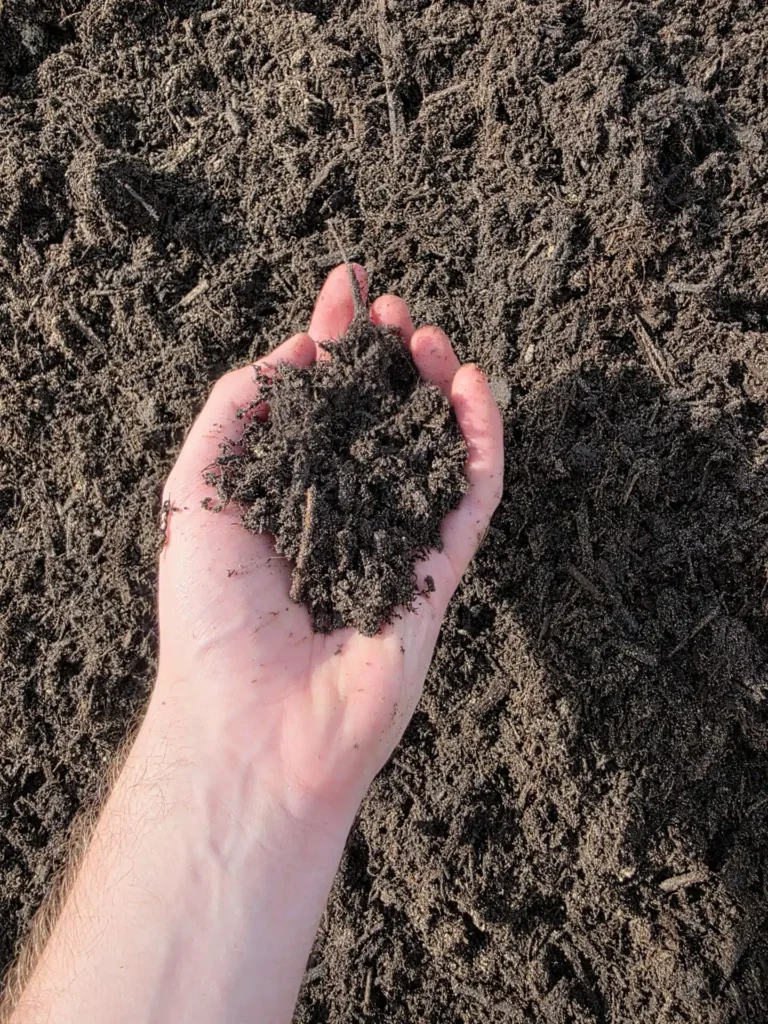 From $44.03/yard
- Density2000 lb/yd³
- ColorDark brown
Delivered pricing in Chicago
| Order size | Price / ton | Delivery fee | Lead time |
|---|---|---|---|
| 3+ tons | $117 | $226 | 1-2 business days |
| 8+ tons | $100 | $122 | Same/next day |
| 15+ tons | $87.00 | Included | Free delivery |
Estimate how much you need
Calculate Your Project
Estimate only. Add 10-15% for compaction and waste.
Browse more
Available in nearby cities
Plan your project
Related guides
 GUIDEGravel Size Chart: Pea Gravel to Crushed StoneA gravel size chart showing pea gravel, crushed stone and river rock diameters side by side, so you can match the right size to your project.Read guide →
 GUIDEThe Different Types of Gravel and How to ChooseA plain-language guide to the main types of gravel, covering pea gravel, crushed stone, river rock and decomposed granite.Read guide →
 GUIDEWhat Are Screenings? A Guide to Crushed Stone FinesScreenings are fine crushed stone used for paver bases, joint fill and walkways. See what screenings are, common types, and mistakes to avoid.Read guide →GUIDEWhat to Put Under River Rock for Landscaping BedsHere is what to put under river rock landscaping: a compacted base where needed, then landscape fabric, then rock, to stop weeds and settling.Read guide →
Frequently Asked Questions
How much compost do I need to improve a clay bed in Chicago?
One cubic yard covers 324 square feet at a 1-inch depth. To fork 2 inches into a 20-foot by 30-foot backyard you need about 3.7 cubic yards, so round up to 4. For a 4-foot by 8-foot raised bed filled 12 inches deep, plan on about 1.2 yards after settling.
How fast can you deliver compost in Chicago?
Smaller 3-ton orders typically arrive within 1 to 2 business days. Mid-size 8-ton loads often ship same or next day. Full 15-ton truckloads move on our free-delivery tier with scheduling confirmed in advance.
Will compost really fix Chicago's heavy clay soil?
Yes. Clay is mineral-rich but lacks structure, so it compacts and drains poorly. Forking 2 to 3 inches of compost into the top 6 inches opens air pockets that improve drainage and root growth. Repeating it yearly steadily transforms the soil.
When is the best time to apply compost in Chicago?
Spring, from the April thaw through May, is the prime window for amending beds before planting in the short season. Fall, from September until the ground freezes, is also excellent because winter freeze-thaw helps mix the compost in for you.
What is the minimum compost order for delivery?
Our smallest delivered tier is a 3-ton minimum at $117 per ton plus a $226 delivery fee. Stepping up to the 8-ton tier drops the rate to $100 per ton and cuts the fee to $122, so combining projects usually pays off.
Can I plant directly in straight compost over clay?
No. Pure compost over clay subsoil can stay waterlogged and is too rich for tender roots. Blend it with Topsoil and Garden Soil so beds get both fertility and drainage, which matters most over Chicago's dense ground.
Should I dig compost into wet clay?
No. Working clay when it is saturated smears it into hard clods. Wait a few dry days after a spring rain so the soil is moist but not wet, then fork the compost into the top 6 inches.
Do you deliver compost outside the city of Chicago?
Yes. We serve Hammond, South Bend, Milwaukee, Fort Wayne, and Carmel. Customers in farther markets like Fort Wayne or Carmel should add a day for scheduling, especially during the compressed spring rush.
How much area does a full 15-ton load cover?
A 15-ton load is roughly 30 cubic yards. At a half-inch topdressing depth that covers nearly 19,000 square feet, enough for a large lawn plus a season of bed refills in one free delivery.
Is your compost safe for organic vegetable gardens?
Yes. Our compost is fully matured and stable, made from yard trimmings and clean organic feedstock with no raw-manure nitrogen-burn risk. It is well suited to organic vegetable beds and community garden plots.