
Riprap Med Delivery in Milwaukee, WI
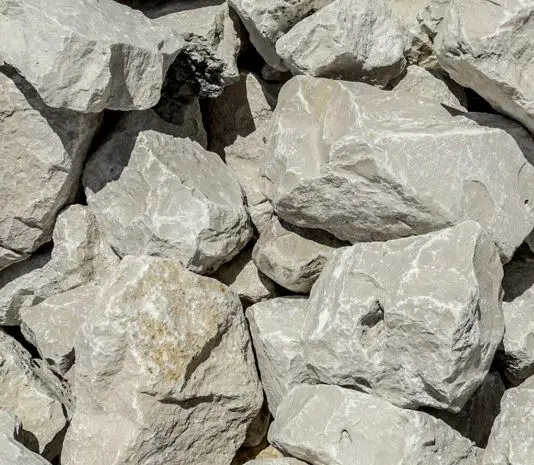
Bulk riprap med delivered in Milwaukee, WI. Stone size 4 - 9. Gray color.
From $103/ton delivered, free delivery on full loads
Bulk Riprap Med Delivery in Milwaukee, WI
Milwaukee sits on the edge of one of the largest bodies of fresh water on the planet, and Lake Michigan does not treat a shoreline gently. Northeast storms drive long-fetch waves straight at the bluffs and beaches from Bay View up through the harbor and out along the North Shore, and in winter the lake hammers the same banks with ice. Add in the heavy clay soils of southeastern Wisconsin and a hard freeze-thaw cycle, and you get a region where erosion is a constant, year-round fight. Medium Riprap Med is the workhorse stone for that fight. These are angular gray pieces graded 4 to 9 inches that weigh roughly 2,700 pounds per cubic yard, heavy enough to hold a bank against wave action and spring runoff, yet small enough to place with a skid steer or by hand on a smaller repair. We deliver across the metro starting at just $103 per ton.
From a failing bluff toe in Whitefish Bay to a culvert outlet along a Menomonee River tributary to a detention basin in a Waukesha County subdivision, medium riprap is what Milwaukee contractors and property owners reach for when water is carving away soil that needs to stay put.
Why Milwaukee Crews Use Medium Riprap
The Milwaukee erosion picture is driven by three forces working together: lake waves, heavy spring snowmelt, and a freeze-thaw cycle that loosens everything in between. Bare clay banks slick off and slump, and concentrated flow cuts gullies fast. Riprap shows up wherever that energy has to be absorbed:
- Lakefront and bluff toe protection: Along the Lake Michigan shore, riprap armors the toe of eroding bluffs and protects beach revetments from the wave energy that would otherwise undercut them.
- Riverbank and channel stabilization: On the Milwaukee, Menomonee, and Kinnickinnic rivers and their tributaries, riprap holds banks against spring flood flows.
- Detention and retention basins: The region's stormwater basins rely on armored inlets, outlets, and side slopes to survive heavy rain events without scouring out.
- Culvert and storm outfalls: Where a pipe dumps runoff onto clay soil, a riprap apron breaks the energy and stops the deep scour hole that forms behind it.
Behind the armor stone, crews back the work with a Drain Rock layer and filter fabric so the clay fines cannot pump out. For decorative dry-creek beds and landscape features set back from the water, River Rock gives the rounded look, and on budget base and access-road work some jobs use Crushed Concrete beneath the stone.
Local Delivery and Lead Times in Milwaukee
We deliver riprap across the Milwaukee-Waukesha metro, from the lakefront neighborhoods and the harbor district out through Wauwatosa, West Allis, and the Waukesha County suburbs. Most established neighborhoods and job sites have good truck access, and we just need a firm, clear spot where the load can be tipped without sinking into soft spring ground. Smaller orders around 5 tons typically arrive within 1 to 2 business days. Mid-size loads near 8 tons often go out same or next day. Full truckloads of 16 tons and up ship on our free-delivery tier.
Regional routes also reach the wider area: Chicago is 81 miles south and Hammond about 103 miles, so we coordinate loads moving down the I-94 corridor and out toward South Bend (126 mi), Fort Wayne (196 mi), and Carmel (231 mi). For Milwaukee work specifically, the tight metro geography keeps turnarounds quick, though we recommend booking ahead in early spring when shoreline and riverbank crews rush to repair winter ice damage before the summer storm season.
How Much Riprap You Need
Medium riprap is sold by the ton, and a reliable planning rule is one ton covering about 35 to 40 square feet at a 12-inch placed thickness, the typical depth for shoreline and slope armor. High-energy lake-facing reaches and steep bluff toes need a thicker layer, so round up.
Here is a quick coverage example. Say you are armoring a failing bluff toe on a North Shore lot, with a sloped face running 60 feet along the bank and rising about 8 feet, roughly 480 square feet. At a 12-inch placed depth that works out to around 13 tons. Order 16 tons and you cover the face, fill the keyed toe trench at the base, and qualify for free delivery in a single drop. On a lake-exposed bank you may want 18 inches of placed depth, which would push the same area closer to 20 tons.
Milwaukee Riprap Pricing
Our bulk tiers reward larger loads, which fits riprap well since most shoreline and riverbank jobs need real tonnage. Medium riprap in Milwaukee starts at $103 per ton. The delivered tiers break down like this:
- 1-ton minimum: $140 per ton with a $268 delivery fee, arriving in 1 to 2 business days. Right for a small repair or a single culvert apron.
- 6-ton minimum: $126 per ton with a reduced $144 delivery fee, often same or next day. A good fit for a moderate riverbank patch or basin slope.
- 16-ton minimum: $103 per ton with free delivery. The best value for full shoreline armor, contractors, and flood-control work.
The spread from the 1-ton rate to the 16-ton rate is $37 per ton, and the delivery fee disappears at the top tier, so on any sizable Milwaukee shoreline or river job it almost always pays to consolidate into one full load rather than ordering piecemeal.
Spreading and Installation Tips
Filter Layer Over Clay Soil
Southeastern Wisconsin clay is the trap here. Riprap placed straight on bare clay will pump fines out from beneath it as waves and runoff work the bank, and the armor settles and fails. Lay a geotextile filter fabric or a graded gravel filter against the prepared bank first. Behind any seawall or channel wall, a Drain Rock backing relieves the hydrostatic pressure that builds when the water table is high after snowmelt.
Key In the Toe
On a lake bluff or a riverbank the toe is where the water attacks first, scouring down and pulling the bank apart from the bottom up. Excavate a toe trench below the expected scour line and set your largest stones there so the whole blanket anchors against undercutting.
Place for Interlock
Place the stones so they nest and fill the voids with smaller pieces. A dumped pile may look like a revetment but loses rock to the first big northeast blow. On tight lakefront and riverbank sites, a skid steer with a grapple sets stone far better than a loader bucket.
Freeze-Thaw and Ice Action on the Lakefront
Milwaukee winters add a force most southern markets never deal with: ice. Shore ice and ice shove can lift and displace poorly anchored stone, and the repeated freeze-thaw cycle of a Wisconsin spring loosens soil and works rock loose from a bank that was tight in the fall. Medium riprap handles this because the heavy, angular 4 to 9 inch stone interlocks into a flexible blanket that can absorb frost heave and ice load without breaking apart the way a rigid structure would. The trick is a well-keyed toe and a clean filter layer so meltwater drains rather than building pressure behind the armor. Crews who get the toe right in the fall usually find the blanket settles and tightens over the first winter rather than failing.
Seasonal Notes for Wisconsin
The Milwaukee riprap calendar runs against the lake and the frost. Late summer and fall are the prime placement window: low lake levels expose the bluff toe, the ground is firm enough to excavate and key a trench, and you can finish a bank before winter ice arrives. Early spring is the busy rush as everyone repairs the damage from winter ice and assesses what the freeze-thaw cycle loosened, so book early to lock in delivery. Avoid the worst of the spring thaw for major excavation, when saturated clay banks are unstable and access roads turn soft. Plan shoreline work around stable lake conditions and you will place stone faster and key the toe deeper, which is what makes the blanket last through the next winter.
Ready to schedule a drop anywhere from the lakefront to Waukesha County? Tell us your access, your bank, and your target depth, and we will size the right load for your job.
About Riprap Med
About Our Riprap Med
Medium riprap is a quarried, angular gray stone graded from roughly 4 to 9 inches across, built as an erosion-control and armoring material rather than a decorative one. Each piece is hard, dense, and irregular, and that angularity is the point: the broken faces lock against one another so a placed blanket behaves like a single flexible mass instead of a loose pile. At about 2,700 pounds per cubic yard, it is among the heaviest aggregates we carry, and that weight is what lets it stay put against wave action, spring flood flow, and ice.
The 4 to 9 inch gradation is the most versatile of the riprap grades. It is large enough to stand up to the high-energy wave and current loads on shorelines, riverbanks, and culvert outlets, yet small enough to place with a skid steer or by hand, unlike the heavy and extra-large grades that require an excavator. Lighter drainage and bedding work calls for Drain Rock instead, while purely decorative landscape installations typically use River Rock for its smooth, rounded look.
Typical uses include lakefront and bluff toe protection, riverbank and channel stabilization, detention and retention basin lining, culvert and storm outfall aprons, bridge abutment scour protection, and heavy drainage structures. The stone is almost always installed over a geotextile filter fabric or a graded gravel filter so the soil beneath cannot wash or pump out, with the toe keyed into a trench below the scour line so the blanket anchors at its base. On budget-driven base and access work, some crews use Crushed Concrete beneath the riprap, though the armor stone exposed to flowing or wave-driven water should be hard natural rock.
Sold loose by the ton for direct placement, medium riprap ships in volumes from small repair loads up to full shoreline-armor truckloads. Because gradations and placed depths vary and water energy is high, order on the high side of your coverage math to account for voids and the keyed toe trench.
What Riprap Med costs in Milwaukee
In the Milwaukee market, riprap med is sold by the ton and priced at the gate before delivery is added on. Pricing in Milwaukee starts at $103 per ton on full-truck loads, which works out to roughly $139 per cubic yard at the typical density of 2700 lb per yard. One ton covers about 80 sq ft at a 3 inch finished depth, so a 400 sq ft driveway pad runs roughly 5 tons.
How crews use Riprap Med in Milwaukee
Crews working out of Milwaukee tend to call for riprap med on a few repeat jobs each week. The first is erosion control, typically laid in tight urban lots and infill builds with a base lift compacted before the finish course goes on. The second is drainage gravel, which lands here in dense neighborhoods where curb access is short and usually ships as a 4 to 8 ton order. With a population around 569,330, Milwaukee pulls a mix of single-truck homeowner orders and contractor full-loads through the season.
Delivery day in Milwaukee
On the day of the drop, the dispatcher pulls the closest yard, batches your ticket with other Milwaukee stops, and sends a window the night before. Tandem-axle dumps need at least 12 ft of clear width and 14 ft overhead to set the bed; tri-axles need 14 ft of clearance on both counts and a level pad to tip safely. Standard lead time on this lane is Mon-Sat, with same-day windows held open for orders that hit the desk before 11 AM and clear payment.
Related materials we deliver in Milwaukee

Delivered pricing in Milwaukee
| Order size | Price / ton | Delivery fee | Lead time |
|---|---|---|---|
| 1+ tons | $140 | $268 | 1-2 business days |
| 6+ tons | $126 | $144 | Same/next day |
| 16+ tons | $103 | Included | Free delivery |
Estimate how much you need
Calculate Your Project
Estimate only. Add 10-15% for compaction and waste.
Browse more
Available in nearby cities
Plan your project
Related guides
 GUIDEDoes Gravel Stop Weeds? Honest Answer + What WorksPractical, field-tested guide: does gravel stop weeds. Pulled from real US installer notes and 2026 supplier price data.Read guide →
 GUIDEHow Much Gravel Do I Need? Quick Sizing GuidePractical, field-tested guide: how much gravel do i need. Pulled from real US installer notes and 2026 supplier price data.Read guide →
 GUIDEWhat Is #57 Stone? Uses, Size, and Cost ExplainedPractical, field-tested guide: what is 57 stone. Pulled from real US installer notes and 2026 supplier price data.Read guide →
 GUIDEHow Deep Should a Gravel Driveway Be? Layer GuidePractical, field-tested guide: how deep should gravel driveway be. Pulled from real US installer notes and 2026 supplier price data.Read guide →
Frequently Asked Questions
How much medium riprap do I need for a bluff toe in Milwaukee?
Plan on one ton covering about 35 to 40 square feet at the typical 12-inch placed depth. A 480 square foot bluff face works out to roughly 13 tons, so rounding up to 16 tons covers the face, fills the toe trench, and earns free delivery. On lake-exposed banks use 18 inches of depth and order more.
How fast can you deliver riprap in Milwaukee?
Smaller 1-ton orders usually arrive within 1 to 2 business days, while 6-ton loads often ship same or next day. Full 16-ton truckloads move on our free-delivery tier. Most metro neighborhoods and Waukesha County sites have good truck access, so turnarounds stay quick.
What is the minimum riprap order for delivery?
Our smallest delivered tier is a 1-ton minimum at $140 per ton plus a $268 delivery fee. Stepping up to the 6-ton tier drops the rate to $126 per ton and cuts the fee to $144. The 16-ton tier reaches the $103 per ton starting price with free delivery, the best value for a real shoreline or riverbank job.
Do I need filter fabric under riprap on Milwaukee clay?
Yes, almost always. Southeastern Wisconsin clay pumps its fines out from under bare riprap as waves and runoff work the bank, and the armor settles and fails. Lay a geotextile filter fabric or a graded gravel filter against the prepared bank first, and back any seawall with a Drain Rock layer to relieve pressure after snowmelt.
Will medium riprap hold up to Lake Michigan waves and ice?
Yes, when installed right. The heavy, angular 4 to 9 inch stone interlocks into a flexible blanket that wave action and freeze-thaw cannot easily pull apart. The key is a deeply keyed toe and a clean filter layer so meltwater drains rather than building pressure behind the armor, which is what lets it ride out the ice.
Can I use riprap at a culvert outlet or basin in the Milwaukee area?
Yes, that is a core use. Where a pipe dumps runoff onto clay soil, a riprap apron breaks the energy and prevents the deep scour hole that undermines the structure. Size the apron to the pipe and design flow, extend it past where the water spreads, and back it with a filter layer.
When is the best time to place riprap in Milwaukee?
Late summer and fall are the prime window, when low lake levels expose the bluff toe and the ground is firm enough to key a trench before winter ice. Early spring is the busy rush to repair ice and freeze-thaw damage, so book early. Avoid the worst of the spring thaw for major excavation in saturated clay.
Should riprap be dumped or hand placed?
Place it, do not dump it. Placed stones interlock with the voids filled by smaller pieces to form a stable blanket, while a dumped pile loses rock to the first big northeast blow. On tight lakefront and riverbank sites, a skid steer with a grapple sets stone far better than a loader bucket.
How heavy is medium riprap and can I move it by hand?
It runs about 2,700 pounds per cubic yard, and individual 4 to 9 inch pieces can be lifted by hand on smaller repairs, which is part of why this grade is popular. For a full shoreline or riverbank job, a skid steer with a grapple is far faster and safer than placing stone by hand.
Do shoreline projects in Wisconsin need permits?
Often yes. Work on or near Lake Michigan, navigable rivers, or regulated wetlands in Wisconsin can require permits through the state and local authorities before you place stone below the ordinary high-water mark. Confirm the requirements for your specific bank before you order, and we can time delivery to your approved schedule.