Riprap Med Delivery in Albuquerque, NM
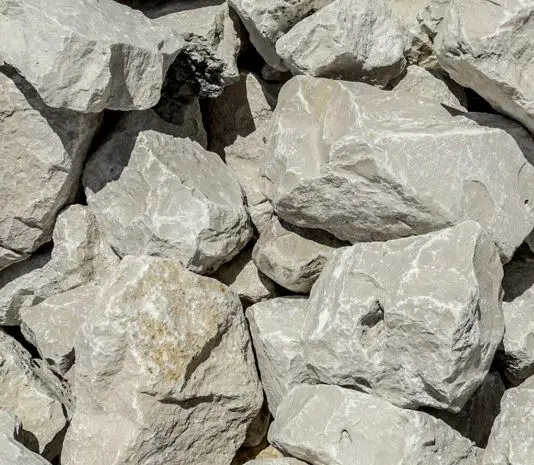
Bulk riprap med delivered in Albuquerque, NM. Stone size 4 - 9. Gray color.
From $110/ton delivered, free delivery on full loads
Bulk Riprap Med Delivery in Albuquerque, NM
Albuquerque is a high-desert city built between the Rio Grande and the Sandia Mountains, and water here arrives in two extremes: long dry stretches and sudden, violent monsoon downpours. When a summer storm parks over the foothills, runoff pours off the bare mesa and the mountain front into the arroyo network, and those normally dry channels can fill and run hard in minutes. Where that flow concentrates, it scours the sandy, erodible soil with real force. Medium Riprap Med is the stone that stops it. These are angular gray pieces graded 4 to 9 inches that weigh about 2,700 pounds per cubic yard, heavy enough to hold against a flash flow yet workable enough to place with a skid steer or by hand. We deliver across the metro starting at just $110 per ton.
From an eroding arroyo bank in the Northeast Heights to a culvert outlet along a Westside arterial to a bank repair near the Rio Grande bosque, medium riprap is what Albuquerque contractors and property owners reach for when monsoon scour has to be controlled.
Why Albuquerque Crews Use Medium Riprap
The high-desert erosion script is feast or famine: months of dry channel followed by short, intense flash flows that carry sand, grit, and debris. The loose sandy and silty soils of the valley have little to hold them when that water comes, so riprap shows up wherever flow gathers:
- Arroyo bank and channel armoring: Across the city's extensive arroyo system, riprap holds banks and grade-control structures that monsoon flows would otherwise carve out.
- Rio Grande and ditch bank protection: Along the river corridor and the acequia and drain network, riprap stabilizes banks against current and seasonal high water.
- Detention and retention basins: The region's stormwater basins depend on armored inlets, outlets, and side slopes to survive a monsoon cloudburst without scouring out.
- Culvert and storm outfalls: Where a pipe dumps runoff onto sandy soil, a riprap apron breaks the energy and prevents the deep scour hole that forms behind it.
Behind the armor, crews back the work with a Drain Rock layer and a filter so the sandy fines cannot wash out. For decorative dry-arroyo landscape features and xeriscape work, River Rock gives the rounded look, and on budget base and access-road jobs some crews use Crushed Concrete beneath the stone.
Local Delivery and Lead Times in Albuquerque
We deliver riprap across the Albuquerque metro, from the North and Northeast Heights down through the valley and out across the Westside and Rio Rancho. The grid layout and generally wide lots make access straightforward in most areas, and we just need a clear, firm spot where the truck can tip the load. Smaller orders around 5 tons typically arrive within 1 to 2 business days. Mid-size loads near 8 tons often go out same or next day. Full truckloads of 16 tons and up ship on our free-delivery tier.
Regional routes also reach the wider area, with El Paso 230 miles south and Pueblo about 247 miles north, so we coordinate loads moving along the I-25 corridor and out toward Amarillo (272 mi), Colorado Springs (278 mi), and Lubbock (293 mi). For Albuquerque work specifically, the compact metro keeps turnarounds fast, though we strongly recommend booking ahead in late spring as crews race to armor arroyos and basins before the July monsoon arrives.
How Much Riprap You Need
Medium riprap is sold by the ton, and a reliable planning rule is one ton covering about 35 to 40 square feet at a 12-inch placed thickness, the typical depth for arroyo and slope armor. High-energy arroyo reaches and steep banks need a thicker layer, so round up.
Here is a quick coverage example. Suppose you are armoring an eroding arroyo bank behind a Northeast Heights property, with a sloped face running 50 feet along the channel and rising about 10 feet, roughly 500 square feet. At a 12-inch placed depth that comes to around 13 to 14 tons. Order 16 tons and you cover the bank, fill the keyed toe trench at the channel bottom, and qualify for free delivery in a single drop. A steeper or higher-energy reach may justify 18 inches of depth, pushing the same area past 20 tons.
Albuquerque Riprap Pricing
Our bulk tiers reward larger loads, which suits riprap well since most arroyo and basin jobs need real tonnage. Medium riprap in Albuquerque starts at $110 per ton. The delivered tiers break down like this:
- 1-ton minimum: $149 per ton with a $286 delivery fee, arriving in 1 to 2 business days. Right for a small repair or a single culvert apron.
- 6-ton minimum: $134 per ton with a reduced $154 delivery fee, often same or next day. A good fit for a moderate arroyo bank or basin patch.
- 16-ton minimum: $110 per ton with free delivery. The best value for full bank armor, contractors, and flood-control jobs.
The spread from the 1-ton rate to the 16-ton rate is $39 per ton, and the delivery fee disappears at the top tier, so on any sizable Albuquerque arroyo or basin job it almost always pays to consolidate into one full load rather than ordering piecemeal.
Spreading and Installation Tips
Filter Layer Over Sandy Soil
The valley's loose sand and silt is the trap here. Riprap placed straight on bare sandy soil will undermine itself as the fines wash out from beneath when the monsoon flow comes. Lay a geotextile filter fabric or a graded gravel filter against the prepared bank first. Behind any retaining or channel wall, a Drain Rock backing handles the brief but intense pressure a cloudburst builds.
Key In the Toe at the Channel Bottom
In an arroyo the toe is where the flash flow attacks first, scouring down and pulling the bank apart from the bottom. Excavate a toe trench at the channel bottom and set your largest stones there so the whole blanket anchors against the scour.
Place for Interlock
Place the stones so they nest and fill the gaps with smaller pieces. A dumped pile may look like a revetment but loses rock in the first flash flood. On tight arroyo and basin sites, a skid steer with a grapple sets stone far better than a loader bucket.
Monsoon Floods and Flash-Flow Energy
The summer monsoon, roughly July through September, is the whole reason riprap matters in Albuquerque. Storms drop intense rain over ground that absorbs almost none of it, so runoff is fast and carries sand, gravel, and debris that batter anything in the channel. That debris load is part of what makes flash flows so destructive in an arroyo: it is not just water but a moving abrasive. Medium riprap stands up to it because the heavy, angular stone interlocks into a blanket the flow cannot easily pluck apart, and a well-graded 4 to 9 inch blend fills its own voids so the debris-laden water has nowhere to work in. The key is to have the armor in place and the toe keyed before the season, because once an arroyo is running you cannot work in it safely and any unfinished section is exposed to the full force of the storm.
Seasonal Notes for New Mexico
The Albuquerque riprap calendar revolves around the monsoon. The cooler, dry stretch from fall through spring is the prime placement window: the arroyos are empty, the ground is workable, and you can excavate and key a toe trench without fighting flowing water. Late spring is the busy rush as everyone armors arroyos, banks, and basins before the July monsoon, so book early to lock in delivery. Avoid major arroyo work during the monsoon itself, when a dry channel can flood with little warning and unfinished armor is at risk. High-desert spring winds and afternoon heat also favor scheduling large placement jobs for the milder, calmer months, which lines up neatly with beating the storm season.
Ready to schedule a drop anywhere from the Heights to the Westside or Rio Rancho? Tell us your access, your bank, and your target depth, and we will size the right load for your job.
About Riprap Med
About Our Riprap Med
Medium riprap is a quarried, angular gray stone graded from roughly 4 to 9 inches across, built as an erosion-control and armoring material rather than a decorative one. Each piece is hard, dense, and irregular, and that angularity is the point: the broken faces lock against one another so a placed blanket behaves like a single flexible mass instead of a loose pile. At about 2,700 pounds per cubic yard, it is among the heaviest aggregates we carry, and that weight is what lets it stay put against flash floods and debris-laden monsoon flows.
The 4 to 9 inch gradation is the most versatile of the riprap grades. It is large enough to stand up to the high-energy flash flow of a desert arroyo on banks and culvert outlets, yet small enough to place with a skid steer or by hand, unlike the heavy and extra-large grades that require an excavator. Lighter drainage and bedding work calls for Drain Rock instead, while purely decorative desert installations typically use River Rock for its smooth, rounded look.
Typical uses include arroyo bank and channel armoring, slope and embankment protection, riverbank and irrigation-ditch stabilization, detention and retention basin lining, culvert and storm outfall aprons, bridge abutment scour protection, and heavy drainage structures. The stone is almost always installed over a geotextile filter fabric or a graded gravel filter so the loose sandy soil beneath cannot wash out, with the toe keyed into a trench so the blanket anchors at its base. On budget-driven base work, some crews use Crushed Concrete beneath the riprap, though the armor stone exposed to flowing water should be hard natural rock.
Sold loose by the ton for direct placement, medium riprap ships in volumes from small repair loads up to full bank-armor truckloads. Because gradations and placed depths vary and flash-flow energy is high, order on the high side of your coverage math to account for voids and the keyed toe trench.
What Riprap Med costs in Albuquerque
Local Albuquerque yards quote riprap med by the ton; the delivered number includes fuel, the truck, and the haul. Pricing in Albuquerque starts at $110 per ton on full-truck loads, which works out to roughly $149 per cubic yard at the typical density of 2700 lb per yard. A ton of this material spreads across about 80 sq ft when laid 3 inches deep, useful when you are sizing a patio base or a walkway run.
How crews use Riprap Med in Albuquerque
In and around Albuquerque, riprap med shows up most often on two project types. The most common deployment is erosion control, often in tight urban lots and infill builds in two to three inch lifts. Second on the list is drainage gravel, which we see in dense neighborhoods where curb access is short on partial-truck deliveries. At roughly 562,599 people, the Albuquerque order mix leans toward 3 to 8 ton residential drops with the occasional 16 ton job for a contractor.
Delivery day in Albuquerque
A typical Albuquerque drop is dispatched from the closest yard with a two hour window and a heads-up call once the truck is loaded. Tandem trucks want a 12 ft lane in and out; tri-axles need 14 ft, and both want firm ground at the tipping spot so the load releases cleanly. Standard lead time on this lane is Mon-Sat, with same-day windows held open for orders that hit the desk before 11 AM and clear payment.
Related materials we deliver in Albuquerque

Delivered pricing in Albuquerque
| Order size | Price / ton | Delivery fee | Lead time |
|---|---|---|---|
| 1+ tons | $149 | $286 | 1-2 business days |
| 6+ tons | $134 | $154 | Same/next day |
| 16+ tons | $110 | Included | Free delivery |
Estimate how much you need
Calculate Your Project
Estimate only. Add 10-15% for compaction and waste.
Browse more
Available in nearby cities
Plan your project
Related guides
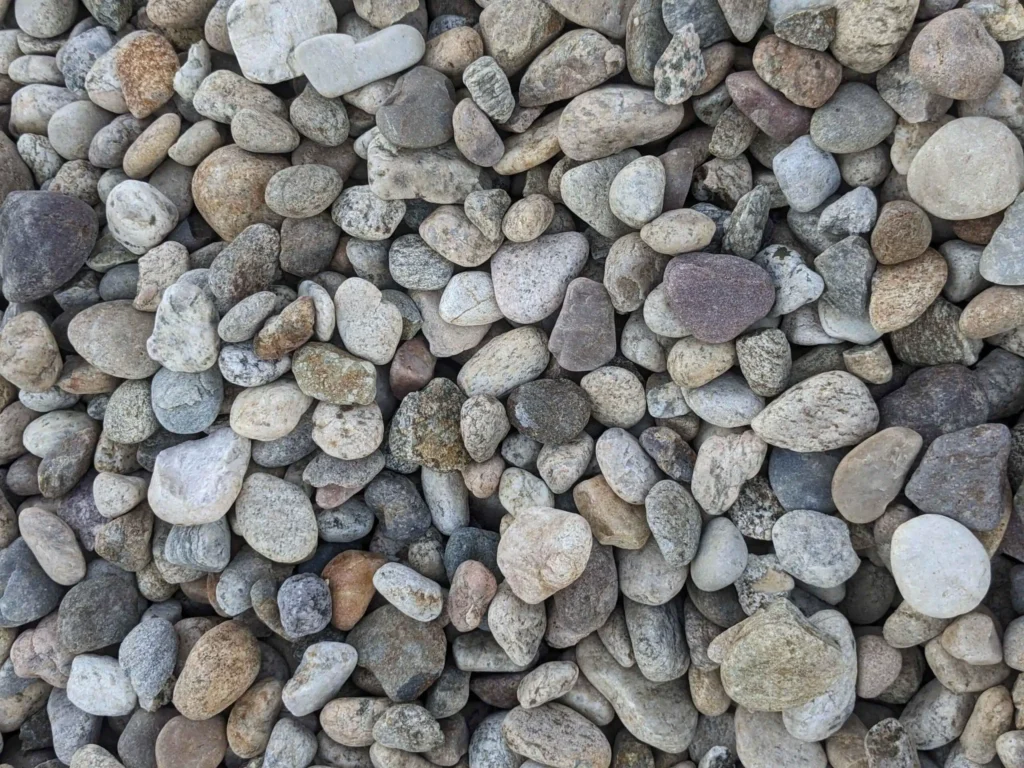 GUIDEHow Much Does River Rock Cost? By Ton or YardRiver rock cost depends on your ZIP code, order size, and whether you buy by the ton or the cubic yard. Here is how pricing works.Read guide →
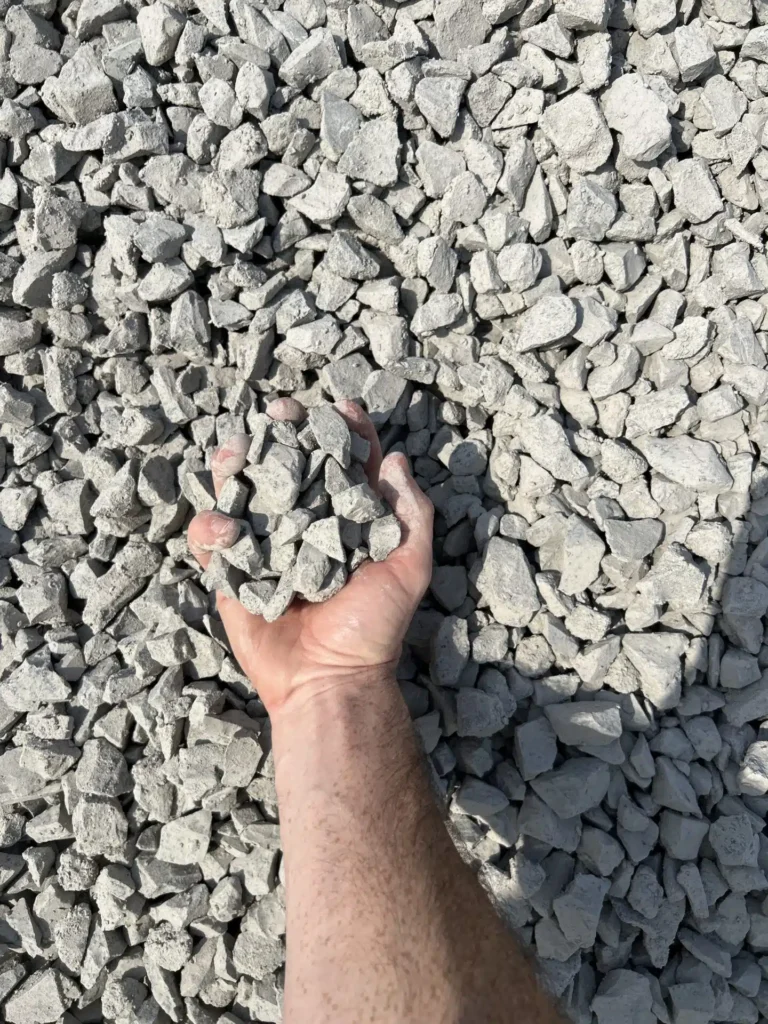 GUIDEWhat Size Crushed Stone Goes Under a Concrete SlabMost slabs need 4 to 6 inches of compacted crushed stone underneath. What size crushed stone under a concrete slab needs, and why it matters.Read guide →GUIDEWhat Is Crushed Stone? Sizes, Uses and Buying BasicsCrushed stone is quarried rock crushed and screened into angular pieces sold by the ton. Here is what it is, how it is graded, and where to use it.Read guide →
 GUIDEHow Much Does Gravel Cost? A Practical Pricing GuideHow much does gravel cost and why does it vary? See the real factors behind ton pricing, delivery, and order size before you buy.Read guide →
Frequently Asked Questions
How much medium riprap do I need for an arroyo bank in Albuquerque?
Plan on one ton covering about 35 to 40 square feet at the typical 12-inch placed depth. A 500 square foot arroyo bank works out to roughly 13 to 14 tons, so rounding up to 16 tons covers the bank, fills the toe trench, and earns free delivery. Order on the high side for voids and high-energy reaches.
How fast can you deliver riprap in Albuquerque?
Smaller 1-ton orders usually arrive within 1 to 2 business days, while 6-ton loads often ship same or next day. Full 16-ton truckloads move on our free-delivery tier. The grid layout and wide lots keep access easy, so turnarounds stay fast from the Heights to the Westside and Rio Rancho.
What is the minimum riprap order for delivery?
Our smallest delivered tier is a 1-ton minimum at $149 per ton plus a $286 delivery fee. Stepping up to the 6-ton tier drops the rate to $134 per ton and cuts the fee to $154. The 16-ton tier reaches the $110 per ton starting price with free delivery, the best value for a real arroyo job.
Do I need filter fabric under riprap in Albuquerque?
Yes, in almost every case. The valley's loose sand and silt washes out from under bare riprap when monsoon flow comes, so lay a geotextile filter fabric or a graded gravel filter against the prepared bank first. Behind a retaining or channel wall, a Drain Rock backing also relieves the water pressure a cloudburst builds.
Will medium riprap hold up to monsoon flash floods?
Yes, when installed right. The heavy, angular stone interlocks into a blanket that fast, debris-laden flow cannot easily pull apart, and a well-graded 4 to 9 inch blend fills its own voids. The key is to key the toe and finish the armor before monsoon season, since an arroyo cannot be worked once it is running.
Can I use riprap at a culvert outlet or basin in Albuquerque?
Yes, that is a core use. Where water leaves a pipe onto sandy soil, a riprap apron breaks the energy and prevents a deep scour hole that can undermine the structure in one storm. Size the apron to the pipe and design flow, extend it past where the water spreads, and back it with a filter layer.
When is the best time to place riprap in Albuquerque?
The cooler, dry stretch from fall through spring is the prime window, with empty arroyos and workable ground for keying a toe trench. Late spring is the busy rush as everyone armors before the July monsoon, so book early. Avoid major arroyo work during the monsoon, when dry channels flood fast.
Should riprap be dumped or hand placed?
Place it, do not dump it. Placed stones interlock with the gaps filled by smaller pieces to form a stable blanket, while a dumped pile loses rock in the first flash flood. On tight arroyo and basin sites, a skid steer with a grapple sets stone far better than a loader bucket.
How heavy is medium riprap and can I move it by hand?
It runs about 2,700 pounds per cubic yard, and individual 4 to 9 inch pieces can be lifted by hand on smaller repairs, which is part of why this grade is popular. For a full arroyo or basin job, a skid steer with a grapple is far faster and safer than placing stone by hand in the high-desert heat.
Does work near the Rio Grande or an arroyo need a permit?
Often yes. Bank work along the Rio Grande, regulated arroyos, or the acequia and drain network in New Mexico can require permits and coordination with local flood-control and conservancy authorities before you place stone. Confirm the requirements for your specific channel first, and we can time delivery to your approved schedule.