
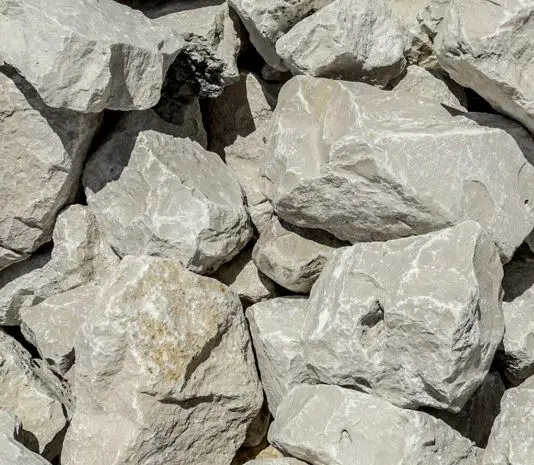
Riprap Med Delivery in Mesa, AZ
Bulk riprap med delivered in Mesa, AZ. Stone size 4 - 9. Gray color.
From $112/ton delivered, free delivery on full loads
Medium Riprap in Mesa: Desert Armor Stone for Flash Flood Country
Mesa lives with a drainage reality that surprises newcomers. The Sonoran Desert gets little rain most of the year, then dumps a summer monsoon that sends sheets of water roaring down washes and across hardpan that has lost all its absorption. That whiplash between bone dry and violently wet is exactly the condition Riprap Med is built for. Our gray 4 to 9 inch angular armor stone holds banks, lines channels, and protects outlets when the monsoon arrives, then sits unbothered through the long dry months in between.
The East Valley grows fast, and with growth comes graded lots, new retention basins, and miles of engineered drainage tying into the existing wash network. From the edges of the Salt River bottoms to the desert fringes near Apache Junction, contractors across Mesa rely on medium riprap to keep flash flow from chewing through soil that has no vegetation to bind it. We keep this stone moving year round throughout the Phoenix-Mesa-Chandler metro.
What Riprap Med Is and Why Mesa Crews Use It
Riprap Med is quarried gray stone graded to a 4 to 9 inch size, weighing about 2,700 pounds per cubic yard. The angular broken faces lock together when placed, forming a flexible armor mat rather than a loose pile. In flash flood country, where water arrives fast and hits hard, that interlocking behavior is what keeps the stone in place instead of being swept downstream the way rounded gravel would be.
Across Mesa and the surrounding East Valley, this stone goes onto a familiar set of jobs:
- Wash and channel armoring where monsoon flow concentrates and would otherwise scour the banks.
- Retention and detention basin protection on the many new commercial and residential developments built to manage stormwater on site.
- Culvert and storm drain outlets where concentrated discharge needs an energy-dissipating apron.
- Slope and embankment armoring on graded desert lots and roadway cuts.
- Salt River bank protection on sites near the riverbed corridor.
Where the goal is to move water through a section rather than deflect it, Mesa crews back the riprap with Drain Rock behind filter fabric. On decorative desert landscaping, the rounded look of River Rock fits better in xeriscape beds and dry creek features. For economical base and fill, Crushed Concrete is the common choice. But when a wash bank or basin edge has to survive a monsoon burst, Riprap Med is the stone that earns its place.
Local Delivery and Lead Times in Mesa
We deliver Riprap Med across the entire Phoenix-Mesa-Chandler MSA, reaching the neighboring cities that ring Mesa so closely they almost blend together: Gilbert (5 mi), Tempe (6 mi), Chandler (8 mi), Scottsdale (8 mi), and Phoenix (14 mi). Small one to five ton orders typically arrive within 1 to 2 business days. Loads from 6 to 15 tons usually ship same day or next day. Full sixteen ton truckloads are scheduled around your site and our route.
The tight clustering of the East Valley works in your favor on delivery: routes are short and traffic, not distance, is the main variable. We ask about site access since a loaded dump truck needs firm ground and clearance to raise its bed. On fresh desert grading that is rarely a problem, but it is worth confirming on a soft wash bottom or a tight infill lot in central Mesa. Builders running parallel jobs in Gilbert or Chandler often schedule riprap deliveries on the same week so the same crew and machine can move between sites, which keeps mobilization costs down across the East Valley.
How Much Riprap Med You Need
Riprap Med is sold by the ton. As a planning figure, a 12 inch placed layer of 4 to 9 inch stone covers roughly 80 to 90 square feet per ton. On flash flood work, do not skimp on thickness, since a thin single-stone layer leaves channels that high-velocity monsoon flow will exploit immediately.
Consider a typical Mesa job. You are armoring a 50 foot section of wash bank, carrying the stone 12 feet up the face, at 12 inches thick. That is 600 square feet, or about 7 tons at roughly 85 square feet per ton. At our 6 ton tier of 136 dollars per ton, that is 952 dollars in stone plus a 157 dollar delivery fee. Bundle in a basin edge and a culvert apron to reach a full 16 ton load and the rate falls to 112 dollars per ton with free delivery, a meaningful saving on a larger placement.
Local Pricing Context
Riprap Med in Mesa starts from 112 dollars per ton. The tiered pricing favors larger loads, which fits the scale of most East Valley drainage work:
- 1 ton minimum: 151 dollars per ton with a 291 dollar delivery fee, arriving in 1 to 2 business days.
- 6 ton minimum: 136 dollars per ton with a 157 dollar delivery fee and same or next day service.
- 16 ton minimum: 112 dollars per ton with free delivery throughout the Mesa area.
Most wash, basin, and outlet jobs land in the 6 to 16 ton range, so measure the full footprint and order the right tier up front rather than paying the higher one ton rate on a top-up load.
Installation and Spreading Tips
In the desert, the layer under the stone matters as much as the stone itself. Strip loose material, shape the bank to a stable angle, and place a non-woven geotextile filter fabric before laying rock. The fabric stops fine desert soil from being pumped up through the voids during a monsoon surge, which is the failure mode that ruins riprap aprons in Mesa.
Place the 4 to 9 inch stone deliberately so pieces interlock and the surface sits tight, with no straight open channels for water to seize on. Key the toe in below the expected scour depth, and on wash banks carry the armor above the high-water line that the monsoon reaches. A compact excavator with a thumb makes quick, tidy work of a bank that would take days by hand. Backfill any gaps at the top edge with smaller spalls so the transition from armored stone to native desert grade does not become a new erosion point, and tamp the surrounding soil so the first rain does not undercut the work from the side.
Seasonal Notes for Arizona
The Arizona calendar gives you a clear window. The summer monsoon, roughly July through September, is when flash flooding does its damage, so the smart play is to have riprap placed before it starts. Spring and early summer offer dry, workable washes and stable ground, ideal for placement, though crews must plan around extreme midday heat. Fall is also a good window once monsoon flows recede. Get your bank armor and basin protection in before the rains and it will be locked in and doing its job when the first big storm rolls across the East Valley.
About Riprap Med
Riprap Med is graded angular quarry stone in the 4 to 9 inch size range, supplied in a natural gray color. It weighs approximately 2,700 pounds per cubic yard and is sold by the ton. As a medium-class riprap, it sits between smaller drainage gravels and the large boulders reserved for major hydraulic structures, making it the most versatile armor stone for routine erosion and water-management projects.
The angular, broken faces of each piece are what make riprap work. When placed, those faces key into one another to form a flexible, self-supporting layer that resists displacement by flowing water, wave action, and gravity on a slope. Rounded landscape gravel cannot do this, since it rolls and scatters under the same forces.
Common applications include streambank and shoreline protection, slope and embankment armoring, culvert and pipe outlet aprons, detention and retention basin edges, bridge abutment scour protection, and channel lining. The medium grade resists moderate to high flow velocities while remaining small enough to place by hand or with a compact machine, which keeps labor reasonable on residential and light commercial sites.
For best results, riprap is installed over a geotextile filter fabric or graded granular filter that prevents underlying soil from migrating up through the voids. A properly built installation is essentially maintenance free and routinely lasts for decades. Because this is a natural quarried product, exact color and gradation may vary slightly by source, but every load is screened to meet the stated 4 to 9 inch size range.
What Riprap Med costs in Mesa
In the Mesa market, riprap med is sold by the ton and priced at the gate before delivery is added on. Pricing in Mesa starts at $112 per ton on full-truck loads, which works out to roughly $151 per cubic yard at the typical density of 2700 lb per yard. One ton covers about 80 sq ft at a 3 inch finished depth, so a 400 sq ft driveway pad runs roughly 5 tons.
How crews use Riprap Med in Mesa
Crews working out of Mesa tend to call for riprap med on a few repeat jobs each week. The first is erosion control, typically laid in tight urban lots and infill builds with a base lift compacted before the finish course goes on. The second is drainage gravel, which lands here in dense neighborhoods where curb access is short and usually ships as a 4 to 8 ton order. With a population around 504,258, Mesa pulls a mix of single-truck homeowner orders and contractor full-loads through the season.
Delivery day in Mesa
On the day of the drop, the dispatcher pulls the closest yard, batches your ticket with other Mesa stops, and sends a window the night before. Tandem-axle dumps need at least 12 ft of clear width and 14 ft overhead to set the bed; tri-axles need 14 ft of clearance on both counts and a level pad to tip safely. Standard lead time on this lane is Mon-Sat, with same-day windows held open for orders that hit the desk before 11 AM and clear payment.
Related materials we deliver in Mesa

Delivered pricing in Mesa
| Order size | Price / ton | Delivery fee | Lead time |
|---|---|---|---|
| 1+ tons | $151 | $291 | 1-2 business days |
| 6+ tons | $136 | $157 | Same/next day |
| 16+ tons | $112 | Included | Free delivery |
Estimate how much you need
Calculate Your Project
Estimate only. Add 10-15% for compaction and waste. Riprap Med
Browse more
Available in nearby cities
Plan your project
Related guides
GUIDEHow Deep Should a Gravel Driveway Be? Layer GuidePractical, field-tested guide: how deep should gravel driveway be. Pulled from real US installer notes and 2026 supplier price data.Read guide →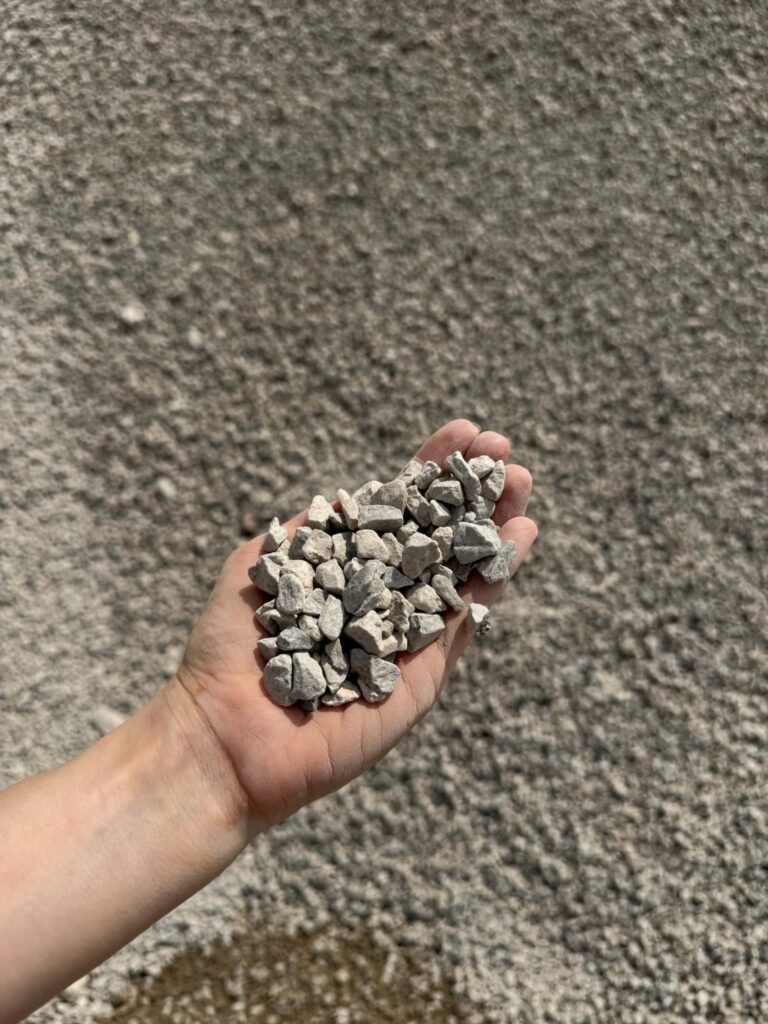 GUIDEWhat Is #57 Stone? Uses, Size, and Cost ExplainedPractical, field-tested guide: what is 57 stone. Pulled from real US installer notes and 2026 supplier price data.Read guide →
 GUIDEHow Much Gravel Do I Need? Quick Sizing GuidePractical, field-tested guide: how much gravel do i need. Pulled from real US installer notes and 2026 supplier price data.Read guide →
 GUIDEDoes Gravel Stop Weeds? Honest Answer + What WorksPractical, field-tested guide: does gravel stop weeds. Pulled from real US installer notes and 2026 supplier price data.Read guide →
Frequently Asked Questions
How much Riprap Med do I need for a wash bank in Mesa?
Figure roughly 80 to 90 square feet of coverage per ton at a 12 inch placed thickness, the standard depth for flash-flood work. A 600 square foot bank section needs about 7 tons. Measure the length, the slope height, and your thickness, then convert to square feet to size the order.
How fast can you deliver Riprap Med in the Mesa area?
Small one to five ton orders generally arrive within 1 to 2 business days. Loads of 6 tons or more often ship same day or next day depending on order time. The East Valley is compact, so routes are short and full 16 ton truckloads are scheduled around your site access.
What is the minimum order for Riprap Med?
The minimum is 1 ton at 151 dollars per ton with a 291 dollar delivery fee. Moving up to 6 tons drops the rate to 136 dollars per ton, and a 16 ton load brings it to 112 dollars per ton with free delivery, so larger loads are far more economical per ton.
Will Riprap Med hold up to Mesa monsoon flash flooding?
Yes. The 4 to 9 inch medium grade is sized for the moderate to high velocities seen in East Valley washes during the monsoon. Placed properly over filter fabric and keyed in at the toe, it forms a flexible armor mat that stays put when flow arrives fast. Extreme channels may call for a larger stone class.
Do I need filter fabric under riprap in the desert?
Absolutely. A non-woven geotextile filter fabric between the soil and the stone is essential in Mesa. Without it, monsoon surges pump fine desert soil up through the voids and the riprap slumps over time. The fabric is cheap insurance against the most common cause of failure here.
When should I place riprap in Arizona?
Place it before the summer monsoon, roughly July through September, when flash flooding does its damage. Spring and early summer offer dry, workable washes, though crews should plan around extreme heat. Fall is also good once monsoon flows recede. The goal is to have the armor locked in before the first big storm.
How is Riprap Med different from Drain Rock?
Riprap Med is large 4 to 9 inch angular armor stone that deflects and resists moving water on banks and slopes. Drain Rock is smaller stone designed to let water pass through, used in trenches and behind structures. Many Mesa drainage jobs use both, with Drain Rock as a drainage layer beneath Riprap Med armor.
Do you deliver to Gilbert, Tempe, Chandler, and the rest of the East Valley?
Yes. We cover the full Phoenix-Mesa-Chandler MSA, including Gilbert, Tempe, Chandler, Scottsdale, and Phoenix, all within about 15 miles of Mesa. The tight clustering keeps routes short, so distance is rarely the limiting factor on delivery timing.
Can I install Riprap Med without heavy equipment?
On small outlet aprons and short bank sections, two people can place 4 to 9 inch stone by hand. On longer wash banks or steep slopes, a compact excavator with a thumb is much faster and lets you key the stones together correctly. Place the rock deliberately rather than dumping it loose.
How thick should the riprap layer be on a Mesa wash?
A 12 inch placed thickness over filter fabric is standard for most East Valley drainage and slope work, which is roughly one and a half to two stone diameters. Thinner layers leave open channels that high-velocity monsoon flow exploits. On the fastest channels, increase the thickness and consider larger stone.