
Parking Lot Gravel Calculator
Quickly estimate cubic yards, tons, and material cost for your crusher-run. Adjust the inputs below and the result updates in real time.
Calculate Your Project
Estimate only. Add 10-15% for compaction and waste. crusher-run
How this calculator works
Cubic yards = (area × depth ÷ 12) ÷ 27
Tons = cubic yards × density × 27 ÷ 2000
Commercial parking lot aggregate planner. Defaults to 6″ depth of crusher run.
Enter your area and depth, and we’ll compute cubic yards, tons, and a delivered material cost using current 2026 quarry pricing.
What the parking lot gravel calculator computes
Parking lot gravel calculators size the aggregate needed for a gravel-surface parking area. Inputs are total area in square feet, base depth, and finish course depth. Output is cubic yards and tons for each layer. Commercial-scale parking lots use heavier specs than residential driveways because vehicle weight and turning loads concentrate at parking spots.
A typical 10-vehicle gravel parking lot (3,000 square feet, 12 cars at 200-square-foot stalls plus aisles) needs roughly 30 to 50 tons of Crusher Run base plus 15 to 25 tons of #57 Crushed Stone or 1.5" Crushed Gravel finish. Total tonnage for a small commercial gravel lot lands between 45 and 75 tons, typically 3 to 5 truckloads.
Base and surface specs for parking
Parking lots need deeper base than residential driveways because vehicles park and pivot in fixed locations, concentrating wear in spots rather than distributing it. The standard parking lot spec is 8 inches of compacted Crusher Run base in two lifts, topped with 3 inches of #57 Crushed Stone or 1.5" Crushed Gravel surface. For heavy-vehicle parking (delivery trucks, construction equipment), increase the base to 10 to 12 inches in three lifts.
The finish course material depends on traffic and aesthetics. #57 Crushed Stone is the universal pick for clean appearance and tight compaction. 1.5" Crushed Gravel is rougher visually but holds up better under heavy truck pivots. Asphalt Millings work as a budget alternative for rural commercial parking; they compact to a paved-road density without a separate base course and cost roughly half what new crushed stone costs.
Avoid Pea Gravel and any rounded gravel as a parking surface. The rounded fragments roll under tire pivots, leaving deep ruts at every parking spot within months.
Drainage and grading for gravel lots
A gravel parking lot needs more aggressive drainage than a residential driveway. Standard spec: 2 percent cross-slope (1/4 inch per foot of width) toward a perimeter swale or storm drain. Without the slope, water pools in spots that get displaced by tire weight, creating progressively deeper potholes.
For larger lots (over 5,000 square feet), add a perimeter French drain (4 inch perforated pipe in a Drain Rock-filled trench) to collect runoff and route it to a stormwater outlet. Without subsurface drainage, surface water sits at the edges where the lot meets the surrounding ground, creating the soggy strip every gravel lot owner knows.
The crown shape matters too. Two-way drainage off a center crown (like a road) works for narrow lots up to 30 feet wide. Wider lots need either a single-direction slope toward one edge or multiple low-point drains. Plan the drainage before the first load of stone arrives; retrofitting drainage on a finished parking lot is expensive.
Compaction and maintenance schedule
Each base lift compacts with a vibratory roller (rental from a construction equipment yard, $200 to $400 per day). Plate compactors are fine for residential-scale work but inadequate for parking lots over 1,000 square feet; the area is too large and the load is too heavy for a hand-pushed plate to produce uniform density.
The finish course compacts with the same roller after the parking lot opens to traffic. A few weeks of regular vehicle use compacts the surface to roughly 90 percent of maximum density; rolling adds the final 5 to 8 percent for a finished, durable surface.
Maintenance is annual. Each spring, top up worn spots with 0.5 to 1 ton of finish material (typically the same #57 Crushed Stone used originally), grade with a tractor-mounted box scraper or a manual grading rake, and roll. The annual top-up is $50 to $200 in materials for a small commercial lot and prevents the progressive degradation that turns a gravel lot into a mud pit within 3 to 5 years.
Cost comparison and code considerations
Total per-square-foot cost of a gravel parking lot installation (materials only, owner labor) runs $0.85 to $1.40 for the base-and-surface combo, $0.40 to $0.65 for asphalt millings only. Compared with asphalt paving at $4 to $7 per square foot installed or concrete at $7 to $12 per square foot, gravel is the budget option by 70 to 85 percent.
Local zoning codes vary on gravel parking lots. Some municipalities require asphalt or concrete for commercial customer parking; others allow gravel with specific drainage and maintenance requirements; rural areas typically have no restriction. Check with the local building department before ordering materials; the cost of redoing a parking lot to meet code is much higher than designing it correctly from the start.
For commercial operations with ADA accessibility requirements, a small section of paved parking (3 to 4 ADA stalls plus an accessible path to the entrance) combined with gravel for the remainder of the lot is the common cost-efficient pattern.
ADA compliance and accessible parking
Commercial parking lots open to the public must include accessible parking spaces under ADA regulations. The required count scales with total parking: 1 accessible space for 1 to 25 total, 2 for 26 to 50, 3 for 51 to 75, with at least 1 van-accessible space in every group. Accessible stalls must be at least 8 feet wide with a 5 foot access aisle adjacent (or 8 foot aisle for van-accessible). The access aisle connects to an accessible route from the parking to the building entrance.
For gravel parking lots, the ADA accessibility requirement creates a design tension. Loose gravel does not meet the "firm and stable surface" requirement for accessible paths or stalls. The standard solution is a small section of paved (asphalt or concrete) parking that includes the required ADA stalls and an accessible path from those stalls to the building, with the remainder of the lot in gravel. Costs are higher than pure gravel but lower than full paving.
The paved ADA section needs proper slope (under 2 percent in any direction within the parking stall and access aisle), level transitions to surrounding gravel (less than 1/2 inch height difference at the gravel-pavement edge), and clear signage (the international wheelchair symbol at each accessible stall, signed at 60 inches above grade).
State and local accessibility codes sometimes exceed federal ADA requirements. California, Texas, and several Northeast states have stricter standards. Check local codes before designing the parking layout.
For seasonal businesses with parking that closes for part of the year, the ADA-paved section can serve double duty as the year-round entrance path while the rest of the gravel lot is open only during operating season. This combined approach is common at orchards, pumpkin patches, and seasonal markets in rural areas, balancing accessibility with the cost-efficiency of mostly-gravel parking.
Materials this calculator covers
From $28/ton- Sizevaries"
- Density2900 lb/yd³
- ColorGray
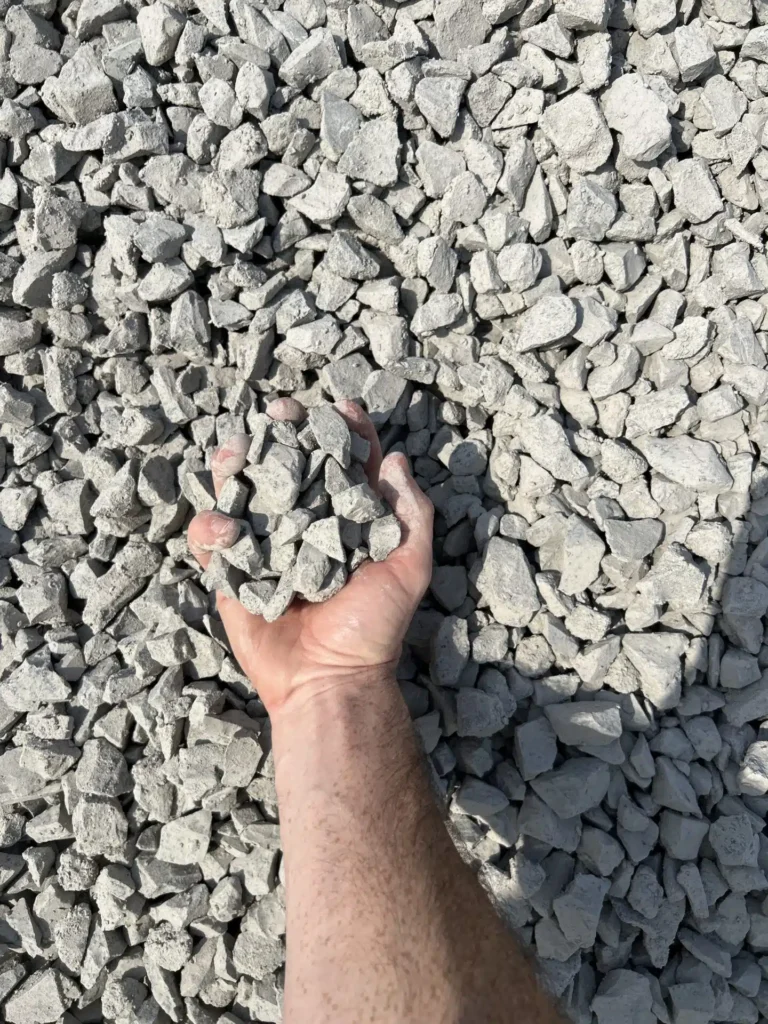 From $44/ton
- Size3/4 - 1"
- Density2700 lb/yd³
- ColorGray
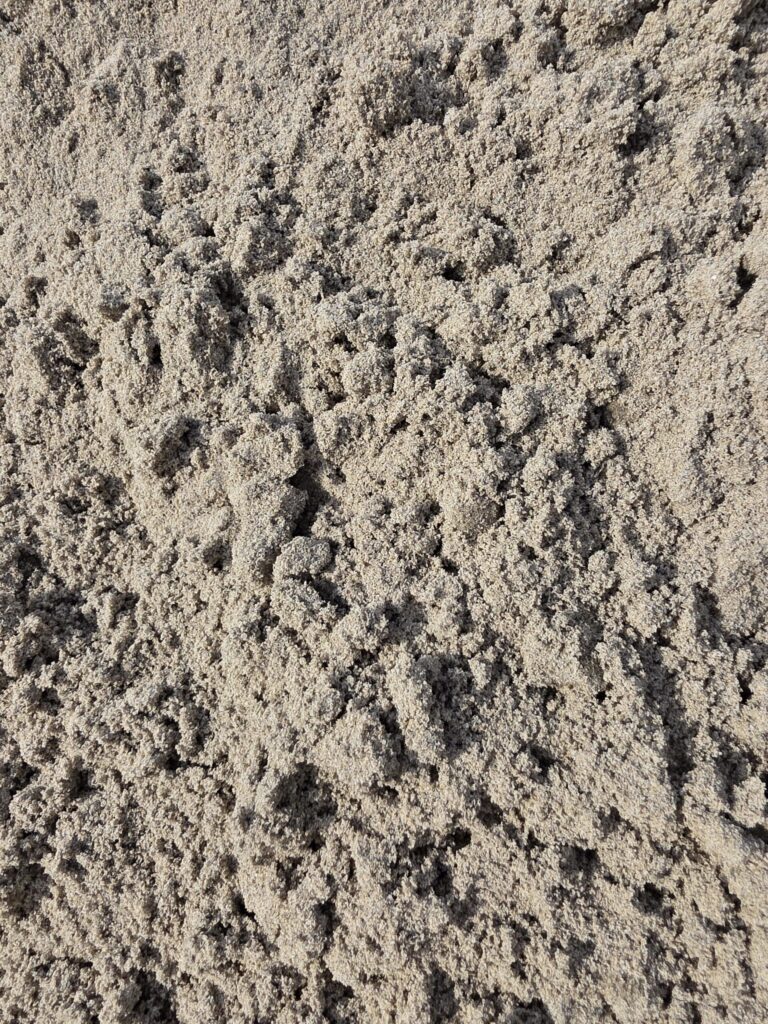
 From $37/ton
- Size1/4 - 3/8"
- Density2800 lb/yd³
- ColorTan / mixed
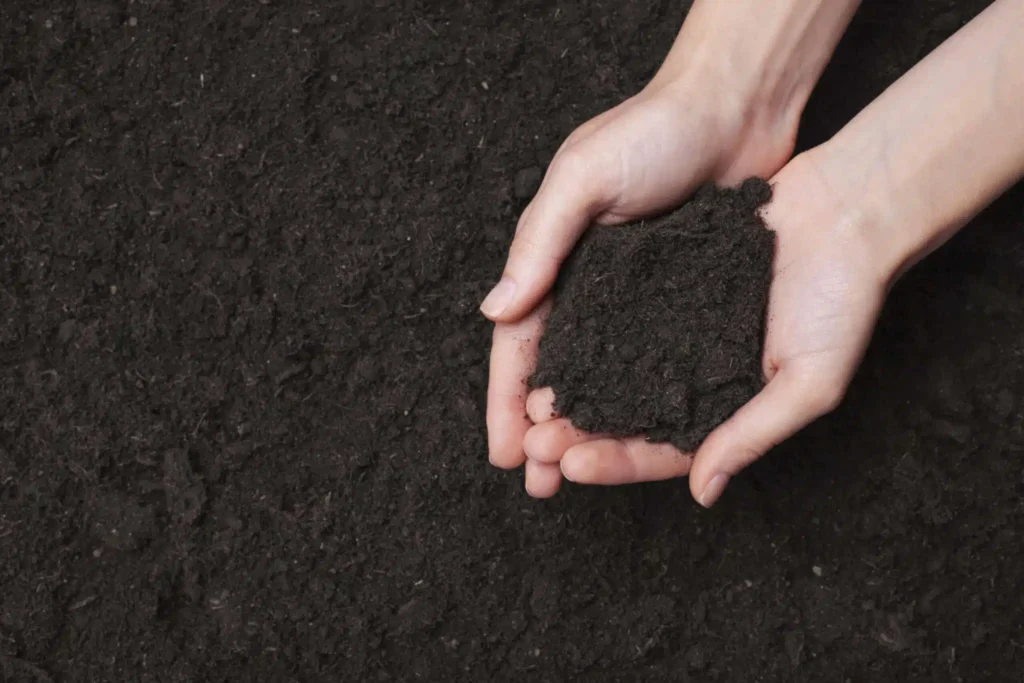 From $30/yard
- Sizescreened"
- Density2200 lb/yd³
- ColorDark brown
Other calculators
 CALCULATORPipe Bedding Sand CalculatorBedding sand around drainage or sewer pipe.Open calculator →
 CALCULATORSeptic Field Aggregate CalculatorEstimate drain rock for a septic leach field. Includes lateral spacing math.Open calculator →
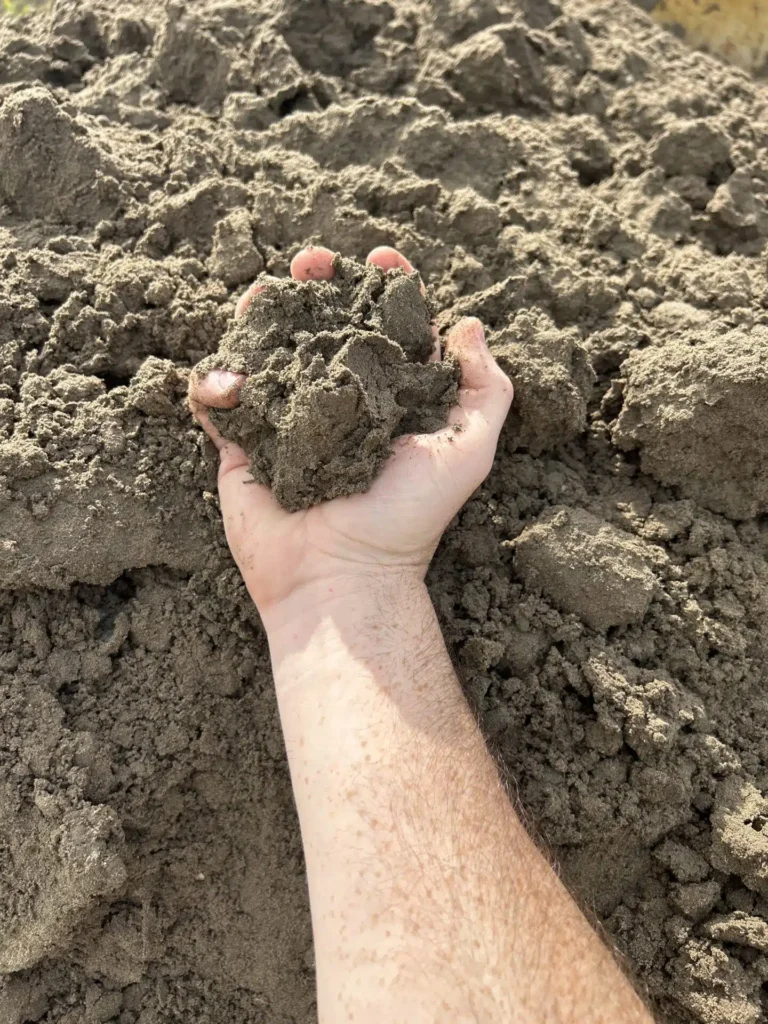 CALCULATORFill Dirt Volume CalculatorYards of fill dirt for grading, low-spot repair, or building pad prep.Open calculator →CALCULATORFrench Drain CalculatorHow much drain rock does a French drain need? Enter length, width, and depth - get tons and material cost.Open calculator →
Related guides
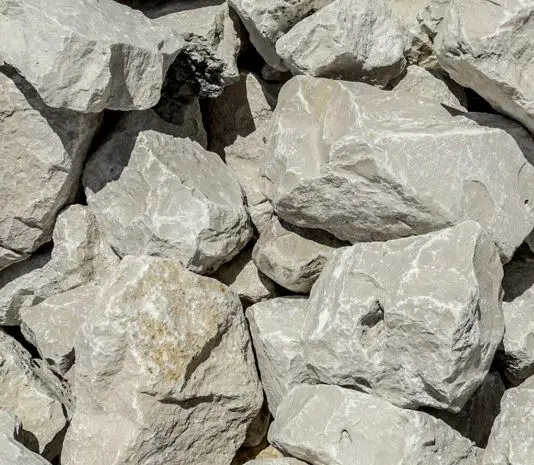 GUIDEHow Deep Should a Gravel Driveway Be? Layer GuidePractical, field-tested guide: how deep should gravel driveway be. Pulled from real US installer notes and 2026 supplier price data.Read guide →
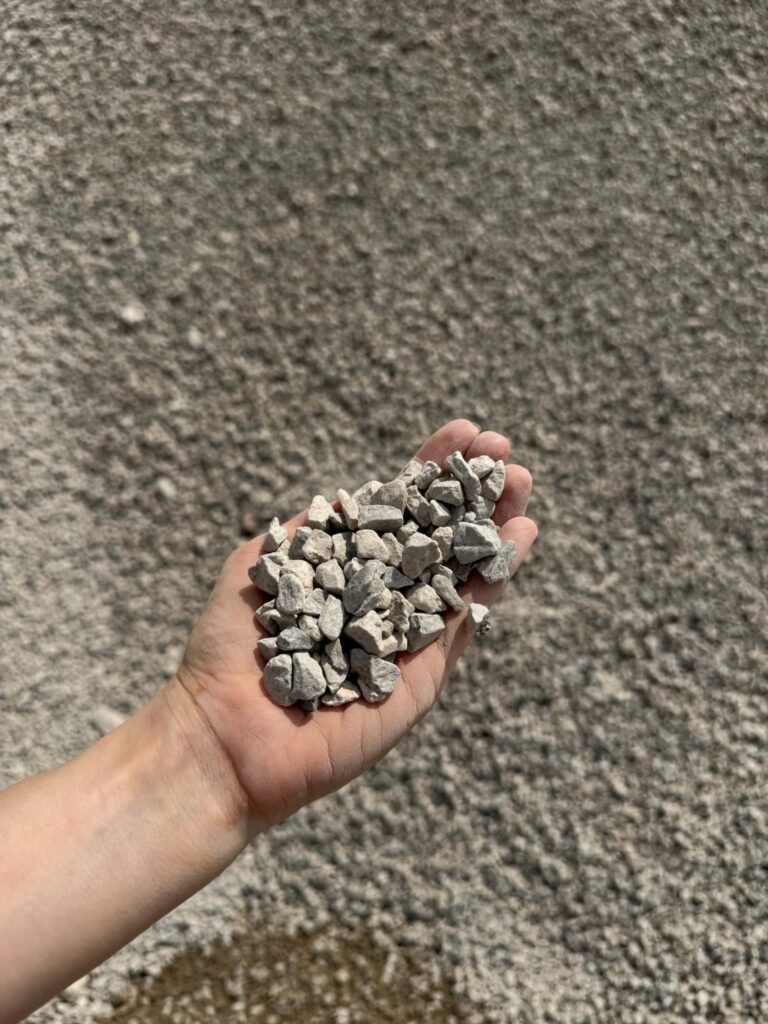 GUIDEWhat Is #57 Stone? Uses, Size, and Cost ExplainedPractical, field-tested guide: what is 57 stone. Pulled from real US installer notes and 2026 supplier price data.Read guide →GUIDEHow Much Gravel Do I Need? Quick Sizing GuidePractical, field-tested guide: how much gravel do i need. Pulled from real US installer notes and 2026 supplier price data.Read guide →
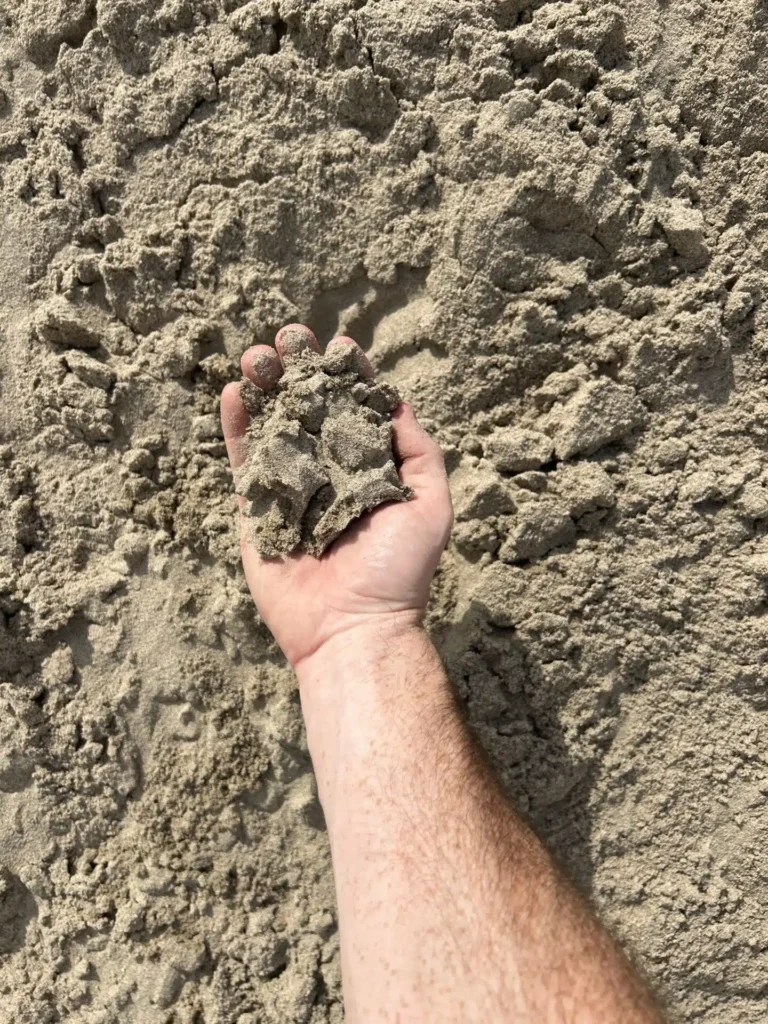 GUIDEDoes Gravel Stop Weeds? Honest Answer + What WorksPractical, field-tested guide: does gravel stop weeds. Pulled from real US installer notes and 2026 supplier price data.Read guide →
Frequently Asked Questions
How does this calculator work?
Enter area in sq ft and depth in inches. We convert to cubic yards, multiply by density to get tons, and divide by 2,000.
What if I don't know the depth?
Most projects use 4 inches. Drainage applications go deeper (6-12 in).
Why is the estimate different from my supplier quote?
Within 10% is normal - supplier quotes include delivery + minimum-load surcharges that depend on your distance from the quarry.
Should I round up?
Yes - round up to the nearest half-ton. The price-per-ton usually drops on larger orders.
Does this include delivery cost?
No - the result is material cost only. Get a delivered quote with your ZIP for the full price.
Can I use this for another material?
Density varies by material. This calculator is tuned for crusher-run; switch to the matching calculator for accurate results.